The White House is gearing up to slap fresh tariffs on imports from China, the European Union, and 14 other economies over state-backed industrial subsidies and excess factory capacity. If you thought Washington's tariff push was strictly a China story, think again.
According to Associated Press reporting alongside coverage from The Wall Street Journal and Bloomberg, the administration is preparing to roll out duties tied to an Office of the U.S. Trade Representative investigation into foreign subsidies and overproduction. Officials haven't locked in final rollout timing yet, and neither the White House nor the USTR has publicly confirmed the exact terms. Still, the direction of travel is unmistakable. Rather than relying on the sweeping emergency duties that the U.S. Supreme Court struck down in February, Washington is rebuilding its tariff architecture piece by piece.
I've watched trade policy whipsaw importers for years, and honestly, the most dangerous mistake companies make right now is treating a headline tariff number as the whole bill. When duties stack across different statutory authorities, your landed cost can jump even when an individual rate looks modest on paper.
Why Subsidized Production Became Washington's Main Target
For years, economists and trade officials have argued over factory overcapacity in sectors like electric vehicles, solar panels, steel, and cement. When domestic demand slows at home—especially in China, where sluggish local consumption has pushed producers to chase foreign buyers—surplus output spills onto global markets. China's trade surplus hit a record near $1.2 trillion last year, fueling frustration from trading partners across the globe.
What makes this move tricky diplomatically is the timing. President Donald Trump traveled to Shenzhen last week for his third in-person meeting with Chinese President Xi Jinping this year, and Xi is expected to visit Doral, Florida, next month for the Group of 20 summit hosted by Trump. Diplomacy and economic pressure are running on parallel tracks. Even as leaders talk about stabilizing ties or easing friction, Washington treats state subsidies and excess capacity as structural threats to domestic manufacturers.
At the same time, the European Union isn't getting a free pass simply because it's a traditional U.S. partner. Industrial policy in Europe—ranging from green transition support to targeted manufacturing aid—has increasingly drawn scrutiny from U.S. trade officials. Including the EU alongside 14 other economies signals that Washington views subsidized production as a broad global distortion rather than a single-country problem.
How These Tariffs Fit Into the Post-Supreme Court Shift
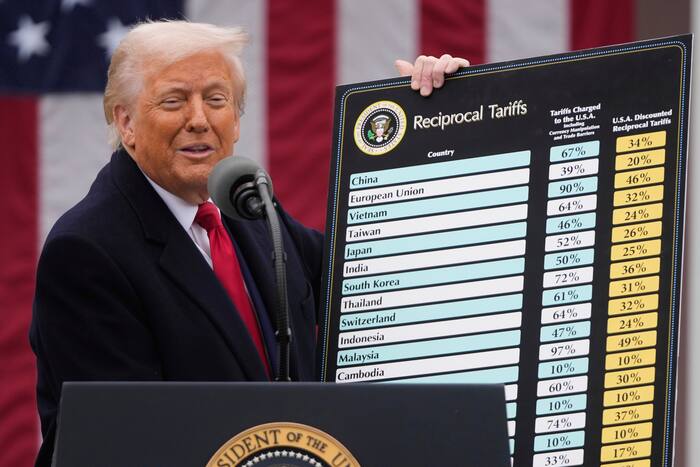
To understand why this matters right now, you have to look at the legal chess match playing out in Washington. In February, the U.S. Supreme Court struck down the sweeping "reciprocal" tariffs the administration had imposed on nearly every trading partner in April 2025.
That ruling forced a pivot. Instead of relying on broad emergency tariffs that courts can sweep away wholesale, the administration has moved toward targeted statutory actions. One piece came in July, when the White House imposed 10% to 12.5% tariffs on roughly 60 trading partners over alleged failures to enforce bans on forced labor—a measure already facing legal challenges before the Court of International Trade.
Now comes the industrial subsidies track under Section 301. Trade analysts at firms like Withum note that the USTR review spans 16 economies or blocs in total: China, the EU, Japan, South Korea, Vietnam, India, Taiwan, Mexico, Bangladesh, Indonesia, Malaysia, Cambodia, Thailand, Singapore, Switzerland, and Norway.
Here's the catch that trips up plenty of supply chain managers: tariffs don't always replace one another cleanly. Reports indicate these new duties could stack on top of existing Section 301 tariffs on China as well as the July forced-labor duties, while excluding items like steel, aluminum, and automobiles that already face separate Section 232 national-security levies.
Who Faces Higher Rates and Who Gets Caps
Nobody outside the administration has the final schedule in hand yet, so treat any rate talk as provisional until the official notice drops. Even so, trade reporting points to a tiered approach shaped by earlier negotiations and perceived subsidy intensity.
China is expected to face a steeper rate than many other covered economies because U.S. officials view Beijing's industrial subsidies and excess capacity as unusually sweeping. Some reporting suggests overall tariff levels on China could stay under 20%, though existing overlapping duties still complicate the math.
For the European Union, Japan, and South Korea, reported expectations point toward rates of 15% or lower, reflecting prior trade arrangements—with EU duties potentially staying below a 15% cap agreed to last year. Meanwhile, countries like Vietnam and India could see higher rates tied to their specific bilateral trade terms with Washington.
Is that fair? Honestly, there's plenty of debate on both sides. Supporters argue that if foreign governments subsidize factories to keep output running during domestic slowdowns, American workers and domestic plants shouldn't absorb the resulting price crash. Critics counter that stacking import taxes raises costs for U.S. manufacturers that buy foreign components and fuels consumer inflation—a sore spot that helped drive Republican losses in this month's midterm elections despite the party still holding levers in Washington.
Common Misconceptions About This Tariff Push
People hear "tariffs on China, EU and others" and jump straight to three wrong assumptions:
- Assumption 1: The Supreme Court ruling ended the tariff fight. It ended one specific legal pathway, not the policy goal. The administration has simply shifted toward Section 301 investigations and other trade statutes that are harder to overturn in a single stroke.
- Assumption 2: Allies like the EU, Japan, or South Korea won't get hit. Friendship doesn't make an economy immune when Washington is targeting subsidies and trade surpluses. Even capped or lower rates still change landed costs and sourcing decisions.
- Assumption 3: Congress can quickly wipe out new tariffs. Even with a newly elected Democratic majority taking shape after the midterms, unilateral executive tariff actions aren't easy to undo—a presidential veto can block legislation aimed at rolling them back or watering them down.
What Importers and Businesses Should Do Next
Waiting until the press release hits your inbox is a slow way to manage margin risk. Start tightening your homework now:
- Audit your country-of-origin and HTS codes across all 16 covered economies. Make sure your product classifications are rock-solid and verify where components are actually manufactured or substantially transformed.
- Model tariff stacking, not single-line rates. Check how any new Section 301 duties could layer onto existing Section 301 levies, July forced-labor tariffs, or Section 232 exclusions for steel, aluminum, and autos.
- Read your supplier and customer contracts closely. Look at price-adjustment, tariff pass-through, and change-in-law clauses before sudden cost increases squeeze your gross margins.
- Test customs valuation and sourcing alternatives. Review transfer-pricing alignment, explore eligible first-sale valuation rules where lawful, and stress-test secondary suppliers outside heavily exposed subsidy zones.