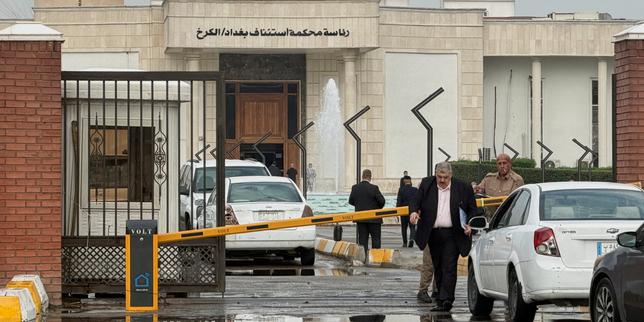
When Tehran's top security official tells Baghdad to keep outsiders out of their trade relationship, nobody in the Middle East treats it as routine diplomacy. Major General Mohsen Rezaei, secretary of Iran's Supreme National Security Council, made that warning in Tehran during talks with Iraqi national security adviser Qasim al-Aboudi, urging Iraq not to let foreign pressure choke off bilateral commerce.
Look at the timing and you see the real stakes right away. Rezaei's warning comes as Iraqi Prime Minister Ali al-Zaidi moves to pull border crossings, oil fields, and armed groups under federal control—steps that drew public backing from U.S. President Donald Trump and triggered sharp friction along Iraq's northern border with the semi-autonomous Kurdistan Region. With maritime shipping in the Gulf and Strait of Hormuz tangled in blockade measures and war fallout, land borders between Iran and Iraq have become a pressure point for survival, revenue, and political leverage.
Short wire stories like the one on The Tribune capture the headline quote, yet they barely scratch what is happening on the ground. Closing a gate on a 1,400-kilometer border isn't just a customs tweak. It hits electricity grids, gas pipelines, truckers' wallets, Kurdish autonomy, and Baghdad's balancing act between Washington and Tehran.
Why Economic Ties With Iraq Matter So Much to Tehran
For years, Iraq has been one of Iran's most vital economic lifelines. Estimates of annual bilateral trade often range from roughly $10 billion to $18 billion depending on the metric and period counted, including billions of dollars in Iranian natural gas and power sales alongside construction materials, agricultural goods, and consumer products.
When naval pressure tightens around Iranian ports, overland routes across a frontier stretching more than 1,400 kilometers—roughly 850 miles—gain even greater weight. Even if land crossings can't replace full maritime capacity on their own, keeping trucks moving across official and unofficial points helps Tehran keep goods flowing and maintain regional influence.
That is why Rezaei paired his trade warning with a push for full implementation of the bilateral security agreement. From Tehran's perspective, trade and border security are two sides of the same coin:
- Energy and utilities: Iraq still relies heavily on imported gas and electricity to keep power plants and homes running through peak demand.
- Sanctions workarounds: Washington has long accused Iran of using Iraqi financial and trading channels to ease sanctions pain, making cross-border flows a constant target of U.S. scrutiny.
- Border buffer: Tehran wants assurance that Iraqi territory and border zones won't serve as a launchpad or transit corridor for armed groups or hostile operations.
What Washington Wants and Why Baghdad Is Tightening Control
If you watch U.S. policy toward Iraq closely, the pressure on border crossings and oil flows isn't random. U.S. officials have pressed Baghdad to curb oil smuggling, rein in armed factions outside state command, and reduce economic dependence on Tehran, including warnings tied to banking access and border controls.
Iraqi Foreign Minister Fuad Hussein indicated earlier this month that Washington had urged Baghdad to leave only two border crossings with Iran open—one in the Kurdistan Region and one under federal authority. Whether every demand is practical or fully enforced is another story, because Iraq has multiple crossings and deep commercial ties along the frontier. Still, the pressure is real.
Prime Minister Ali al-Zaidi has framed his recent moves around state sovereignty, anti-corruption, halting oil smuggling outside state marketer SOMO, and bringing weapons under government authority. Baghdad recently moved to assert federal control over crossings in the Kurdistan Region and oil infrastructure, closing crossings such as Sheikh Saleh and Bashta after an earlier closure at Chazabeh (Sheeb). Trump publicly praised Zaidi's push to assert state authority, stop oil smuggling, and disarm non-state factions.
Here is the catch that outsiders often miss: domestic Iraqi politics drives much of this too, not just foreign wish lists. Iraqi officials have pointed to massive historical revenue losses from crude oil moving outside federal oversight, while residents and leaders in the Kurdistan Region have pushed back against federal takeovers they view as an assault on constitutional autonomy.
The Hidden Friction Inside Iraq and Across the Border
In my experience following Middle East trade disputes, big geopolitical speeches sound clean on television and messy in real life. Closing a border gate sounds simple on paper. In practice, it creates immediate headaches for everyone involved.
Take the Kurdistan Region. Federal moves to deploy troops, take over border crossings, and centralize oil control sparked protests and rare unity among Kurdish political factions opposing what they see as unilateral overreach. At the same time, intelligence reports and official statements have highlighted how oil transit routes and informal networks along northern and southern corridors became flashpoints over smuggling and state control.
Meanwhile, traders and drivers feel the pinch directly. Currency swings, steep freight costs, insurance hurdles, and sudden customs or border closures turn routine shipments into gambles. Major crossings like Mehran—crucial for religious travel and commerce—stay in the spotlight, while smaller or disputed crossings get shut or restricted as security and customs rules shift.
Al-Aboudi responded to Rezaei by reiterating commitment to the bilateral security pact and stating Iraq wouldn't let its land or airspace be used against Iran or neighboring states. That phrasing matters. Baghdad is trying to show Tehran it honors security commitments without handing Washington a pretext to squeeze Iraq's banking system or sovereignty.
Common Misconceptions About This Clash
People looking at headlines from a distance tend to fall into a few predictable traps:
- Thinking border closures stop all trade overnight: Iraq has a long border with numerous official and unofficial routes, and major crossings remain active even when specific gates close. Smuggling and informal trade adapt fast when official channels tighten.
- Assuming Baghdad is simply taking orders from Washington: Zaidi faces intense domestic pressure over corruption, oil revenues, and armed militias, and Iraqi officials have noted the economic cost of sweeping border shutdowns on Iraq itself.
- Treating Iran and Iraq as identical in their economic goals: Both are majority-Shiite neighbors with deep social and religious ties, yet Iraq also wants foreign investment, stable power supplies, and workable ties with Gulf states and the United States.
What to Watch Next and How to Track It
If you follow regional trade, energy markets, or geopolitical risk, don't get stuck reading only top-line statements from Tehran or Washington. Watch the actual execution over the coming weeks:
- Track specific crossing statuses, not just rhetoric: Check whether closures at crossings like Chazabeh, Sheikh Saleh, or Bashta expand or whether major hubs like Mehran face new restrictions.
- Watch federal-Kurdish negotiations on oil and borders: Any compromise—or escalation—between Baghdad and Erbil will shape how smuggling crackdowns hold up and whether protests widen.
- Monitor Iraqi banking and energy signals: Pay close attention to U.S. Treasury moves, Iraqi power and gas supply updates, and statements from Baghdad's oil and foreign ministries to see how far Iraq can balance both sides.