Think tank meetings sound like the most boring thing on earth until governments stop talking and trade starts breaking. When researchers from Japanese and Chinese think tanks met face-to-face in Shanghai on November 28, 2026, it wasn't just another polite academic roundtable. It was the first in-person dialogue between scholars from both sides since the diplomatic chill sparked by Prime Minister Sanae Takaichi's parliament remarks over Taiwan in November 2025.
Look at where things stand right now. Official government-to-government channels have been largely frozen. Even around the November 2026 APEC summit in Shenzhen, efforts to arrange a leader-level thaw hit a wall, with Beijing holding firm on its demand that Takaichi walk back her comments on a Taiwan contingency. Meanwhile, tourism numbers from mainland China to Japan dropped 47 percent year-on-year in October 2026 to 379,500 visitors, marking eleven straight months of decline.
So yeah, when The Genron NPO and the Shanghai Institute for International Studies sat down together in Shanghai, people in Tokyo and Beijing paid close attention. Private-track talks won't magically erase a year of political friction overnight. Still, when official diplomacy stalls, track-two channels are often the only place where people can test ideas without losing face.
What Sparked the Freeze After Sanae Takaichi's Remarks
To understand why this Shanghai meeting is getting so much scrutiny, you have to rewind to November 2025. That's when Takaichi told Japan's parliament that a conflict or blockade involving the Taiwan Strait—especially if it involved warships and the use of force—could amount to a situation threatening Japan's survival, opening the door to Tokyo exercising collective self-defense or taking military action.
Beijing's reaction was swift and sharp. Chinese officials view Taiwan as part of China, to be reunified by force if necessary, and condemned Takaichi's framing as crossing a major red line. Tensions escalated quickly across diplomatic, public, and economic fronts, including a heated social media clash involving Chinese Consul General in Osaka Xue Jian and warnings from Chinese authorities that kept bilateral ties tense well into 2026.
Days after the controversy erupted in November 2025, The Genron NPO announced that the annual Tokyo-Beijing Forum—a flagship track-two gathering that had brought together political, business, and academic figures from both countries for roughly two decades—was being postponed. Joint opinion poll rollouts tied to that exchange were put on hold too.
Honestly, postponing a twenty-year forum was a big deal. In East Asian diplomacy, canceling or delaying established dialogue venues sends a clear signal that the political climate isn't normal. When even semi-official or civil-society bridges get put on ice, miscalculations become way more likely.
Why Shanghai Matters More Than a Typical Think Tank Chat
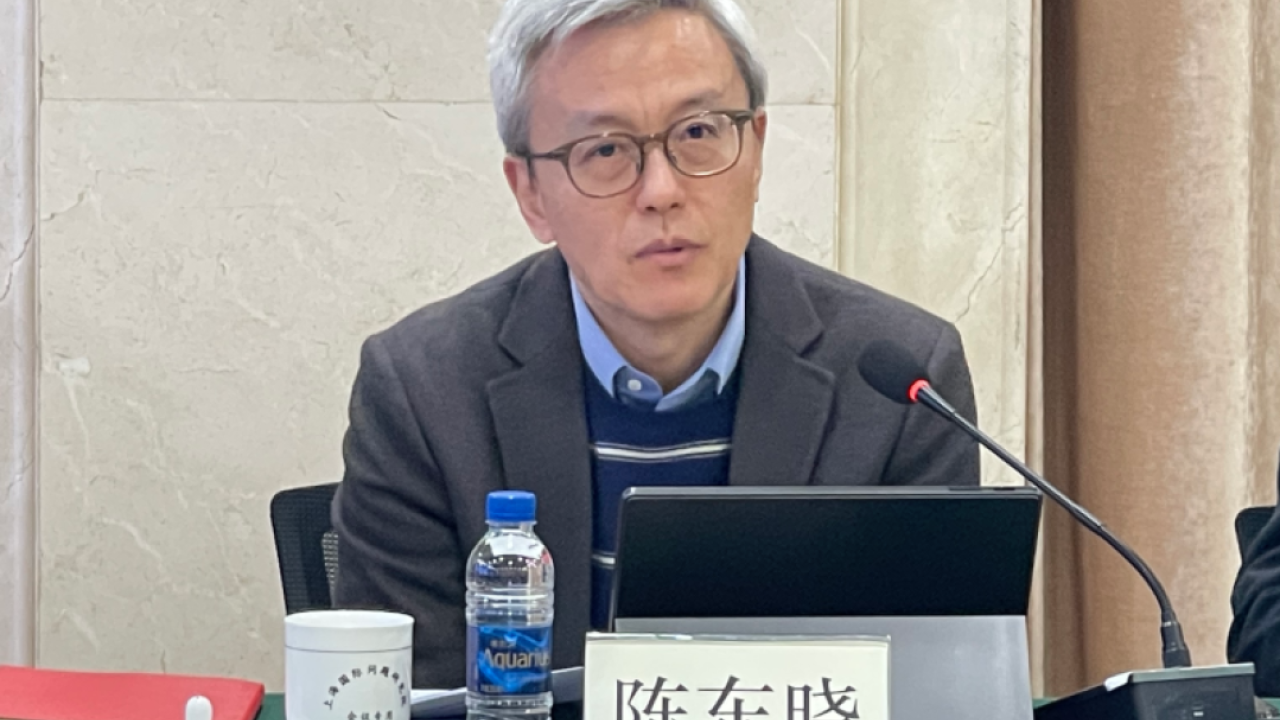
The November 2026 session brought together around 20 Chinese participants and 10 Japanese participants in Shanghai, co-hosted by The Genron NPO and the Shanghai Institute for International Studies. Names at the table included Genron NPO president Yasushi Kudo, Shanghai Institute president Chen Dongxiao, Nikko Research Center chairman and former Bank of Japan deputy governor Hirohide Yamaguchi, and Keio University professor Tomoki Kamo.
A couple of details here stand out:
- The venue and timing: Holding the meeting in Shanghai in late November 2026—just days after the APEC leaders' summit in Shenzhen where top-level political friction remained visible—shows both sides felt pressure to stop the silence from becoming total.
- The focus on economic security: Reports from the talks indicate participants focused heavily on economic security and potential areas of economic cooperation. With supply chains strained and travel down sharply, economists and security analysts aren't talking in abstract theory anymore.
- Kudo's candid warning: Speaking to reporters in Shanghai, Yasushi Kudo pointed to a real sense of crisis over the halt in dialogue amid rapid shifts in the global environment, calling the private-sector meeting a first step that could eventually help rebuild a foundation for government-level talks.
From a practical standpoint, think tank dialogues work best when participants speak as analysts rather than negotiators reading from rigid scripts. Even when both sides repeat core national positions, face-to-face contact helps clarify where red lines sit and where room for practical risk management still exists.
What People Get Wrong About Track-Two Diplomacy
Whenever think tanks resume talks after a major diplomatic row, two opposite myths tend to pop up. Both are misleading.
The first myth is that think tank meetings mean a diplomatic breakthrough is right around the corner. Let's be real—they don't. Beijing has continued to demand a retraction or correction of Takaichi's Taiwan remarks as a condition for broader political improvement, and official cabinet-level meetings have remained scarce or informal. A seminar in Shanghai doesn't override core sovereignty disputes or domestic politics in Tokyo and Beijing.
The second myth is that think tank talks are completely pointless because researchers don't sign treaties or command militaries. That misses how policy actually gets shaped. Think tanks in both countries feed analysis directly into ministries, corporate boards, and media debates. When a dialogue stops completely, decision-makers operate inside echo chambers, relying on worst-case assumptions about what the other side is thinking.
There's also a growing commercial reality that gets overlooked in headline coverage. Even before the 2025–2026 row, many Japanese manufacturers were already diversifying supply chains to reduce overreliance on any single market. Political friction accelerates that trend, forcing companies to weigh cost efficiency against geopolitical resilience every single quarter.
Economic Security Is Now the Front Line
For years, business leaders in Japan and China leaned on a familiar playbook: keep politics separate from economics as much as possible. That separation is much harder to maintain today.
When diplomatic tensions spill into tourism advisories, ministerial cold shoulders, and public hostility, economic security stops being a niche policy term. It becomes a day-to-day operational risk for exporters, manufacturers, logistics firms, and service businesses.
At the same time, complete economic decoupling between two of the world's largest economies is easier to talk about than to execute cleanly. That tension—wanting resilience and security without triggering mutually damaging shocks—is exactly why economic cooperation and economic security were central topics in the Shanghai exchange.
Practical Next Steps for Businesses, Analysts, and Watchers
If you're tracking East Asia policy, running cross-border operations, or advising teams exposed to China-Japan volatility, waiting for a single dramatic summit isn't a strategy. Here are concrete moves you can take right now:
- Watch action signals, not just headlines: Track whether follow-up working sessions, joint research releases, or business delegations actually materialize after the Shanghai talks, rather than treating one meeting as a permanent thaw.
- Stress-test supply chain and travel exposure: Audit where your revenue, sourcing, or business travel relies heavily on bilateral sentiment, especially in sectors sensitive to diplomatic advisories or regulatory friction.
- Read both sides' strategic framing: Compare Japanese policy and economic commentary (such as coverage from The Japan Times and Nippon.com) alongside Chinese official and analytical outlets (such as Global Times and reporting on the South China Morning Post) so you catch shifts in tone early.
- Build contingency plans before flashpoints hit: Keep backup suppliers, flexible routing, and clear internal communication protocols ready before a fresh diplomatic flare-up forces last-minute decisions.
Talking in Shanghai doesn't fix a deep geopolitical rift by itself. Still, keeping a working line open between serious analysts on both sides beats flying blind in the dark.