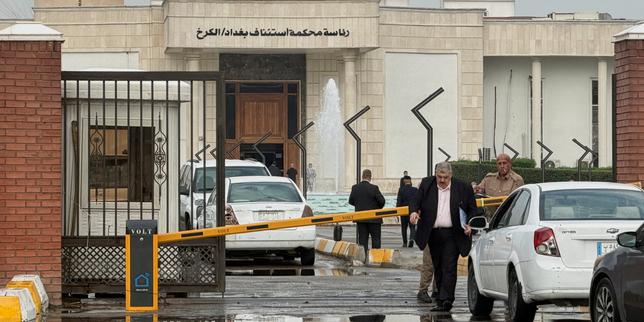
Seven more French ISIS fighters just got life in prison in Iraq. On November 29, 2026, an Iraqi court handed down life sentences to seven French nationals for belonging to the Islamic State, while giving two others fifteen-year terms.
If you think this is just another routine headline from Baghdad, you're missing the bigger picture. Hundreds of foreign militants sat in limbo for years after the territorial collapse of the caliphate. Now the legal reckoning is moving at full speed, and Paris isn't in the driver's seat anymore.
I've followed foreign-fighter prosecutions across the Middle East and Europe for years, and one thing stands out immediately. When an Iraqi court locks up a French citizen for life, it isn't merely punishing past crimes. It's locking in a diplomatic standoff between Baghdad and Western capitals over who owns this security problem.
Why French ISIS Fighters Are Facing Iraqi Courts Now
For a long time, European governments treated Syria and Iraq like distant problems best kept at arm's length. French officials preferred that suspects captured abroad face local justice rather than coming back to French soil, where proving battlefield offenses in domestic courts can be slow and legally tricky.
That calculus shifted hard in 2026. Following security concerns around detention facilities run by the Kurdish-led Syrian Democratic Forces in northeast Syria, thousands of ISIS suspects—reportedly more than 5,700 detainees from dozens of countries—were transferred into Iraqi custody starting in January 2026. Trials picked up in the autumn, and French nationals have been appearing in batches before Iraqi judges.
Just days before the November 29 rulings, another group of French defendants received stiff sentences in Baghdad, including eight life terms and two fifteen-year sentences on November 26, following earlier verdicts in October and mid-November. Every new verdict adds weight to the same reality. Baghdad is prosecuting these cases on its own terms, even as French embassy representatives observe the proceedings.
Here's what people often get wrong about those numbers. Seeing life sentences handed out in Iraq makes it sound like a clean, closed book. In reality, it's the messy middle of a multi-year legal and geopolitical squeeze.
How Iraq Applies Its Anti-Terrorism Law
To understand why these sentences look the way they do, you have to look at Iraq's legal framework. Under Article 4 of Iraq's 2005 Anti-Terrorism Law, mere membership in or support for a terrorist group can carry severe punishment, up to the death penalty.
Yet judges in these recent cases haven't automatically ordered executions for every French defendant. Instead, courts have leaned on provisions like Article 132 of the Penal Code, which allows judges to substitute a long or life prison term when they find grounds for leniency.
That distinction matters. A life sentence in Iraq is harsh, isolating, and punishing. Still, it differs sharply from a death sentence, both in how human rights groups view the proceeding and in how diplomatic friction plays out behind closed doors.
At the same time, legal observers have long pointed out a tension in how broad membership statutes work. In many regional prosecutions, belonging to the group can trigger heavy penalties even when prosecutors focus less on individual battlefield acts than on affiliation itself. Critics and international monitors have debated those broad strokes for years, arguing that evidentiary standards and defense access in mass-caseload environments deserve close scrutiny.
What This Means for France and European Security
Honestly, Paris faces a tough balancing act here. Domestic public opinion in France has been deeply shaped by the trauma of jihadist attacks, including the 2015 Paris attacks and the 2016 Nice attack. Politically, taking a hard line against returning fighters is popular.
Practically, though, outsourcing trials to Iraq has trade-offs. When a French citizen is sentenced to life in an Iraqi prison, France isn't bringing that person into its own penitentiary or intelligence-gathering system. It's relying on Iraqi institutions to hold them securely for decades.
Baghdad has repeatedly urged foreign governments to take back and prosecute their own nationals. Leaders in Iraq, including former Prime Minister Mohammed Shia al-Sudani in discussions with French President Emmanuel Macron earlier in 2026, have pressed the point that Iraq shouldn't have to shoulder the burden of foreign militants alone.
Western capitals haven't budged easily. Repatriation brings fierce political pushback at home, complicated evidentiary hurdles for prosecutors trying to prove crimes committed years earlier in war zones, and intense scrutiny from families and civil liberties groups. Leaving suspects in Iraqi courts lets politicians avoid bringing controversial defendants home—at the cost of ceding control over the process.
Common Misconceptions About These Trials
When news breaks about seven French ISIS fighters getting life in Iraq, a few myths almost always pop up. Let's clear them up directly.
- Myth one: Every French fighter in Iraq gets executed. Not true. While Iraq's anti-terrorism statute allows capital punishment, recent rulings show courts handing down life sentences and fifteen-year terms alongside capital cases.
- Myth two: A life sentence in Iraq ends French legal interest. Wrong. French authorities still track nationals abroad, monitor consular presence, and weigh ongoing counterterrorism and legal implications long after a verdict is read.
- Myth three: Transferring detainees from Syria solved the foreign-fighter issue. Hardly. Moving thousands of suspects into Iraqi courts speeds up verdicts, sure, but long-term incarceration, prison security, and diplomatic disputes over nationality and repatriation remain unresolved.
- Myth four: Defendants never claim minor roles. Actually, courtroom accounts frequently feature defendants insisting they were cooks, translators, or low-level operatives rather than fighters or commanders. Judges weigh those claims against investigations and confessions, and leniency isn't guaranteed.
The Bigger Geopolitical Picture in 2026
You can't separate these courtrooms in Baghdad from wider shifts across Iraq and Syria. Even years after ISIS lost its physical caliphate in Iraq in 2017 and Syria in 2019, sleeper cells and remnant networks haven't vanished completely. Security forces in both countries still deal with sporadic attacks, smuggling routes, and fragile local governance.
Meanwhile, shifts in regional security arrangements—including changing foreign troop footprints and evolving coordination between Baghdad, Kurdish authorities, and international coalitions—have forced governments to confront unfinished business. Detention camps and prisons holding thousands of ISIS suspects were never meant to be permanent holding pens without resolution.
For Iraq, holding and trying high-profile foreign detainees is both a sovereignty assertion and a heavy logistical load. Thousands of prisoners mean crowded facilities, strained judicial dockets, and ongoing security risks if institutions ever weaken.
For France, the stakes are equally real. Every verdict underscores a lingering question that has followed Europe for a decade. How do open societies deliver firm justice, protect citizens, and close the chapter on the caliphate without creating new legal or diplomatic headaches down the road?
Practical Next Steps for Following This Story
If you're tracking this case for research, policy work, or informed reading, don't rely on single-day headline summaries. Do a few concrete things instead.
- Track subsequent court dockets in Baghdad. Watch for follow-up rulings on remaining French defendants, including high-profile cases where verdicts have been adjourned or scheduled separately.
- Read primary statements alongside international reporting. Compare official Iraqi judiciary announcements with reporting from established outlets like Le Monde and Al Jazeera, noting where details are confirmed and where legal context is still unfolding.
- Check the exact legal articles cited. Pay attention to whether a verdict rests on membership provisions under Iraq's Anti-Terrorism Law or mitigation provisions in the Penal Code, since that explains why sentences vary between fifteen years, life, or more.
- Watch official French diplomatic responses. Look for statements from France's foreign ministry or justice authorities whenever new batches of nationals are sentenced abroad, as those signals show how Paris is calibrating its repatriation stance.
The sentences handed down in Baghdad on November 29 are another milestone in a long, grinding aftermath. The war for territory ended years ago, yet the legal and political fallout is still playing out in courtrooms today.