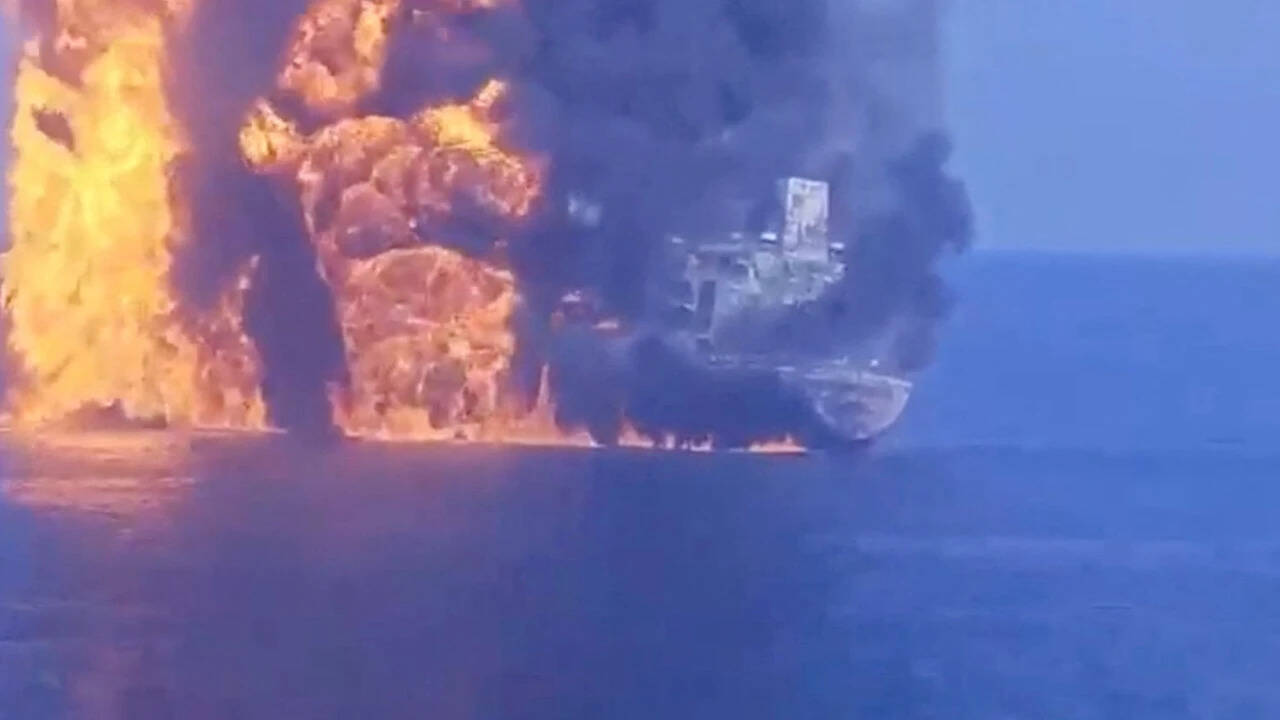
One strike might cripple a tanker. A second strike wrecks the rescue.
That simple, brutal logic sits behind the surge of double-tap attacks hitting commercial shipping in the Strait of Hormuz. If you run maritime operations, insure cargo, or trade energy out of the Persian Gulf, you can't treat a single hit as the end of a vessel's ordeal anymore. In October and November 2026, commercial shipping in the strait faced more than 50 recorded attacks—the heaviest two-month toll since US and Israeli strikes on Iran began on February 28, 2026. At least six ships were struck more than once during those two months, according to data from maritime security consultancy EOS Risk cited by the Financial Times.
Look closely at the map above. The waterway between Iran and the Arabian Peninsula is tight enough that every vessel has a predictable rhythm. When a ship takes damage, slow-moving tugs, firefighting vessels, and salvage crews have to converge on a known position. Hit the ship again—or hit the response—and you turn a manageable incident into a stalled hull, a burning cargo, or an environmental spill.
What Double Tapping Actually Means at Sea
In military jargon, a "double tap" usually refers to a second strike meant to catch responders or finish off a target. At sea in the Strait of Hormuz, analysts and maritime security advisers use the term for repeated strikes against the same commercial vessel over days or weeks.
Honestly, this isn't just about piling damage onto steel. It's about attrition and friction.
Take the Navig8 Messi, owned by Abu Dhabi National Oil Company (ADNOC). A maritime security adviser told the Financial Times that the tanker was believed to have been hit at least three times. Then look at Tara Gas, struck on two consecutive days in November and set ablaze after the second hit. Or the Chinese-owned crude tanker Gem No 2, which suffered repeated attacks in October and caused a major oil spill off the United Arab Emirates coast.
Why hit a ship twice when one strike already scares crews? Because a single strike doesn't always take a vessel permanently out of circulation. A damaged ship can sometimes limp toward port, get patched up, or be rescued. Repeat hits raise the odds of fire, structural failure, or disabling damage that ties up salvage assets and pushes operators to pull tonnage out of the Gulf.
Still, let's be fair about what's debatable. Some observers argue that lower overall traffic in parts of the waterway raises the statistical odds that remaining ships get hit more than once. Others see deliberate targeting meant to keep ships disabled and salvage teams off balance. Both explanations can be true at the same time—and when you're the master on the bridge, the motive matters less than the incoming threat.
The Numbers Behind a Contested Chokepoint
People love dramatic headlines claiming a chokepoint is "completely shut." Usually, reality at sea is messier than that.
Data from Lloyd's List published on November 26 and 27 showed more than 50 attacks on commercial vessels across October and November—with 35 attacks in October alone and at least 20 in November. Yet inbound transits into the Gulf still hit 237 in October, the highest monthly count since the conflict began. At the same time, maritime intelligence firm Kpler reported weekly transits dropping from 217 at the start of November to 147 by November 23, and Iran's Islamic Revolutionary Guard Corps (IRGC) claimed in late November that tankers were hitting sea mines along southern routes backed by the US military.
Before the war began on February 28, 2026, roughly 25% of global seaborne oil trade and 20% of global liquefied natural gas moved through the Strait of Hormuz, alongside up to 30% of internationally traded fertilizers.
Even when crude flows recover to roughly 82% of pre-war levels—including offshore transfers in the Gulf of Oman—the economics shift fast. Higher war-risk premiums, slower convoy or escort movements, and longer detours eat into margins across energy and agriculture. Chinese crude imports from the Gulf still accounted for more than a third of China's crude supplies in October, showing that buyers with leverage and specific routing keep pulling barrels out despite the danger.
Compliance Lists, Blockades, and Naval Friction
If you want to understand why ships are getting caught in a vise, look at the overlapping rulebooks now enforced by force.
Tehran has pushed its own registration and compliance system through the Persian Gulf Strait Authority, a body under US sanctions. According to maritime intelligence firm Windward, more than 260 vessels have been placed on Iran's non-compliance list, many only after they were attacked. Many of those listed ships tie back to Gulf oil companies or South Korean operator Sinokor.
Meanwhile, the US military has maintained heavy naval forces in the theater—including a constant presence of two aircraft carriers—escorting vessels along routes near the Omani coast while enforcing a naval blockade on Iranian ports that resumed in July after a summer pause. Since that blockade resumed, the US military has reported redirecting 158 merchant ships and disabling others that refused to comply, including the Pacific Archer.
Think about what that puts commercial crews through. One side warns that southern lanes are unsafe or mined and demands compliance with its authority. The other side enforces a port blockade and escorts traffic along its preferred corridors. Commercial mariners—who are civilians doing a grueling job—end up navigating political lines drawn in live ordnance. Tragically, the human cost keeps climbing, from early war casualties on vessels like Skylight and MKD Vyom to a Jordanian sailor's body found off the UAE coast in late November.
Common Mistakes Shipowners and Charterers Make Right Now
From watching how chokepoint crises play out, three mistakes keep costing companies money and lives:
- Assuming a quiet week means safety. A dip in attacks doesn't erase mines, drones, or missiles. Attack tempos spike in waves—October's 35 strikes proved how quickly risk can jump.
- Relying on stale AIS or static route assumptions. Transponder behavior, route advisories, and claimed mine incidents shift day by day. Treating yesterday's safe corridor as permanent is a fast way to get blindsided.
- Underestimating salvage and spill exposure. A strike isn't just hull plating and cargo value. Fire, oil spills near sensitive coastlines, and disabled ships create multi-week headaches that strain marine insurance and emergency response.
Practical Next Steps for Maritime and Supply Chain Teams
If your business has exposure to Persian Gulf shipping or Hormuz-linked commodities, tighten your playbook today:
- Cross-check every hull and charter against compliance and incident lists. Verify whether vessels, beneficial owners, or managers appear on Iranian non-compliance lists or have prior damage records before locking in charters.
- Pair Lloyd's List, Kpler, and Windward intelligence with naval advisories. Don't rely on a single feed. Track transit counts, port congestion, and mine or strike claims alongside official maritime security updates.
- Stress-test contracts for delays, re-routing, and war-risk costs. Review laytime, force majeure, off-hire clauses, and hull/cargo coverage so a second strike or a detour through the Gulf of Oman doesn't trigger an unbudgeted dispute.
- Build buffer stock for Hormuz-exposed inputs. If you rely on Middle Eastern crude, LNG, or fertilizers like urea and ammonia, map backup suppliers and alternate shipping routes before spot prices spike again.