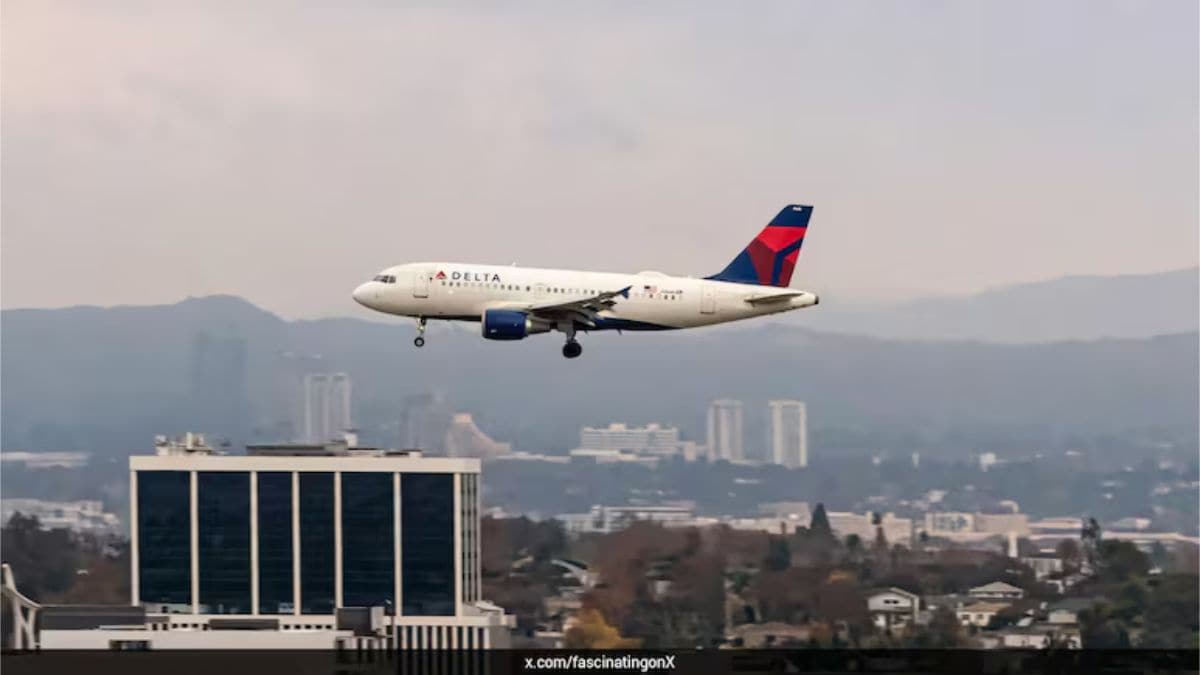
When a magnitude 5.0 earthquake shook Southern California around 9:30 a.m. Pacific Time on Saturday, November 28, 2026, live cameras at Los Angeles International Airport caught the moment the ground started rolling. Car alarms went off. Glass shattered inside terminals. And as Delta Air Lines Flight 1972 lined up for touchdown, air traffic control ordered the crew to pull up and go around.
FlightAware data shows Delta 1972 ended up delayed by one hour and 13 minutes. Honestly, a go-around sounds terrifying if you've never been on a plane when the nose pitches up right before the wheels hit concrete. Yet in aviation, a go-around is standard, disciplined safety work. You're not crashing or failing when you abort a landing. You're buying time while people on the ground make sure the runway isn't cracked, buckled, or cluttered with debris.
Competitor recaps often treat a dramatic clip like a Hollywood stunt. A plane climbs hard, a passenger screams in the cabin, a refinery flares up in the distance, and the story ends with a neat summary of how many aftershocks followed. That misses the real operational story. A moderate offshore shaker beneath Santa Monica Bay—centered roughly five kilometers southwest of Manhattan Beach at a depth of about 12 to 13 kilometers, according to the U.S. Geological Survey—exposes how aviation, emergency services, and seismic alerts interact in real time.
How a Los Angeles Airport Go-Around Works Under Seismic Stress
Pilots execute go-arounds every single day for routine reasons. Bad wind shear. A slow plane still clearing the runway ahead. A sudden shift in weather.
An earthquake adds a different wrinkle because the runway itself can change condition in seconds. Even if a magnitude 5.0 quake doesn't rip a mile-long trench across the pavement, shaking can rattle lighting fixtures, knock loose chunks of concrete or glass, or trigger an alert while tower staff and airport crews verify surface conditions. When air traffic control tells a crew to break off an approach, the pilots apply takeoff thrust, retract gear or adjust flaps according to company procedure, and climb back into the departure or missed-approach path.
That extra lap around the sky feels dramatic from a terminal livestream or a window seat. In reality, it's a built-in buffer. You get another look once initial checks happen, and the crew avoids committing to a landing before the surface is cleared.
Look at how a similar seismic moment played out in Anchorage, Alaska, during the 2018 magnitude 7.0 earthquake near Ted Stevens Anchorage International Airport. Controllers had to evacuate the tower building briefly during intense shaking before getting back to work. Even with modern automation and decision-support tools, human judgment and clear radio communication still anchor those split-second calls. You can't automate away the moment a controller looks at shaking glass and decides a plane shouldn't touch down just yet.
What the November 28 Quake Actually Did Across Southern California
Let's keep the scale straight. A magnitude 5.0 earthquake is strong enough to scare you in a high-rise or rattle dishes hard in Pasadena, roughly 27 miles northeast of the epicenter. It is not the kind of catastrophic rupture people picture when they think of the 1994 Northridge quake or 1906 San Francisco.
Still, plenty of real events unfolded across the Southland that morning:
- LAX terminal and walkway impacts: Broken terminal windows and loose ceiling tiles forced crews to block off part of a walkway in Terminal 7 after an aftershock, while some travelers ducked beneath tables as dust and tiles fell.
- Aftershock swarms: Dozens of aftershocks followed along the coast, including a magnitude 3.7 tremor within the first 45 minutes and a magnitude 4.5 jolt later on, keeping residents on edge as the sequence unfolded.
- Refinery safety flaring: A Chevron refinery in Southern California triggered automated safety flaring—controlled bursts of flame and smoke used to burn off excess gases safely during a process upset rather than a sign of an uncontrolled explosion.
- Citywide response: The Los Angeles Fire Department entered earthquake mode across more than 100 neighborhood stations to inspect critical infrastructure by land, air, and sea, reporting no major structural damage or injuries within city limits.
- Coastal precautions and daily life: Manhattan Beach officials closed the city pier temporarily as a precaution, no tsunami threat existed according to the National Tsunami Warning Center, and afternoon plans like the UCLA versus USC football game at the Rose Bowl went ahead after assessments.
Notice something important here. Not every weird event on a quake day is caused by the fault. A burst pipe at Universal Studios Hollywood's Revenge of the Mummy attraction flooded part of the lower lot later that afternoon, and fire officials indicated it was likely unrelated to the earthquake even while closing the flooded spot for repairs. When people's nerves are frayed, every loud noise or wet floor looks like seismic fallout.
Why ShakeAlert and Myths About Quakes Matter Right Now
One of the biggest takeaways from November 28 is how fast early warnings reach people compared to seismic waves traveling through rock. Seismologists with the Southern California Seismic Network and Caltech noted that ShakeAlert delivered phone alerts right around the time shaking arrived—and sometimes seconds ahead depending on your distance from the rupture—with an initial estimate near magnitude 5.1 before review settled on 5.0.
That's a big deal, though it isn't magic. ShakeAlert detects the fastest initial seismic energy and sends a warning before stronger shaking hits areas farther out. If you're right on top of the epicenter, the warning and the jolt arrive almost together.
Meanwhile, whenever a quake hits near the coast, myths pop up fast. Some folks wonder if warm ocean water, El Niño, or Kelvin waves trigger deep earthquakes. Seismologists push back on that cleanly: tectonic faults rupture miles underground in solid rock, completely divorced from ocean surface temperatures or atmospheric weather patterns.
Another misconception is that aftershocks are just tiny leftovers that can't hurt anything. In truth, aftershocks are normal adjustments along and near the fault zone. They can last for days, weeks, or even months, and occasionally a stronger shock can follow. Treating every rumble as "just a little shake" is how people get careless around weakened glass or top-heavy shelves.
Practical Next Steps After a Quake or Travel Disruption
If you're in Southern California right now—or flying into LAX or another seismically active hub soon—don't rely on adrenaline or viral clips to guide you. Take a few concrete steps today:
- Practice Drop, Cover, and Hold On for aftershocks. Whenever another tremor hits, drop to your hands and knees, cover your head and neck under sturdy furniture or against an interior wall away from glass, and hold on until shaking stops. Guidance from the California Seismic Safety Commission stresses staying put rather than running outside during shaking.
- Check buildings, glass, and utilities carefully. Watch for broken glass, falling ceiling panels, or shifted items before opening cabinets. If you smell gas, hear a hissing sound, or spot downed power lines, leave the area and report hazards to authorities instead of guessing.
- Keep phone calls brief and verify alerts. Use text or data when possible so emergency lines stay clear, and check official agency updates rather than unverified social media claims about damage or rumors.
- Build a buffer into your flight plans. If a quake hits near your departure or arrival airport, expect delays from runway sweeps, tower checks, or go-arounds. Pack essential medications and chargers in your carry-on—not checked bags—so an extra hour or two on the tarmac or in the air doesn't wreck your day.