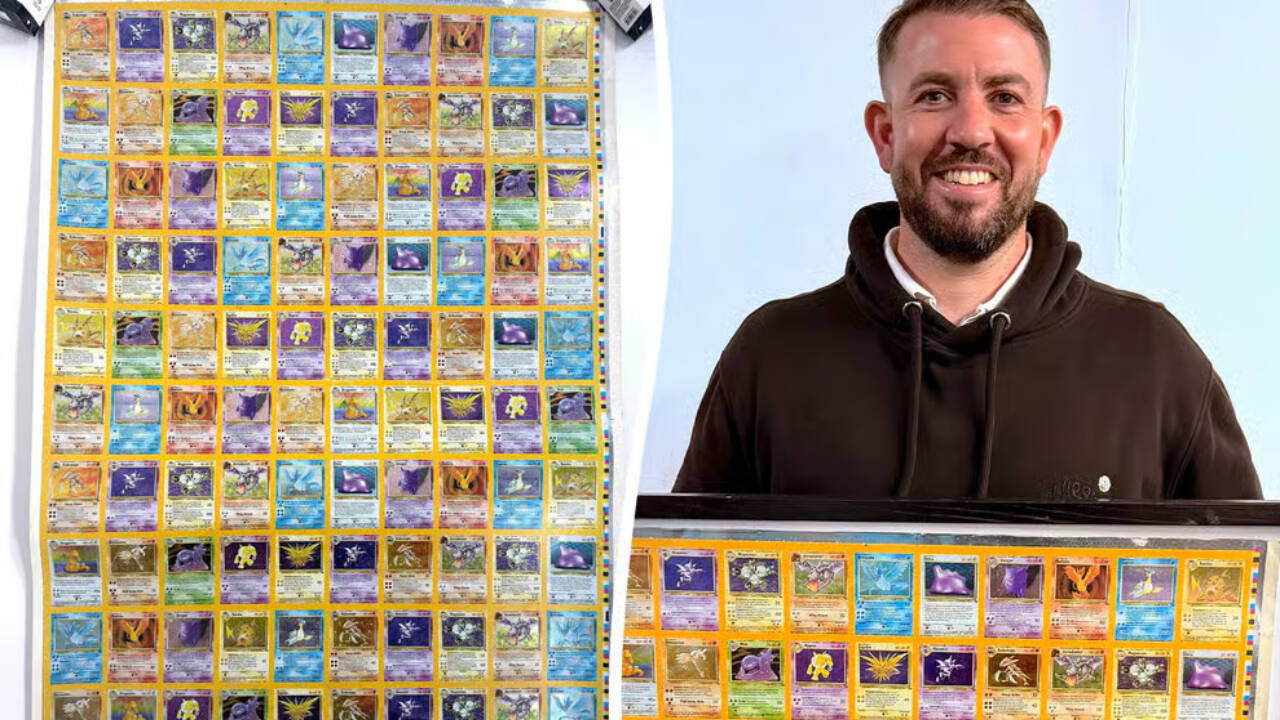
Most headlines about that rare 1999 Pokémon card sheet found in a Surrey attic make it sound like a random factory mistake worth a quick £10,000. It isn't.
When a rolled-up sheet of 110 uncut holographic cards from the 1999 Fossil expansion surfaced in an English loft ahead of its November 29, 2026 sale at Cullens of Surrey, mainstream outlets treated it like just another lucky childhood binder find. They missed the actual story. That sheet isn't a misprint or a rogue factory scrap—it's a documented artifact from a specific 1999 American retail promotion by KB Toys, printed by Wizards of the Coast.
If you're trying to figure out why a damaged, rolled-up poster of uncut cardboard carries a £6,000 to £10,000 estimate, or what to do if you think you have something similar gathering dust upstairs, you need to look past the hype.
Why This 1999 Pokémon Card Sheet Exists in the First Place
Collectors know individual Fossil holos like Dragonite, Gengar, and Articuno from booster packs. Seeing 110 of them locked together in an uncut 11-by-10 grid feels jarring.
Here's the provenance most brief news reports gloss over. The Surrey seller's older brother worked at KB Toys—the now-defunct US mall toy chain—during the late 1990s and early 2000s. In late 1999, right as Pokémania hit fever pitch in North America, Wizards of the Coast produced uncut Fossil holofoil sheets specifically for KB Toys promotional sweepstakes and store giveaways.
They weren't sold in packs. They were promotional prizes, roughly 26.5 by 39.5 inches in size, printed on the exact same holofoil stock used for retail booster boxes before the industrial die-cutters sliced them into individual 2.5-by-3.5-inch cards.
That single detail changes everything about how serious buyers evaluate the piece:
- It isn't an "error" item. Factory back-door sheets often lack proper ink layers or alignment marks. KB Toys sheets were legitimate promotional giveaways.
- It features 15 distinct Fossil holos. Because an uncut press sheet holds 110 cards and the English Fossil set only had 15 holographic rares, characters like Gengar, Dragonite, Raichu, and Lapras repeat multiple times across the grid.
- Cross-Atlantic travel explains the mystery. Seeing a US-exclusive KB Toys prize turn up in a loft in Wallington, Surrey sounds bizarre until you trace the family connection back to an American retail job.
Honestly, provenance is half the battle in high-end trading card auctions. Without that direct link to a 1990s toy store employee, an auction house has to work ten times harder to prove a sheet wasn't quietly walked out of a printing facility without authorization.
The Brutal Truth About Condition and the £10,000 Estimate
Let's talk money, because headline numbers always distort reality. Cullens of Surrey put a £6,000 to £10,000 guide price on the sheet for their November 29 live webcast auction (where advance online bidding opened back on November 20).
Why isn't it estimated at £30,000?
Because rolling up holographic cardstock for nearly three decades destroys its surface. According to the auction house's condition notes, this specific sheet has scratches, surface residue, creasing, and a tear on the reverse side.
In the Pokémon market, condition isn't a minor detail—it's the entire ballgame. Clean, flat, professionally framed examples of this exact 1999 KB Toys Fossil holofoil sheet have surfaced on major US platforms like Goldin Auctions—where a graded/authenticated example achieved $7,930 (including buyer's premium) in early 2025—and high-end sellers routinely list pristine framed sheets near the $30,000 mark.
When you compare those benchmarks against the Surrey discovery, the £6,000 to £10,000 estimate makes complete sense. Buyers are paying for the sheer rarity of an intact 110-card holo sheet, while aggressively discounting for the creases and back tear caused by decades in a cardboard tube or loft corner.
Why You Should Never Cut an Uncut Sheet
Every time one of these sheets hits the news, someone in the comments asks the same question: "Couldn't you just pay a professional printer to slice this into 110 cards and get them graded by PSA?"
Don't even think about it.
Third-party grading companies like PSA, CGC, and Beckett reject hand-cut or post-factory cut cards from sheets like this—or worse, label them "Authentic Altered," which tanks their value. Even if you somehow slipped one past a grader, the raw value of 110 individual Unlimited Fossil holos in played or creased condition wouldn't come close to £10,000.
An uncut sheet is a singular display artifact. The moment you take a blade to it, you destroy the very thing collectors are bidding on.
What Else Is Crossing the Block in Surrey
If you look at the broader catalog for Cullens of Surrey's November 29 Toy, Model and Trading Card Sale—founder Derrick Hunt's largest dedicated collectibles webcast auction to date—you can see how traditional UK auction houses are adapting to modern nerd nostalgia.
Alongside the 110-card sheet, the sale features several other heavy hitters that show where collector money is actually flowing right now:
- Complete 1st Edition Fossil Set: A near-mint 62-card master set carrying an estimate of up to £2,500. Notice the contrast here—a complete, pack-pulled 1st Edition set is estimated at roughly a quarter of the price of a damaged uncut Unlimited promotional sheet. Rarity of format beats standard set completion every time.
- Single Vintage Snorlax Card: Estimated at up to £2,000 on its own, proving how fiercely top-grade individual 1999 holos still perform when condition holds up.
- 2000 Tom Brady Rookie Card: Graded Mint 9 and numbered out of just 300 copies produced, carrying an estimate up to £3,000. Even in a UK auction house better known for Dinky diecast models and Steiff bears, blue-chip American sports cards are drawing international online bidders.
What You Should Do If You Find Old Pokémon Cards in Your Attic
Most people who read about a £10,000 attic find rush upstairs, grab a stack of dog-eared 1999 commons, and expect to pay off their mortgage. Usually, they're disappointed. Ninety-nine percent of childhood binders are worth £30 to £150.
Still, real sleepers do sit in lofts across the UK and US—especially if a family member worked in retail, printing, or toy distribution during the late 1990s. If you actually uncover vintage cards or promotional material, follow these exact steps before doing anything else:
- Stop handling bare surfaces immediately. Oils from your fingers permanently etch into 1999 Wizards of the Coast holofoil. If you find a rolled sheet, do not force it flat against its curl—you will snap the cardstock fibers and create permanent silvering creases. Keep it dry, away from sunlight, and at room temperature.
- Check the bottom right corner and set symbols. Before calling an auctioneer, separate holographic cards from non-holos. Look for a "1st Edition" stamp on the left side of the artwork frame, or a missing shadow border around the art box on Base Set cards ("Shadowless"). Those tiny printing differences separate a £15 card from a £1,500 card.
- Never clean cards with liquids or wipes. Attempting to wipe off "residue" with water, alcohol, or microfiber cloths almost always scratches the soft foil layer and flags the card as altered. Leave any surface grime untouched for specialists to assess.
- Get three independent valuations before consigning. Compare local specialist auction houses (like Cullens of Surrey) against major international trading card platforms (like Goldin or Heritage Auctions). Ask specifically about seller's commission rates, insurance during transit, and whether the buyer's premium eats into your net payout.
Take ten minutes this weekend to check the forgotten boxes in your loft—not because every binder is a goldmine, but because the rarest pieces of 1990s pop culture rarely look like much until an expert unrolls them.