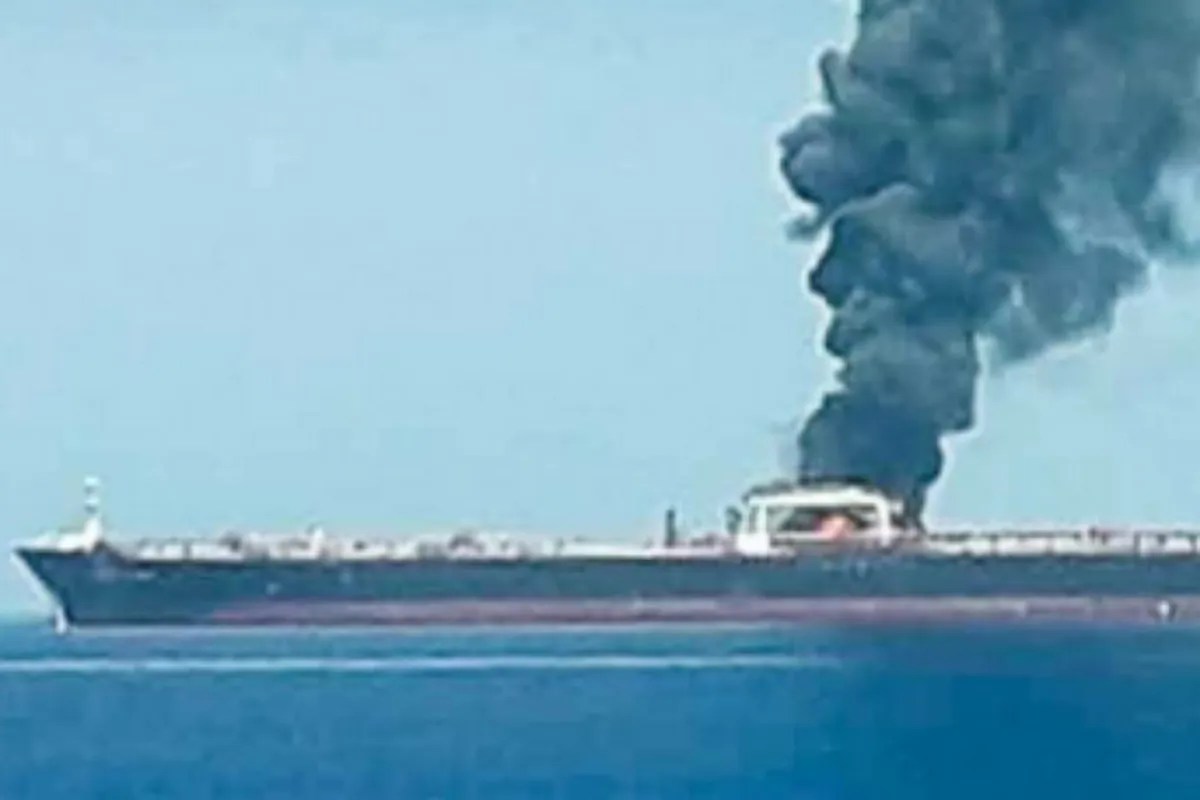
The world economy runs on a very narrow pipeline, and right now, that pipeline is bleeding fire. When three oil tankers hit naval mines in the Strait of Hormuz recently, it wasn't just a localized accident. It was a loud, terrifying wake-up call for global energy markets.
You see, everyone talks about oil prices fluctuating on Wall Street, but nobody likes to talk about the physical choke points where energy actually moves. The Strait of Hormuz is the most critical maritime oil bottleneck on planet Earth. When security breaks down here, every single gas station from Tokyo to Toronto feels the shockwave immediately.
Let's look at what actually happened, why ships are taking desperate risks, and what this means for the future of international shipping.
The Choke Point That Controls the World
If you haven't looked at a map of the Middle East recently, pull one up. The Strait of Hormuz connects the Persian Gulf with the Gulf of Oman and the Arabian Sea. Roughly a fifth of the world's petroleum consumption passes through this narrow strip of water every single day.
When regional tensions spike, this water turns into a high-stakes chessboard. Recently, the Islamic Revolutionary Guard Corps confirmed that three separate oil tankers suffered massive explosions and caught fire after striking naval mines in the area. These weren't random collisions. They were the direct result of vessels trying to bypass restrictions and sneak through closed waters.
Tanker operators are caught in an impossible squeeze. Do they stay docked and lose millions of dollars a day, or do they turn off their transponders, sneak through restricted channels, and risk hitting underwater ordnance? Many choose the gamble. And lately, that gamble is costing them their ships.
Why Tankers Are Going Dark
Modern commercial shipping relies heavily on transparency. AIS or Automatic Identification System transponders let authorities, port operators, and insurers track vessels in real-time. But in a conflict zone, turning on your transponder can make you a target.
To evade naval patrols and restrictions imposed in the Strait of Hormuz, crews have been switching off their navigation systems entirely. They run blind in the dark, hoping to slip past patrols unnoticed.
The strategy backfires instantly when underwater hazards come into play. Naval mines don't care about corporate deadlines or freight contracts. Once deployed to secure restricted waters, they sit silently beneath the surface. When a darkened tanker drifts off the authorized shipping lane, the result is catastrophic. Engine rooms blow out, hulls fracture, and raging fires break out miles from the nearest coast guard.
The Blame Game and Environmental Fallout
Whenever a tanker burns in the Persian Gulf, the fallout goes far beyond the immediate financial loss for shipping corporations.
Authorities point the finger squarely at vessel operators for violating navigation bans and taking reckless shortcuts. From a regulatory standpoint, if you ignore direct warnings and sail into a mined zone with your transponders off, insurers aren't going to bail you out.
At the same time, the environmental toll is staggering. Burning crude oil and leaking bunker fuel choke marine ecosystems in one of the hottest, most fragile marine environments on Earth. Cleanup operations in an active conflict zone are nearly impossible. Nobody wants to send salvage crews into waters where naval mines are actively claiming targets.
What This Means for Global Energy Security
You might think this is just a regional dispute between local naval forces and stubborn commercial captains, but that is a dangerous misunderstanding.
Energy markets are psychological as much as they are physical. When tankers start catching fire in the Strait of Hormuz, shipping insurance premiums skyrocket overnight. Tanker owners refuse to charter vessels to the region without massive hazard pay. Those costs roll downhill straight to the consumer.
Refineries face supply crunches. Manufacturing plants worry about fuel inputs. Suddenly, an incident thousands of miles away dictates how much you pay to heat your home or drive to work.
The hard truth is that maritime security in the Middle East is more fragile than ever. As long as regional standoffs persist, commercial shipping lanes will remain a minefield—literally and figuratively. Navigating these waters requires more than luck and a turned-off transponder. It requires a complete rethink of how global supply chains handle geopolitical flashpoints.
Stop pretending these waterways are safe just because the global economy demands oil. The ocean remembers, and the mines are still in the water.