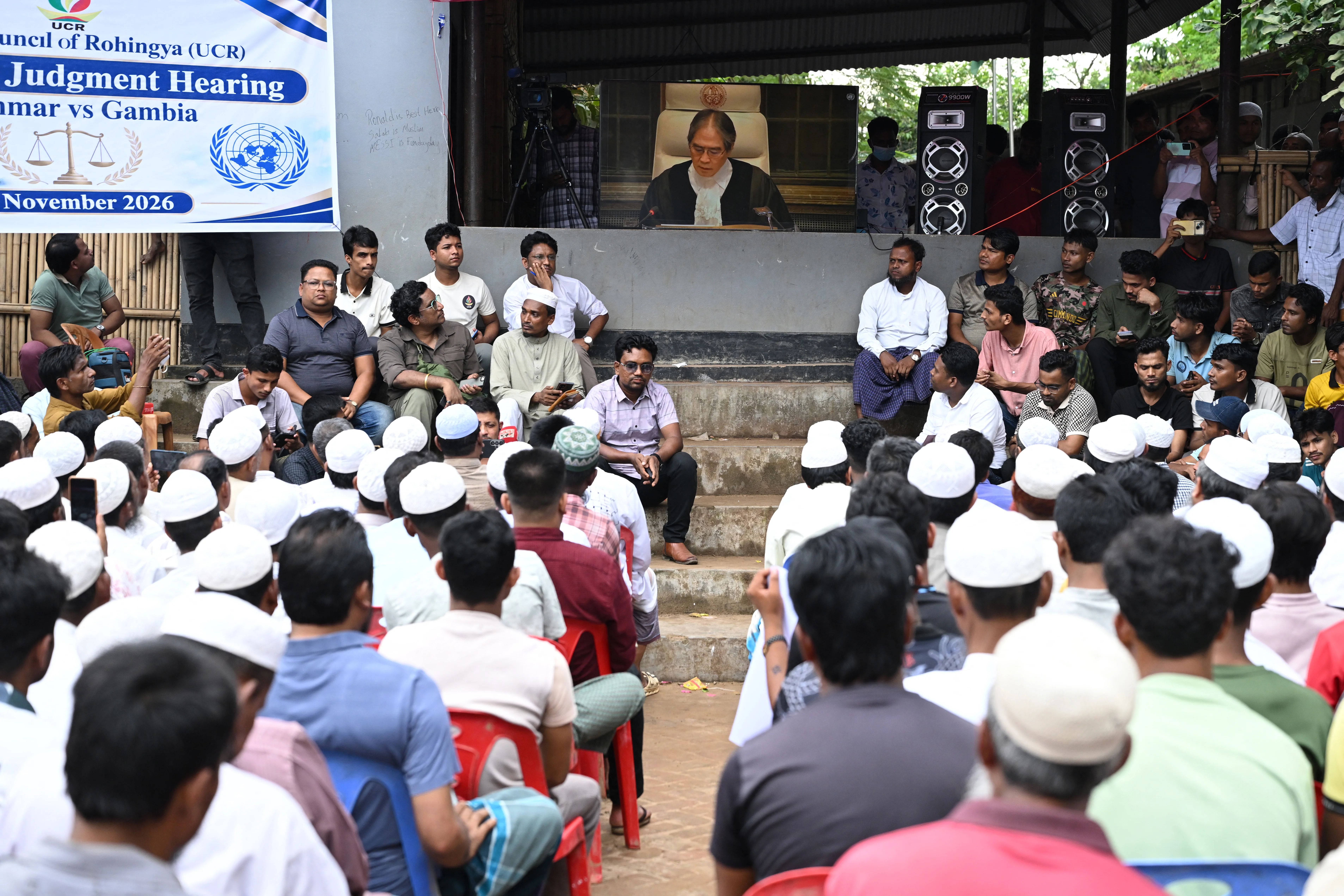
Today, the International Court of Justice did something it has never done before. It ruled that a state committed genocide under the 1948 Genocide Convention.
In a landmark judgment delivered on November 19, 2026, in The Gambia v. Myanmar, the world's top court found that Myanmar violated the convention by committing genocide against the Rohingya in northern Rakhine State. Nine judges backed the core genocide finding while six dissented, with all fifteen judges writing separately to explain their reasoning. For Rohingya survivors who spent years fighting for basic recognition, let alone legal accountability, this moment hits hard.
Honestly, people who treat international court rulings like dry paper exercises miss what just happened in The Hague. For decades, Myanmar's military operated behind a wall of impunity, treating Rohingya communities as outsiders in their own homeland and shrugging off international criticism. Now there's a binding legal label attached to those atrocities, and it comes with real obligations on paper. Still, a ruling on a screen in a refugee camp in Cox's Bazar doesn't magically open a safe road home tomorrow.
What the ICJ Actually Ruled on the Rohingya Genocide
Let's cut through the noise and look at what the court actually decided. The case began when The Gambia, backed by the Organization of Islamic Cooperation, brought proceedings against Myanmar in November 2019 under Article IX of the Genocide Convention. Unlike a criminal trial that puts individual commanders in the dock, this case was about state responsibility.
As UN News reported following the three-hour judgment read by ICJ President Yuji Iwasawa, the court found Myanmar responsible for genocide against the ethnic Rohingya and ruled that the country failed to prevent and punish the crime. That distinction matters. Even when governments try to wave away military operations as counterinsurgency or security sweeps, the court looked at the whole pattern of conduct and said the cruelty went way past any legitimate security claim.
Crucially, the court addressed the hardest legal hurdle in genocide law: specific intent (dolus specialis), meaning the intent to destroy, in whole or in part, a protected group as such. Under established ICJ precedent from earlier cases like Bosnia and Serbia, inferring genocidal intent requires showing that it's the only reasonable inference that can be drawn from the evidence. According to legal analysis summarized by Just Security, the court concluded that genocidal intent was indeed the only reasonable inference supported by the record, pointing to the sheer brutality of the clearance operations, attacks on people fleeing toward Bangladesh, widespread violence against young children and women, and the systematic destruction of Rohingya villages later replaced by non-Rohingya inhabitants.
The court also didn't stop at the main finding. It ruled that Myanmar breached its duty to enact domestic legislation giving effect to the convention, failed to punish genocide, and violated earlier court orders to preserve evidence. Moving forward, the court ordered Myanmar to take effective steps to investigate suspects, offer guarantees of non-repetition, provide restitution—or compensation where restitution isn't possible—and file a report with the court within two years.
Why This Ruling Matters Way Beyond Myanmar
If you think this verdict only matters to people tracking Southeast Asian politics, think again. You're looking at a precedent that shifts how states use the Genocide Convention when mass atrocities unfold far from their own borders.
The Gambia had no direct bilateral injury from the abuses in Rakhine State. By stepping forward under the Genocide Convention, it showed that any state party can invoke collective legal accountability when a protected group faces destruction. Eleven states had intervened in the case, showing how much diplomatic and legal energy governments have put into testing whether international law still has teeth.
Legal scholars and human rights observers are also watching how the reasoning on intent and evidence lands across other high-stakes disputes. As The Guardian noted in its coverage, commentators are already weighing what the court's approach to genocidal intent, military operations, and investigative evidence means for broader global accountability debates—including the separate genocide proceedings involving Israel and Gaza.
At the same time, let's be straight about what this ruling does not do. It doesn't hand down individual prison sentences. It doesn't force an immediate physical return of refugees overnight. And as the American Society of International Law pointed out in its summary of the judgment, the court did not order citizenship for all Rohingya, while leaving exact compensation figures for a later stage. Calling things what they are is essential, yet enforcement remains the hardest part of international justice.
Common Misconceptions About World Court Verdicts
Whenever a big international ruling breaks, the same myths pop up right away. Clearing them up saves a lot of confusion.
- Myth: The ICJ put Myanmar's generals on trial. Not quite. The ICJ settles disputes between states over treaty obligations. Individual criminal accountability belongs to other venues, such as the International Criminal Court or national courts exercising universal jurisdiction—like the 2025 arrest warrants issued by an Argentine court under universal jurisdiction involving figures including Min Aung Hlaing, as noted by Amnesty International.
- Myth: A guilty verdict means compliance happens automatically. That's wishful thinking. States can stall, ignore orders, or dispute legitimacy. Pressure from neighboring countries, donors, and UN bodies still determines whether words on a judgment turn into real protection.
- Myth: Rakhine State is suddenly calm and safe now. Far from it. Reality on the ground in Myanmar is messy and brutal. Human Rights Watch has highlighted ongoing abuses in Rakhine State, including severe repression and violations by the Arakan Army, which controls much of the area, alongside continued displacement and humanitarian strain in Bangladesh.
- Myth: Legal debates over intent are just lawyers splitting hairs. Actually, that threshold is the whole ballgame. Proving genocidal intent is notoriously tough in international law, which is why so few situations have ever crossed that line.
What Happens Next for Survivors and Policymakers
A historic judgment is a starting gun for harder work, not the finish line. Two years might sound like a long time until Myanmar's reporting deadline arrives, and for families living in cramped shelters or facing fresh violence, waiting is exhausting.
If you follow human rights, policy, or humanitarian work—or simply want to push for real follow-through rather than performative outrage—here are concrete steps that actually matter right now:
- Track the two-year compliance clock and push for concrete benchmarks. Don't let diplomatic attention fade after week one. Watch how governments respond to Myanmar's obligations on investigations, evidence preservation, restitution, and the upcoming two-year report to the court.
- Support frontline humanitarian and legal documentation groups. Refugees in Bangladesh and displaced people inside Myanmar still need basic aid, education, and protection, while investigators need sustained funding to preserve testimonies and records for future prosecutions.
- Hold every armed actor accountable on the ground. Justice for the Rohingya can't be selective. Advocates and policymakers need to press both the Myanmar military and armed groups like the Arakan Army to stop abuses, protect civilians, and allow unhindered aid access.
- Insist on safe, voluntary, and dignified conditions before any push for return. Returning people to a war zone or a system of apartheid isn't a solution—it's another trap. Real progress means legal rights, security guarantees, and genuine local conditions that survivors themselves can trust.