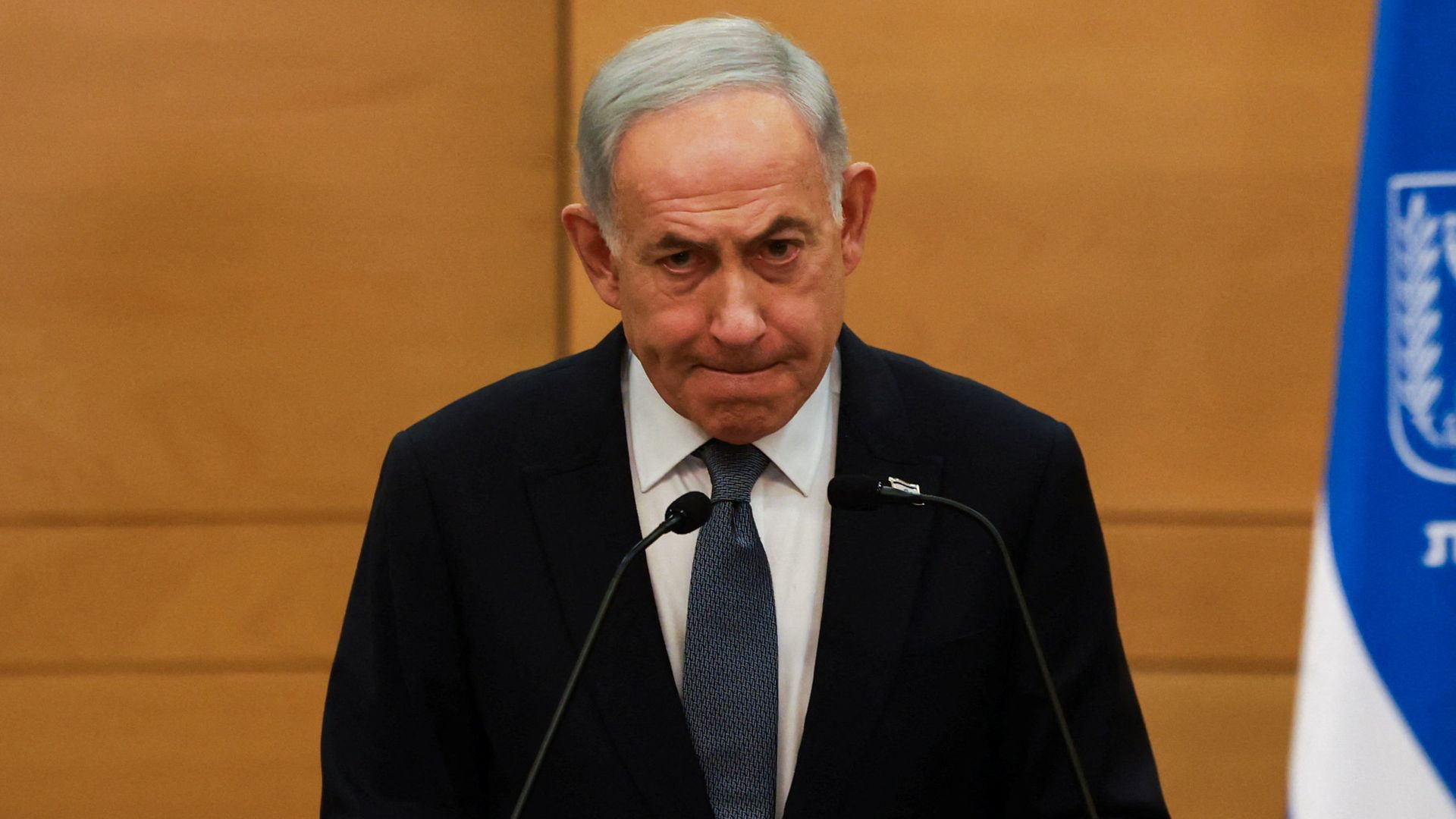
Benjamin Netanyahu just made an offer that shocked half of Jerusalem and made the other half suspicious. Facing a ticking coalition clock after Israel's October 27 election, the longtime prime minister said he's willing to step aside first in a rotation deal—letting his main rival, Gadi Eisenkot, take the top job while Netanyahu serves initially as alternate prime minister.
Let's be honest about what that really means. A leader who has fought tooth and nail to stay in power doesn't hand over the prime minister's chair out of pure charity. He does it when the alternative looks worse.
For anyone trying to make sense of Israeli politics right now, the move boils down to survival math. Following the inconclusive vote on October 27, President Isaac Herzog tapped Eisenkot—leader of the Yashar party and a former military chief of staff—to try to build a government. Likud finished as the largest single party with 27 seats, ahead of Yashar's 21 seats, yet neither side had a clean, easy path to a 61-seat Knesset majority on its own. With Eisenkot's initial mandate running toward its December 6 deadline and opposition parties gathering momentum, Netanyahu threw a sudden lifeline—and a massive headache—into his rival's lap.
Why a Unity Government Offer Changes the Math
At first glance, offering to go second sounds like a surrender. When Netanyahu announced on Saturday, November 28, that he would set aside Likud's usual rule that the biggest party leads first, supporters framed it as statesmanship against what Netanyahu called existential threats.
Critics saw a trap. If Eisenkot takes Netanyahu up on a broad unity deal with Likud, he risks alienating voters and partners who built their entire campaign around pushing Netanyahu out. If Eisenkot rejects it outright, Netanyahu can accuse him of refusing national unity and gambling on a fragile coalition.
That's classic Netanyahu. Whenever he's cornered, he tries to reframe the fight so his opponents have to argue over how to handle him rather than simply removing him. And it worked fast enough to put a face-to-face meeting on the calendar for Sunday morning, November 29, at the Dan Accadia Hotel in Herzliya.
What's Actually Driving Netanyahu Right Now
You can't read this offer in a vacuum. A few major pressures converged right before the weekend announcement.
First, Eisenkot was actually closing in on coalition pieces. Reports from late November noted he had signed deals with The Democrats (8 seats) and Yisrael Beiteinu (7 seats), while pushing to wrap up agreements before early December. Once an opposition bloc builds real momentum, holding out can turn into watching the door close behind you.
Second, Netanyahu's legal and political terrain shifted dramatically in late November. Judges in Israel recommended dropping key charges in a major corruption case against Netanyahu—news that gave his camp a jolt of energy even as his broader coalition options stayed tight. Having a little breathing room in court doesn't automatically hand you 61 Knesset seats, though. It just gives you a reason to fight for a seat at the table rather than exit stage left.
Third, there's the question of time. Eisenkot's 28-day mandate expires on December 6, with a possible one-time 14-day extension if President Herzog grants it. Either way, the clock is loud.
The Fault Lines Inside Both Blocs
Watching coalition horse-trading from the outside, it's easy to assume politicians can just split cabinet ministries and call it a day. Israel doesn't work like that. Every coalition deal comes loaded with ideological landmines.
- The draft and yeshiva exemptions: Ultra-Orthodox parties like United Torah Judaism (7 seats) and Shas (6 seats) have long pressed for military draft exemptions for yeshiva students, while Eisenkot has emphasized national service rules and has faced sharp scrutiny over any compromise on exemptions.
- Arab parties and minority support: Netanyahu has warned against a government reliant on Arab parties, raising alarms about policies affecting Galilee, the Negev, or security decisions. Meanwhile, parties like Ra'am (8 seats) and The Joint List (11 seats) represent real parliamentary weight that neither side can simply wish away.
- Trust—or the lack of it: Rotation agreements in Israeli politics have a mixed track record. Opponents remember past political maneuvers and wonder whether a second turn in a rotation ever arrives cleanly or gets blown up along the way. Former Prime Minister Ehud Barak immediately mocked the rotation idea online, comparing Netanyahu's late-hour generosity to past political brinkmanship.
Other opposition figures pushed back just as hard. Democrats leader Yair Golan dismissed the offer as a political stunt and urged leaders to honor the election outcome rather than rescue Netanyahu's standing.
Common Mistakes People Make Reading Coalition Moves
When big headlines hit the Middle East, casual observers tend to fall into a few predictable traps.
One mistake is treating a unity government proposal as a done deal. In Israeli coalition politics, announcing talks or floating a rotation is often an opening bid designed to test rivals' unity, not a signed contract. A deal only matters once policy lines, cabinet vetoes, and rotation mechanics are actually written down.
Another mistake is ignoring the difference between winning a plurality and commanding a majority. Likud winning 27 seats and 20.42% of the vote is serious weight, and Yashar winning 21 seats and 15.98% is a strong showing for Eisenkot's party. Neither number gets you to 61 alone. In a fragmented parliament where Beyachad won 12 seats, The Joint List 11, Ra'am 8, The Democrats 8, Yisrael Beiteinu 7, Otzma Yehudit 7, United Torah Judaism 7, Shas 6, and the Religious Zionist Party 6, arithmetic rules everything.
People also sometimes assume that because two leaders agree to meet—like Netanyahu and Eisenkot agreeing to talk in Herzliya—their core disagreements just melted away. Politicians meet to probe for weakness, buy time, or avoid looking unreasonable in front of voters. Sometimes they strike a deal. Sometimes they just leave a paper trail showing why talks failed.
What to Watch Next
If you're following how this plays out over the next week or two, keep your eye on a few concrete signals rather than political theater.
- Watch what comes out of Herzliya: Look past the photo-op and see whether Eisenkot's written policy proposals get real answers or stall out over war investigations, judicial issues, and military service.
- Track the December 6 deadline: Pay attention to whether Eisenkot pushes ahead toward swearing in a government or asks President Herzog for a 14-day extension.
- Check who stays locked in: Watch Yisrael Beiteinu, The Democrats, and Beyachad to see if Netanyahu's rotation offer cracks anyone's resolve or actually hardens the opposition's resolve to move forward without him.
- Follow official Knesset filings: Coalition agreements aren't real until they're signed and submitted to the Knesset—everything before that is leverage.
For reliable coverage of the official vote tallies and coalition developments, check Israel's Central Elections Committee alongside major outlets like Reuters and The Times of Israel.
Start by checking the exact seat math and reading the statements from both Likud and Yashar side by side—you'll spot who actually has leverage the moment you stop taking either side's press release at face value.