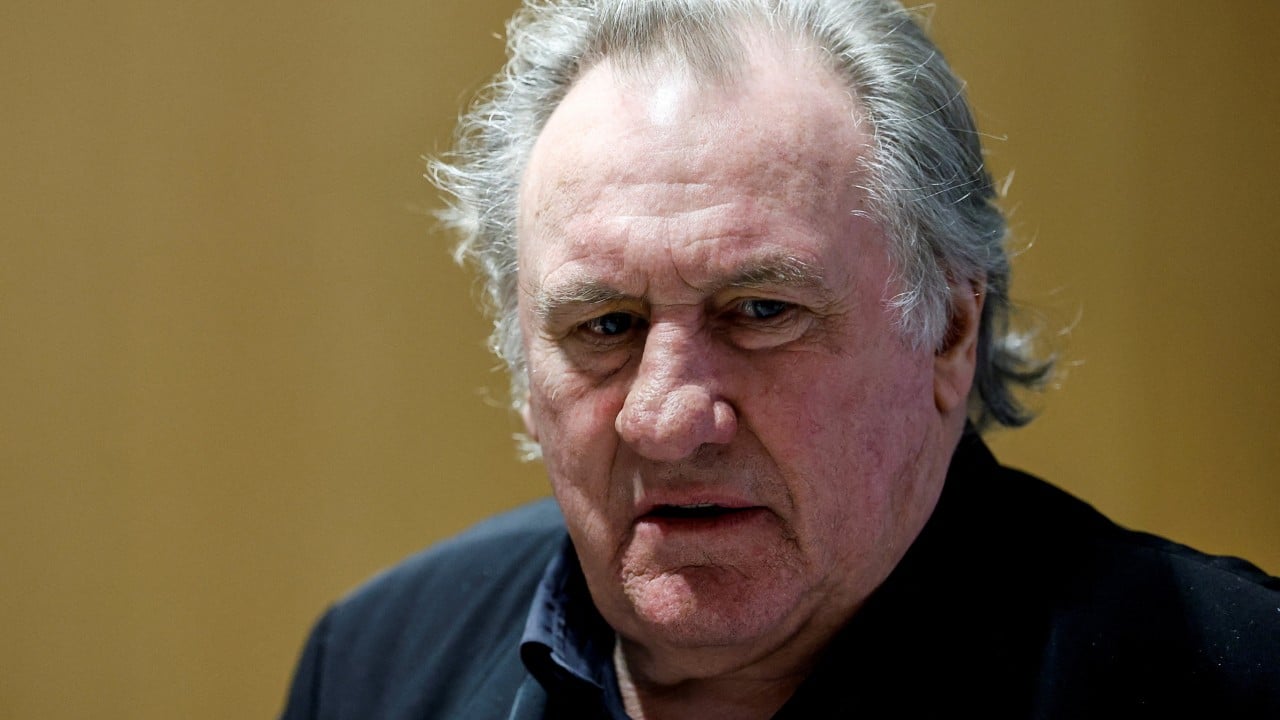
Gérard Depardieu will stand trial over allegations that he raped actress Charlotte Arnould at his Paris home in August 2018 after the Paris Court of Appeal rejected his bid to halt the case on November 26, 2026.
That ruling matters far more than a routine procedural update. For decades, Depardieu was treated as a untouchable giant of French film, a man whose sheer screen presence and box-office weight seemed to insulate him from normal rules. Now, at age 77, he faces a criminal trial that could carry a prison sentence of 15 to 20 years if convicted. Notice the nuance right away too. The appeals court narrowed the scope of the case, upholding the trial order around the alleged August 7, 2018 incident while dismissing a second allegation tied to August 13 over insufficient evidence. A trial order is not a verdict of guilt, yet it ends years of legal maneuvering aimed at stopping the case before a courtroom ever hears it.
People searching for this news usually want three concrete answers. First, what did the Paris appeals court actually decide? Second, what legal argument is at the center of the case? Third, how does this connect to his other legal troubles? Let's break down each piece without hype or guesswork.
What the Paris Appeals Court Actually Decided
Courts move slowly in high-profile French investigations, and the timeline here shows how long this dispute has dragged on. Charlotte Arnould, who was 22 at the time, first accused Depardieu in 2018 after visiting his Paris residence to ask for acting advice from an old family friend. An investigating judge ordered the case sent to a departmental criminal court in August 2025. Depardieu's lawyers appealed that decision, trying to block the trial altogether.
On November 26, 2026, the Paris Court of Appeal rejected that bid to stop the prosecution. Still, the court drew a sharp line between the two dates Arnould raised. It kept the alleged August 7, 2018 incident on track for trial and dropped the August 13 allegation due to insufficient evidence.
That distinction is huge for anyone following the case closely. In French criminal procedure, pre-trial appeals chambers scrutinize whether the investigative record supports sending specific accusations before a trial court. Dropping one date while confirming another shows the judges weighed each allegation separately rather than rubber-stamping everything or throwing out the whole file. And once again, sending a defendant to trial means the evidence crossed the threshold required for a hearing; guilt or innocence remains for the trial court to decide.
Why Moral Coercion Sits at the Heart of the Case
If you look closely at legal reporting on this case, one phrase keeps popping up: moral coercion. Honestly, a lot of casual readers skim right past it, even though it explains why the defense and the indictment clash so sharply.
Under French criminal law, rape is defined around non-consensual sexual penetration committed through violence, coercion, threat, or surprise. Coercion does not have to mean physical blows or an explicit threat with a weapon. It can also be moral coercion, where a power imbalance, shock, fear, or psychological pressure prevents a person from freely consenting or resisting.
According to reporting on the indictment partly upheld by the court, the order points to moral coercion stemming from a state of shock that prevented Arnould from protesting and fleeing. Depardieu has consistently denied wrongdoing in this case. His defense team argued there was no evidence of sexual penetration and denied any criminal intent on his part.
Think about how different those two narratives are. One side frames the encounter through power, shock, and inability to resist; the other side says the legal elements of the crime simply aren't there. That clash is why pre-trial appeals often take months or years—and why a full trial is where witness accounts, medical and investigative records, and legal definitions get tested head-on.
How This Connects to His 2021 Film Set Conviction
You can't really understand the weight of this November 26 ruling without looking at what happened just days earlier. Earlier in November 2026, Depardieu dropped his appeal against an earlier conviction for sexually assaulting two women—a set decorator and an assistant—during the September 2021 filming of Les Volets verts (The Green Shutters).
That earlier case had resulted in an 18-month suspended prison sentence in May 2025, along with an order placing his name on France's national sex offender database. When he abandoned that appeal in mid-November 2026, the suspended sentence stood, and he issued a written statement acknowledging he had been found guilty, accepting the sentence, and offering apologies to those who may have suffered. In that statement, he wrote that he had long hidden behind provocation and crude humor on film sets and believed his words and some actions carried no consequences.
That admission changed the atmosphere around him overnight. For years, defenders of Depardieu leaned heavily on his status as a larger-than-life artist—someone whose rough edges were supposedly part of an older, unfiltered French tradition. Once he dropped his appeal in the Les Volets verts case and admitted hiding behind crude behavior, that "untouchable" aura cracked even further.
At the same time, it's important not to confuse the two cases. The Les Volets verts conviction involved sexual assault on a film set in 2021 and is now settled following his withdrawn appeal. The Charlotte Arnould case involves an alleged rape at a Paris home in 2018 and is moving toward trial. Each case rests on its own facts and legal standard.
What This Means for French Cinema and Public Reckoning
For decades, Depardieu stood near the center of French cultural export, earning global recognition for films like Cyrano de Bergerac and Green Card while appearing in over a hundred productions across his career. Watching a figure of that scale face a potential rape trial forces an uncomfortable reckoning across an entire industry.
In French film and media, debates over power, silence, and accountability have intensified steadily over the past several years, from parliamentary inquiries into abuse in the arts to high-profile courtrooms. Critics argue that big stars and directors were too often shielded because their films brought prestige and money. Defenders of traditional due process push back against treating every accusation as already proven before a verdict, warning that public outrage shouldn't replace careful legal proof.
Both concerns can be true at once. A society can insist that serious allegations get a full, fair courtroom hearing while also recognizing that celebrity status used to buy a level of deference nobody should get when accused of a crime. That tension isn't going away anytime soon.
Practical Next Steps When Following High-Profile Trials
Legal stories like this tend to generate loud hot takes long before a verdict exists. If you want to follow the trial accurately without getting pulled into rumors or misinformation, take a few practical steps:
- Separate charges from convictions: Treat a decision to send someone to trial as a procedural step, not proof of guilt, and check which specific dates or counts survived review.
- Read legal terms carefully: Look up exact definitions—like moral coercion under French law—rather than guessing what a legal phrase means in everyday speech.
- Track cases separately: Keep distinct legal proceedings (such as the 2018 home allegation and the settled 2021 film set conviction) in separate mental buckets so facts don't get blended together.
- Rely on primary court and wire reporting: Check reputable news outlets like Reuters, The Guardian, and CBS News for updates on actual trial dates and court rulings rather than social media speculation.