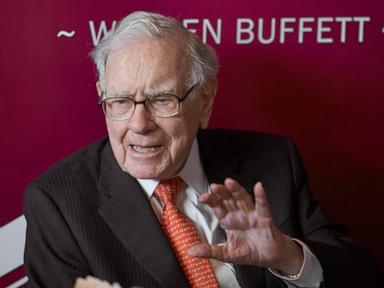
We spend our entire financial lives calculating compound interest. We look at annual percentage yields, dividend payouts, and equity curves, convincing ourselves that math is the ultimate wealth generator. Then Warren Buffett hands out another multi-billion-dollar block of Berkshire Hathaway stock and drops a completely different kind of metric entirely.
The legendary investor recently unloaded roughly $5.5 billion in stock, directing it toward four family foundations. Amid the usual financial analysis of what this means for his remaining stake, one sentence from his letter stopped people cold: Kindness compounds at a better rate than anything he and his late partner, Charlie Munger, ever bought.
Coming from a man who built a trillion-dollar corporate empire through cold-eyed valuation and strict economic moats, that statement carries weight. It forces you to rethink what actually drives long-term value, both in business and in everyday life.
The Mechanics Behind the Multi-Billion-Dollar Thanksgiving Tradition
Let's look at the raw numbers first because they frame the magnitude of what is happening. Buffett converted 6,150 Class A shares into over nine million Class B shares to distribute across the Susan Thompson Buffett Foundation, the Sherwood Foundation, the Howard G. Buffett Foundation, and the NoVo Foundation.
This isn't a random PR stunt. It represents a deliberate, multi-year drawdown of his corporate holdings. Over sixty percent of the Class A shares he held when he formalized his massive philanthropic pledge back in 2006 are now gone. What remains is earmarked to clear out entirely through structured family trusts by the end of 2034.
Most media coverage fixates on the tax implications or the mechanics
Why Warren Buffett Thinks Kindness Compounds Faster Than Money
business
People obsess over Warren Buffett's stock picks, but they completely miss his actual operating system. Berkshire Hathaway's longtime leader just unloaded another massive chunk of stock, gifting roughly $5.5 billion to his family's foundations. Yet the headlines focused entirely on the numbers while skipping the real takeaway. Buffett calls kindness a compounding asset. He treats goodwill the same way he treats a stock portfolio, letting small acts accumulate over decades until they yield massive returns.
Most billionaires treat philanthropy like a PR afterthought or a tax shield. Buffett approaches generosity with the same discipline he applied to buying undervalued companies in Omaha back in the 1960s. He understands that human capital and social trust operate on exponential curves. When you invest early in people, organizations, and community infrastructure, the compounding effect outperforms almost any financial instrument on Wall Street.
The Math Behind Generosity
Let's look at how this actually plays out in the real world. Buffett's recent round of contributions targets foundations run by his children, along with the Susan Thompson Buffett Foundation named after his late first wife. These aren't random write-offs. They represent decades of structured giving designed to solve systemic problems in reproductive health, education, and poverty reduction.
When you give $5.5 billion away in a single sweep, people call it charity. Buffett views it as capital allocation. If you deploy money into high-leverage networks, the initial investment multiplies through institutional scaling. A dollar spent on medical research doesn't just buy a test tube. It trains a scientist, funds a breakthrough, and saves thousands of lives downstream. That is exponential growth in human terms.
Most people wait until they are rich to start giving or helping others. That approach misses the entire point of compounding. You don't need billions of dollars to build social capital.
Why Traditional Success Metrics Fall Short
We live in a culture that measures success entirely by net worth, quarterly returns, and square footage. It's a hollow framework. Buffett has lived in the same modest house in midtown Omaha since 1958, buying it for $31,500. He eats breakfast at McDonald's and drives his own cars. His lifestyle proves that status symbols lose their luster once basic financial security is achieved.
What keeps people grounded isn't accumulation. It's alignment. When your daily actions match your core values, burnout drops and resilience climbs. Buffett often points out that if you reach my age and nobody thinks well of you, your life is a disaster no matter how much money sits in your bank account. That sentiment isn't just folksy wisdom. It's a hard business metric. Reputation takes a lifetime to build and five minutes to ruin. Protecting that asset requires relentless integrity.
Applying the Buffett Philosophy Today
You don't need to run a multinational conglomerate to use the compounding effect of kindness in your own life and career. Small, consistent deposits into your relationships and community yield massive dividends over a thirty-year career.
Start looking at your daily interactions through an investment lens. When a junior colleague asks for advice, do you brush them off or invest twenty minutes to help them grow? When a peer makes a mistake, do you publicly tear them down or quietly help them fix it? These choices seem minor in isolation. Over a decade, they dictate whether people rally around you when times get tough or look the other way.
Here is how you can put this mindset into practice right now.
- Audit your time allocation: Stop spending all your energy chasing transactional wins. Dedicate a fixed percentage of your week to mentoring, connecting people who should know each other, or supporting local initiatives without expecting an immediate return.
- Play long-term games with long-term people: Surround yourself with individuals who value honesty over short-term gains. Trust accelerates velocity in business and life.
- Give credit freely: When a project succeeds, push the praise down to the team. When things fail, absorb the blame. This single habit builds unshakeable loyalty.
Wealth comes and goes. Markets crash, companies fold, and portfolios fluctuate wildly based on macroeconomic winds you cannot control. The only true fortress you can build is a network of deep, authentic trust rooted in consistent generosity. Buffett gets rid of his wealth precisely because he knows the best investment vehicle on earth isn't a stock ticker. It's the human network you leave behind.