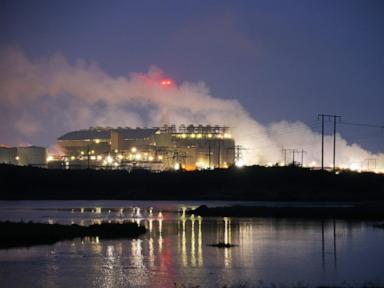
A four-hundred-foot cargo ship sits quietly on the wind-swept banks of Ireland's River Shannon estuary. Its holds are stacked with thousands of tons of white powder, and its destination is Russia. While European leaders regularly step up to microphones in Dublin to pledge unwavering support for Ukraine, a massive industrial plant tucked away in southwest Ireland continues a quiet, highly profitable trade that underpins Moscow's defense manufacturing.
At the center of this geopolitical friction is Aughinish Alumina, the largest refinery of its kind in Europe. It produces alumina, a crucial refined precursor extracted from bauxite that gets smelted into aluminum. And aluminum isn't just used for soda cans or window frames. Investigators and military analysts have tracked how the metal produced by the plant's ultimate Russian owners winds up inside Russian military supply chains, feeding everything from tactical vehicles to aerospace components used in the invasion of Ukraine.
The uncomfortable reality is that this trade is entirely legal under current European Union sanctions. Alumina managed to escape the sweeping economic penalties designed to starve Moscow's war machine. Lawmakers are caught between moral outrage and economic pragmatism, leaving an open pipeline that politicians and activists want slammed shut immediately.
Why Aughinish Alumina Became a Lightning Rod
You don't need a degree in international trade to spot the contradiction. When European heads of state gather for high-profile summits to discuss security guarantees for Kyiv, the optics of a Russian-owned facility operating unhindered on Irish soil become glaringly obvious. For another look on this story, check out the recent coverage from The Washington Post.
The refinery is owned by United Company Rusal, a corporate giant founded by the sanctioned oligarch Oleg Deripaska. Ever since the full-scale invasion escalated, shipments of alumina from the Shannon estuary to Russian ports have continued under the radar of existing punitive measures. Critics point out that maintaining this flow while simultaneously sending humanitarian aid and non-lethal defense equipment to Ukraine creates a hypocritical foreign policy stance.
Local sentiment in Foynes, the neighboring port town, reveals a deep internal conflict. Many residents rely on the refinery for their livelihoods, or know family members who punch the clock there every day. It's a massive regional employer. Townspeople recognize the moral weight of the war, yet practical survival dictates that shutting down a major industrial player carries immediate local consequences. Governments tread carefully when thousands of jobs hang in the balance, even as international pressure mounts from leaders like Ukrainian President Volodymyr Zelenskyy urging quick legislative action.
The Loophole in European Sanctions
The core of the issue lies in how trade restrictions are drafted. Brussels treats raw materials through a lens of delicate balance, attempting to restrict the Kremlin's revenue streams without inadvertently destroying domestic European industrial supply chains. Alumina was designated a critical raw material, leaving a massive regulatory blind spot.
Independent investigators and transparency organizations have mapped out the paper trail, demonstrating how raw material from Aughinish feeds smelters whose output eventually reaches defense contractors. Investigative reports show shipments surging since the outbreak of the war, turning Russia into a primary export market for the Irish facility.
Corporate representatives defend their operations vigorously. Management at Aughinish Alumina maintains that their products have no direct connection to the Russian military supply chain. To prove compliance, the company hired independent auditors to provide monthly traceability reports to Irish authorities. Officials in Dublin have launched internal investigations into the matter, promising findings while navigating the complex legal limits of what national authorities can do without an explicit, bloc-wide EU sanctions mandate.
The Cost of Inaction
Political opposition leaders inside Ireland argue that waiting for a pan-European consensus is a cop-out. Figures from various parties insist that precautionary measures should override corporate convenience. They argue that national sovereignty permits individual member states to take bolder stances when national security and international law are violated.
When cargo vessels slip out of the Shannon estuary loaded down with industrial powder bound for St. Petersburg, they carry more than just raw commodities. They carry a test of Europe's economic resolve. Closing loopholes means accepting short-term industrial friction to achieve long-term strategic security. Until policymakers bridge the gap between sanctions rhetoric and industrial reality, ships will keep sailing, and the factory floor in Limerick will keep feeding the industrial engine of a war zone.
Irish metals refinery is in supply chain that feeds Russian war machine, records suggest
This article provides an in-depth look at the investigative records linking Irish alumina shipments to Russian smelting networks and the broader sanctions debate.



