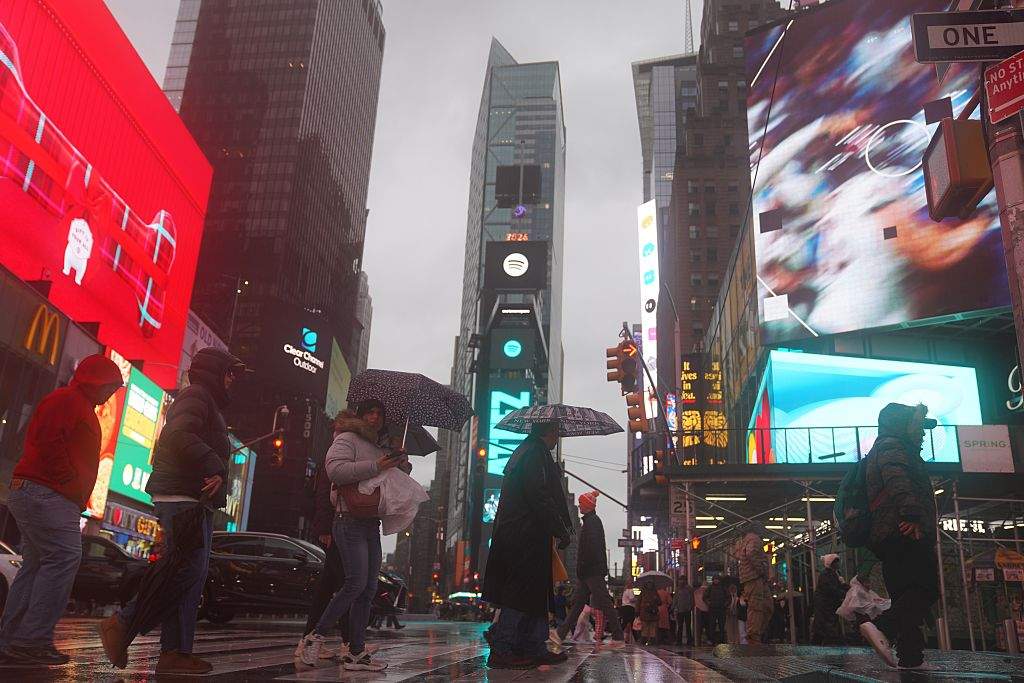
The rain is finally letting up across much of the eastern U.S. today, Friday, November 27, 2026, yet Thanksgiving storms flooding has already left coastal towns, inland suburbs, and holiday travelers dealing with a mess that won't clean up over a single weekend. Honestly, it's wild how fast a holiday centerpiece turned into a multi-front emergency. On Thanksgiving Day, a potent nor'easter pushed drenching rain and fierce gusts up the Atlantic seaboard, triggered water rescues from New York to Virginia, knocked out power for more than 900,000 customers at its peak, and forced the first postponement of the Macy's Thanksgiving Day Parade in its more than century-long history.
If you're looking for the bottom line right now: skies are clearing in spots along the East Coast, and utility crews are restoring electricity to hundreds of thousands of customers, while Maryland officials told nearly 2 million residents they could resume normal water use after conservation alerts. Still, don't pack away your caution just yet. Blustery winds are lingering in the east, coastal flood warnings remain active from New Jersey to Virginia on Friday, Pacific high tides have swamped stretches of California, and another storm system is already lining up for the return travel rush this weekend.
Why This Thanksgiving Deluge Hit So Hard Across Both Coasts
People love to treat big holiday storms like a single weather map event, a neat little blob moving from point A to point B. That's not how this played out. What hit the country this week was a collision of timing, geography, and overlapping hazards that caught plenty of folks off guard.
On the eastern side of the country, a strengthening nor'easter pulled heavy moisture north from the Southeast and Mid-Atlantic right into peak holiday movement. Heavy rain and strong winds flooded streets in places like Ocean City, New Jersey, on Thanksgiving Day. Further south along the coast, a fishing pier partially collapsed in Virginia Beach, Virginia, while residents in Avalon, New Jersey, worked to pump out saltwater surges from some of the highest tides the town has seen in its history. Inland and further west, the cold edge of the pattern wasn't just rain. Wet snow reached as far south as the Tennessee Valley, freezing rain moved across northern New England, and cold rain soaked the Midwest, Ohio Valley, and Lower Great Lakes, including parts of southern Ontario where freezing rain alerts and gusts up to 80 km/h were issued.
Meanwhile, the West Coast wasn't sitting quietly on the sidelines. High tides drove waves onto the Pacific coast, disrupting bus and train service in California and forcing evacuations from Humboldt County in Northern California down to Ventura County near Los Angeles. Another Pacific storm system brought rain along coastal Oregon on Friday, with more mountain snow forecast across the Cascade Range—stretching from southern British Columbia through Washington and Oregon into Northern California—as well as ranges in Montana and Wyoming.
When heavy rain, strong winds, and high astronomical tides stack up together, drainage systems get overwhelmed fast. Storm drains that handle normal runoff just can't push water out when coastal water levels are already elevated.
The Record Context Already Hanging Over Recovery
Here's something a quick glance at today's headlines can easily gloss over. Communities aren't starting from zero on dry ground. Earlier this week, U.S. President Donald Trump approved Florida's request for a Major Disaster Declaration following historic flooding in October and November, unlocking a $100 million fund to support recovery for residents, businesses, and local governments. As Rep. Lois Frankel noted, hundreds of Florida families lost homes, cars, and personal belongings heading into a tough Thanksgiving.
When a region already has saturated soil, damaged infrastructure, or exhausted local emergency resources from earlier autumn storms, a fresh deluge hits twice as hard. Even a smaller rainfall total can cause street ponding and basement seepage when the ground has nowhere left to soak water in.
Thanksgiving Storms Flooding and the Real Bottlenecks of Recovery
When a big storm starts winding down, folks naturally assume the worst is over. In reality, recovery is where the practical headaches really begin—and where people make avoidable mistakes.
Power restoration is a classic example. Even after winds ease on Friday, crews still have to clear downed trees, untangle snapped lines, and inspect damaged transformers across scattered neighborhoods. More than 480,000 homes and businesses were still without power on Friday after the peak exceeded 900,000 outages reported by the Associated Press. That gap between "the rain stopped" and "my lights are back on" can stretch for days in heavily wooded or coastal pockets.
Travel is another sore spot. FlightAware data showed more than 1,100 flights delayed and at least 116 cancelled by Friday morning. Even when runways dry out and skies brighten, aircraft and flight crews are out of position nationwide. One delayed flight in New York or Chicago ripples into missed connections somewhere completely sunny. And on the roads, standing water hides potholes, washed-out shoulders, and downed branches long after the main band of rain moves offshore.
Common Mistakes People Make Once the Rain Stops
I've seen the same pattern play out after plenty of major storms: the sun peeks through, people get impatient, and they rush straight into risky habits.
- Driving through standing water: It's basic, yet people still do it every single time. You can't tell depth from the driver's seat, and a few inches of moving water can stall a vehicle—or sweep it somewhere dangerous.
- Running generators indoors or in garages: Whenever power outages top hundreds of thousands of customers, carbon monoxide risks spike. Generators belong outside, well away from doors, windows, and vents.
- Ignoring saltwater and moisture damage: Saltwater pushed ashore in coastal towns is brutal on wiring, vehicles, and metal fixtures. Letting damp drywall or wet insulation sit inside a home invites mold fast.
- Assuming the weekend forecast is clear: The National Weather Service noted that while conditions began clearing across much of the U.S. on Friday, the system could take time to weaken, and another system moving into the Northwest and interior mountains signals that weather isn't done complicating travel yet.
What Experts and Officials Are Watching Next
From a forecasting and emergency management standpoint, the shift from active storm to recovery brings a different set of priorities. Meteorologists focus on lingering wind gusts, residual coastal flood advisories from New Jersey to Virginia, and incoming Pacific moisture and mountain snow. Emergency managers and utilities focus on clearing debris, restoring water and power reliability, and helping displaced households navigate aid programs.
What's still open to question as the weekend unfolds is how smoothly post-holiday return travel will go and how fast local infrastructure bounces back in the hardest-hit coastal and inland communities. Weather models can map rainfall bands and wind speeds with impressive skill, yet exact street-level flood impacts and local repair timelines always depend on local drainage, terrain, and crew access. That uncertainty is a big reason officials keep urging travelers and residents to check live local advisories rather than relying on yesterday's forecast.
Practical Next Steps If You're Recovering or Traveling This Weekend
If you're dealing with storm aftermath or heading back home after Thanksgiving, keep your moves simple and practical:
- Check active local alerts before you roll: Look up current National Weather Service warnings, coastal flood advisories, and state road updates along your exact route—don't guess based on clearing skies outside your window.
- Build extra buffer time into trips: Expect lingering flight backlogs, slower highway traffic, and detours around flooded low spots or downed trees.
- Document damage right away: If wind, rain, or high water affected your property or vehicle, take clear photos and notes before cleanup or repairs begin, and keep receipts for emergency expenses.
- Stay clear of hazards during cleanup: Watch for sagging utility lines, keep kids and pets away from floodwater and storm debris, and follow local water and safety guidance until officials give the all-clear.
Storms lose their headline drama once the sky clears. The real work starts when the water has to go somewhere and people try to get their lives moving again.



