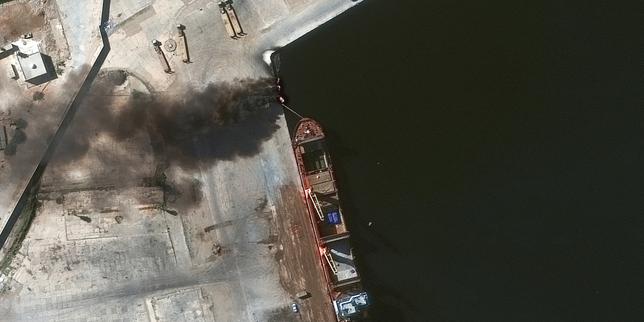
Ukraine just took a war that started on its own eastern border and hit Russian vessels nearly 1,800 kilometers away off the coast of Libya. Honestly, if you thought the maritime front was mostly confined to the Black Sea, this weekend blew that assumption straight out of the water.
On Monday, November 23, 2026, Ukrainian President Volodymyr Zelenskyy publicly confirmed that Ukrainian forces carried out strikes against two Russian vessels tied to the Libyan coast—sinking the corvette Merkury along with a Ka-27 helicopter aboard it, and hitting the sanctioned cargo ship MV Angara. Coming right on the heels of loud explosions and fires reported by local sources in Benghazi on Sunday, the claim shifts how military planners look at Russia's distant supply lines.
So what actually happened, and why does a strike off North Africa matter to people watching the war in Ukraine? The short answer is logistics and reach. Kyiv isn't just contesting coastal waters anymore; it's going after the ships that keep Russian weapons, fuel, and military gear moving between ports outside the Black Sea.
What Zelenskyy and Ukraine's Security Service Claimed
Zelenskyy kept his public statement punchy and deliberate. He said Ukrainian troops deployed seven domestically built naval drones off the coast of Libya, resulting in the sinking of the Merkury—which he noted was commissioned in 2023 during the full-scale war—the destruction of a Ka-27 helicopter on board, and a strike on the dry cargo vessel MV Angara, which he said Moscow used to transport weapons.
Ukraine's Security Service (SBU) added key operational context that live-blog headlines often gloss over. According to the SBU, the uncrewed surface vessels weren't making a single unassisted 1,800-kilometer cross-sea run from Ukrainian shores; instead, they were moved to a designated area and launched from a "mothership" closer to the target zone. That detail matters a lot. A mothership concept turns short-range or medium-range naval drones into a mobile expeditionary strike tool that can pop up well outside traditional theater boundaries.
The SBU also framed both vessels as legitimate military targets. It described the Merkury as a multipurpose corvette tied to Russia's Black Sea Fleet that regularly escorted maritime convoys—including guarding ships like MV Angara—while characterizing MV Angara as a sanctioned vessel involved in moving Russian military equipment along routes linked to Moscow's broader supply networks.
Why Libya Is Such a Big Deal for Moscow's Logistics
To understand why Benghazi shows up in news about the war in Ukraine, you have to look at how Russia moves hardware when Black Sea chokepoints and sanctions tighten the screws. Libya has been fractured since 2011 between rival power centers—the internationally recognized Government of National Unity in Tripoli and eastern authorities aligned with Khalifa Haftar's Libyan National Army and the House of Representatives. Eastern Libya has become a major hub for Russian footprint and port access.
Eastern Libyan authorities stated that the vessel had pulled in to refuel and take on supplies under a cooperation arrangement with Russia, with civil defense crews rushing in to put out a fire after explosions rocked the area. Sources speaking to The New Arab even noted that Russia had unexpectedly shifted shipments from Tobruk to Benghazi about two months earlier, and that Russian investigators arrived in Benghazi following the strikes.
Think about what happens when a warship or supply ship docks in a friendly or permissive foreign port. Crews usually assume that once you clear high-risk waters and pull into harbor or anchor nearby, the threat drops dramatically. If seven sea drones launched from a mothership can slip through defenses—despite air, sea, and land counter-efforts cited by the SBU—then distant "safe" stops suddenly look a lot less safe.
This wasn't an isolated flare-up out of nowhere, either. Reports note that a Ukrainian drone strike hit the Russian cargo ship Sparta II in the eastern Gulf of Finland on Saturday, and a Russian LNG carrier sank off Libya back in early March in an incident Moscow blamed on Kyiv. Put those pieces together and a clear pattern emerges: Ukraine is trying to raise the cost and risk of Russian maritime logistics wherever those ships operate, from the Baltic to the central Mediterranean.
What We Know for Sure vs. What Remains Unclear
Here's where a lot of fast-moving war coverage gets messy—and where you should keep your critical thinking hat on. A president claiming a hit on social media or a security agency releasing a statement doesn't automatically settle every factual detail on the ground.
Let's separate the moving parts clearly:
- Kyiv's official account: Zelenskyy and the SBU state that seven Ukrainian-made naval drones sank the Merkury and a Ka-27 helicopter, and struck MV Angara.
- Visual and local reports: Commercial satellite imagery released by Vantor on November 22 showed a capsized or heavily damaged vessel and smoke at the port of Benghazi, matching local reports of explosions and a fire put out by civil defense units. Still, satellite photos and initial local statements don't by themselves confirm every detail about crew casualties, exact timelines, or the final condition of every vessel involved.
- Silence and diplomacy: Early reports noted no immediate public comment from Moscow on Zelenskyy's claim, while the United Nations Support Mission in Libya (UNSMIL) called for an immediate, independent, and transparent investigation.
UNSMIL's warning cuts to a real tension in this story. The mission stressed that Libya's sovereignty and territorial integrity must be respected and warned that Libya cannot become a battleground for foreign conflicts. Even when a belligerent argues a ship is a legitimate military target tied to an adversary's war effort, conducting strikes at or near a third country's port brings diplomatic pushback, sovereignty questions, and escalation risks.
Common Mistakes People Make Reading Strikes Like This
When news breaks about a dramatic naval strike thousands of kilometers from a front line, it's super easy to fall into two traps.
First, people sometimes treat a single tactical strike as an instant war-ender. Sinking a modern corvette—even one commissioned in 2023—and hitting a supply ship hurts Russia's naval prestige and complicates logistics, yet Russia still has vast military resources and continues launching heavy attacks inside Ukraine, including deadly strikes reported around Kyiv and Zaporizhzhia. Tactical disruption isn't the same thing as strategic victory overnight.
Second, readers often assume naval drones have to drive straight across an entire sea on their own batteries and fuel. That's rarely how long-range maritime operations work in practice. When the SBU mentions a mothership bringing drones to a designated spot before launch, the real operational story is stealthy staging, intelligence, timing, and command-and-control—not just a tiny boat crossing 1,800 kilometers solo.
How to Track This Story Smartly Over the Next Few Days
If you're following this development closely, don't rely on a single viral post or first-wave headline. A few practical steps will give you a much clearer picture:
- Cross-check claims against satellite and OSINT reporting: Watch for follow-up commercial satellite imagery and independent open-source assessments that verify hull position, pier damage, or any secondary vessels affected in Benghazi.
- Watch UN and diplomatic reactions: Keep an eye on statements from UNSMIL and regional actors to see whether calls for an independent investigation gain traction or stall amid Libya's political split.
- Track Russian and Ukrainian diplomatic messaging: Pay attention to whether Moscow responds formally or ties the incident to broader talks and security negotiations—especially with Zelenskyy also pointing to ongoing diplomatic efforts around potential peace talks.
- Look for broader maritime patterns: Compare events off Libya with activity in the Baltic and Black Seas to see if Ukraine is sustaining a wider campaign against Russian shadow-fleet and military-supply shipping.