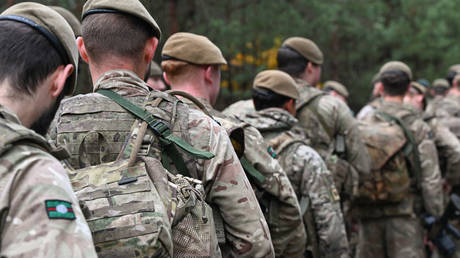
Around 100,000 former British service personnel just got letters from the Ministry of Defence asking them to prepare for a potential wartime call-up. Headlines went straight to panic stations. Cold War echoes, sirens, mobilization orders.
Hold on. Slow down a second.
If you actually read what the UK government published on GOV.UK, this isn't a draft notice or a sudden scramble to ship veterans to the front tomorrow morning. It's the largest Strategic Reserve outreach since the Cold War, yes, and Defense Secretary Wes Streeting called it a sensible precaution in a heightened threat environment. Yet a letter asking you to update your address, share your civilian job skills, and maybe volunteer for a NATO exercise is a very long way from a compulsory mobilization order.
Still, ignoring why London did this right now would be a mistake.
What the Strategic Reserve Actually Means for UK Reservists
Let's clear up the biggest point of confusion first. When people hear "reservists," they usually picture weekend soldiers in camouflage drilling at a local barracks every Tuesday night.
That's not who got these letters.
The Strategic Reserve covers former regular personnel—veterans who already left the British Army, Royal Navy, or Royal Air Force—who still carry a legal liability to return under exceptional circumstances. Think warlike operations, major national emergencies, or serious preparations for war. It's not a tool for patching routine peacetime staffing holes.
In practical terms, the letters sent out in late November 2026—signed by the heads of all three armed forces branches—do three main things:
- Ask ex-service members to update contact details and log current civilian jobs, qualifications, and skills.
- Invite volunteers to join training and exercises, including NATO's Steadfast Defender drills slated for spring 2027.
- Remind recipients how legal recall rules work, while stressing that volunteering doesn't equal compulsory mobilization.
From hands-on experience watching defense policy rollouts, governments rarely send 100,000 letters unless internal databases are stale or planners realize a peacetime registry won't survive a fast crisis. Having a 42-year-old former logistics specialist's old landline number from 2014 isn't much use if a major crisis hits. Updating the roster is basic hygiene dressed up in heavy political signaling.
Why London Pulled This Trigger Now
You don't send letters to 100,000 former troops in a vacuum. Several pressures converged at once across Britain and Europe.
Streeting told Sky News that the step reflects what Russia is doing in Europe and a sharper security threat facing Britain and its NATO allies. Earlier in autumn 2026, Streeting warned that adversaries could be ready for an attack by around 2030—giving Britain and NATO roughly 1,000 days to get serious. Around the same time, Prime Minister Andy Burnham's government has been leaning harder into deterrence, homeland resilience, and defense readiness.
Meanwhile, military bases and critical infrastructure have been dealing with uncomfortable realities. Reports in late November 2026 noted that the Royal Air Force has been moving aircraft into hangars overnight and looking at anti-drone netting to shield parked jets from drone threats—a tactic borrowed directly from the brutal drone warfare seen in Ukraine since 2022. Add in European sabotage concerns, tighter security guidance for defense and critical infrastructure firms, and recent security incidents around UK airbases, and the mood in Whitehall looks distinctly jittery.
Here's the catch, though. Readiness announcements look bold on paper, yet militaries live and die by funding, equipment, and retention. Reports have pointed out friction between big readiness talk and budget constraints, including earlier cancellations of regular army training due to money shortages. Sending a letter costs almost nothing compared to buying air defenses, stocking munitions, or fixing barracks. That tension matters. Deterrence works best when capability backs up the rhetoric, not when paperwork substitutes for hardware.
The Gaps and Misconceptions Worth Calling Out
Sensational coverage loves a dramatic frame: Britain prepares for war. That framing sells clicks fast, yet it blurs important legal and operational lines.
First, this is not conscription. Conscription pulls civilians with no prior military service into uniform. Strategic Reserve liability applies to people who already served and signed up under terms carrying post-service recall obligations. Even then, if someone receives a formal mobilization notice later on, the government's own guidance notes that individuals or employers can request a delay, cancellation, or end to mobilization for valid reasons—such as critical civilian roles, medical status, or personal circumstances.
Second, volunteering for an exercise isn't the same as being ordered to war. The Ministry of Defence explicitly separates voluntary training opportunities—like taking part in next spring's Steadfast Defender exercise—from compulsory mobilization. Officials are also still working through details so Strategic Reservists who join exercises aren't left financially worse off.
Third, let's be honest about what we don't know. Media reports widely cite roughly 100,000 reservists receiving letters, and defense outlets note the scale hasn't been seen since the Cold War. Still, public reporting doesn't give a full breakdown of how many letters have actually landed in mailboxes so far, exact response rates, or how quickly the Ministry of Defence can process thousands of updated civilian skill profiles into usable plans. Overstating either side—claiming "war is imminent" or dismissing the letters as "purely symbolic"—misses the middle ground where real defense planning happens.
What actually works in reserve mobilization isn't a one-off mail drop. What works is clear legal clarity, realistic medical and fitness screening, employer buy-in so civilian businesses aren't blindsided, and regular integration into exercises so former regulars don't feel like strangers in uniform. Anyone who has worked inside large organizations knows that a contact list sitting in a drawer is useless until you test whether people actually respond and show up.
What This Means for Veterans, Employers, and Watchers
If you're a former service member in the UK, a business owner employing veterans, or just someone trying to read the geopolitical tea leaves without losing your head, a few practical steps make sense right now.
- Check your actual status before reacting. Don't rely on social media threads or dramatic headlines. Read the official Strategic Reserve guidance on GOV.UK to see how recall rules apply to your branch and service history.
- Keep your records accurate if you're covered. If you receive an official letter or have an active obligation to keep details current, update your contact info and skills through official channels rather than guessing. Ignoring official correspondence doesn't make legal obligations disappear.
- Talk openly if you manage teams. Employers who hire veterans in engineering, cyber, logistics, medical, or management roles should understand how reserve mobilization and voluntary exercise leave work in practice. Planning ahead beats scrambling during a crisis.
- Watch the follow-through, not just the headlines. Pay attention over the coming months to whether the Ministry of Defence backs up this outreach with real exercise integration, financial protections for participants, and tangible base and air-defense investments.
Letters to 100,000 reservists won't win a war by themselves. Ignoring the warning signs behind them wouldn't be smart either.