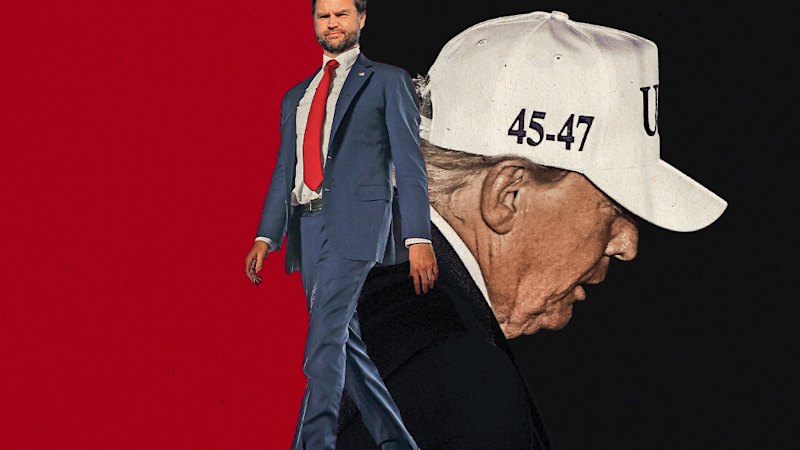
Donald Trump and JD Vance are stuck in a bind that neither of them can easily walk away from. After a bruising midterm cycle that handed Republicans their worst defeat since Watergate, Vance has been trying to carve out space on affordability and foreign entanglement while Trump leans on Vance's Silicon Valley ties to steady markets rattled by the Jensen Huang and Nvidia turmoil.
Here's the catch. If Vance pulls too far away from Trump to win back swing voters frustrated over cost of living and the prolonged war in Iran, he risks alienating the core MAGA base that treats loyalty as the only currency that counts. If he stays glued to Trump's orbit, he inherits the exact drag that sank candidates across the map in November 2026.
I've watched plenty of political marriages look solid on paper until reality hits a midterm wall. On paper, pairing a movement founder with a sharp-elbowed heir who speaks fluent venture capital sounds smart. In practice, voters don't split their ballots cleanly between "good tech connections" and "bad kitchen-table prices." They feel the squeeze at the pump and the grocery store, and they blame the people in charge.
Why Trump And Vance Face A Post-Midterm Squeeze
Let's be honest about what happened in the midterms. A party doesn't suffer its worst beating since Watergate by accident. Voters sent a blunt message about affordability, endless foreign conflict, and an administration that looked more tuned into trillion-dollar market swings than everyday household budgets. As extensively documented in recent coverage by Associated Press, the results are worth noting.
Vance didn't sugarcoat it afterward. His blunt postmortem on X pointed straight at cost-of-living pain and the drag from the war in Iran. Usually, when a deputy publicly diagnoses what went wrong with the boss's agenda, fireworks follow. Instead, Trump called the initial assessment "largely true," a surprisingly accommodating move from a president who rarely shrugs off criticism.
That accommodation isn't charity. It's transactional survival.
Trump has spent much of his second term watching big tech valuations and market milestones closely, and the drama around Nvidia CEO Jensen Huang—including Huang's brief ouster and reinstatement amid questions over a relationship with a woman suspected of being a Chinese spy—hit right where Trump's attention lives. Reports of Trump's own substantial Nvidia stock trades, including sales right after learning of the security concern, only sharpen the stakes. When Trump credited Vance with helping bring Huang back into the fold and steady market nerves, he was leaning on the exact network Vance brings to Washington.
The Silicon Valley Bet Hits Voter Pushback
Vance didn't join the ticket to deliver traditional institutional balance the way Mike Pence once did for evangelical voters. Vance brought a different kind of leverage: deep ties to Silicon Valley founders, investors, and tech power brokers.
That bargain looked like a masterstroke when money and hype were flowing toward AI. Today, it looks a lot trickier. Plenty of everyday voters—including plenty of Republicans—aren't thrilled about the AI boom or billionaire megadonors calling the shots. Look at Elon Musk pouring nearly half a billion dollars into midterm races only to see Republicans sweep mainly in Texas, where Musk had already relocated his operations.
Money can buy ads, ground games, and attention. It can't make a voter feel richer when groceries and energy still bite.
A political brand built on populist grievance struggles when its loudest allies look like the establishment of a new tech era.
Think about that tension for a second. Populism historically thrives on punching upward against entrenched power. When the movement's rising star is closely tied to the wealthiest tech executives on earth, populist credibility gets harder to defend.
The Myth Of A Coherent Post-Trump MAGA Doctrine
Plenty of commentators talk about MAGA as if it's a neat political handbook waiting for a clever editor. It isn't. Honestly, MAGA has always revolved around Donald Trump's instincts, moods, grievances, and improvisation rather than a fixed set of written rules.
That's why Vance's attempt to sketch out a post-Trump future for the movement is so tricky. To give MAGA a durable structure beyond one man, Vance has to name principles and boundaries. Yet almost any rule he sets down is something Trump might contradict tomorrow morning on social media or at a rally.
What History Tells Us About Populist Succession
Political movements rooted in charismatic disruption rarely hand off smoothly. Look back to 2008, when Sarah Palin burst onto the national stage as John McCain's running mate and turned outsider skepticism into a badge of authenticity, helping ignite the Tea Party wave of 2010 before Trump absorbed and reshaped that energy.
Each phase pulled energy from skepticism toward established institutions. Still, charisma doesn't transfer like a deed to a house. Voters who show up for a specific disruptor often treat successors as pale imitations—or worse, as technocrats trying to put guardrails on a wild horse.
Vance has clear advantages that earlier would-be heirs lacked. He's articulate, media-savvy, fiercely loyal when it counts, and well-positioned in conservative circles for 2028. At the same time, his post-midterm polling dip shows how quickly momentum can wobble when voters are sour.
Where The Bear Hug Turns Into A Trap
A bear hug starts out looking like strength. Two allies locked together, projecting unity and muscle. The trouble starts when one person wants to pivot toward the crowd and the other keeps spinning in place.
If Vance tries to define a sharper, more disciplined version of MAGA, friction is almost guaranteed. Too much distance from Trump alienates loyalists who still view Trump as the sole standard-bearer. Too little distance ties Vance to every unpopular policy, foreign entanglement, and market wobble of the second term.
There's also a real risk of over-reading polling snapshots right after a brutal election. Post-election surveys capture raw frustration, and voters' memories shift fast over two years. Even so, ignoring a sharp drop in standing after a historic midterm loss would be naive.
How To Read The Road To 2028 Without Falling For Hype
If you follow Washington closely—whether as a voter, an investor, a policy watcher, or a political junkie—you don't need breathless palace intrigue to track what happens next. You need clear signals.
- Watch kitchen-table metrics over Washington chatter. Cable news loves feuds and court intrigue. Voters care whether prices, wages, and global conflicts feel more manageable a year from now than they do today.
- Separate donor enthusiasm from voter persuasion. Tech executives and wealthy backers can bankroll super PACs and shape policy debates, especially around AI and regulation. Track whether those messages actually move persuadable voters in swing districts, not just donors in boardrooms.
- Test any "MAGA doctrine" against real trade-offs. Whenever you hear talk of a new conservative playbook, ask what happens when it clashes with tariffs, war decisions, tech oversight, or Trump's own instincts. A real doctrine survives friction; a slogan just repeats.
- Track ethical and market flashpoints closely. Episodes involving major tech firms, national security concerns, and high-dollar stock trades tell you a lot about where power and incentives collide. Follow primary reporting and disclosures rather than rumor mills.
- Keep an eye on 2028 early positioning. Watch how Vance handles speeches, policy pitches, and rallies over the next twelve to eighteen months—whether he sounds like a loyal lieutenant defending every move or a future nominee building an independent case to everyday voters.