Washington just floated a proposal that could completely redraw the geopolitical map of Europe. During recent back-channel peace talks in Abu Dhabi, American negotiators explicitly asked Ukrainian leadership a blunt question: What if Ukraine walks away from the eastern Donbas region in exchange for fast-tracked NATO membership?
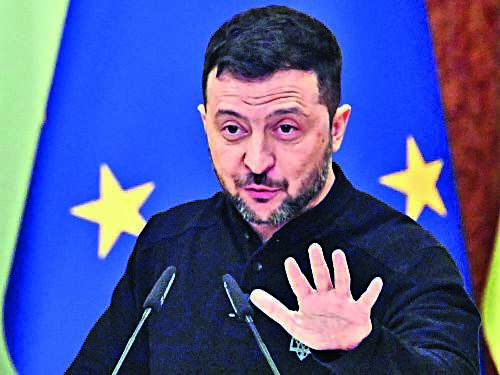
President Volodymyr Zelenskyy confirmed that this is the first time territorial concessions and the Atlantic alliance have been explicitly chained together in official discussions. It sounds like a pragmatic trade on paper. Give up land that is heavily contested and partially occupied to lock in permanent security guarantees against future Russian aggression.
Except real-world diplomacy doesn't work like a real estate transaction. If you look past the glossy headlines about peace deals, trading sovereign soil for a defensive alliance sets a terrifying precedent that rewards unprovoked military aggression.
The Reality Behind the Abu Dhabi Backchannels
The talks in Abu Dhabi featured high-level American envoys alongside diplomatic tracks involving regional power brokers. For years, the official line from Washington was that NATO membership for Kyiv was entirely off the table while active fighting raged, largely out of fear of dragging the alliance into a direct hot war with Moscow.
By floating the Donbas trade, the U.S. stance has shifted dramatically. Yet, the proposal comes with massive caveats that expose how fragile the security architecture truly is. When Ukrainian officials asked whether American troops would actually be stationed on the ground to back up these new security pledges, the answer from Washington was a flat no. Instead, the U.S. is pushing bilateral arrangements modeled after security pacts with Middle Eastern nations rather than the ironclad Article 5 collective defense mechanisms of NATO proper.
You are essentially asking a battered nation to trade physical geography for a paper promise that lacks enforcement teeth.
Why Putin Won't Stop at Donbas
Moscow has long claimed that preventing NATO expansion was the primary justification for launching the 2022 full-scale invasion. But Vladimir Putin's ambitions have never been solely about administrative boundaries on a map.
During the same Abu Dhabi discussions, Russian representatives flatly rejected proposals for a basic ceasefire targeting energy infrastructure. They also pushed tactical demands designed to get Ukrainian forces to abandon fortified positions like Kostyantynivka under the guise of humanitarian missions.
If Kyiv agrees to cede the Donbas, it doesn't buy permanent peace. It simply hands the Kremlin a staging ground for the next phase of expansion. Appeasement rarely satisfies an aggressor; it merely fuels their appetite. Once a regional power realizes that international borders can be rewritten through brute force and diplomatic fatigue, the incentive to stop completely disappears.
The Domestic Political Minefield in Kyiv
Zelenskyy made it clear that he lacks the constitutional authority to unilaterally surrender sovereign territory. Any such deal would have to go to a national referendum, forcing the Ukrainian public to vote on whether to abandon millions of citizens living in the east.
Public sentiment in Ukraine remains deeply resistant to giving up land to an invader, even after years of grinding attrition. Citizens remember what happened after the annexation of Crimea and the initial conflict in the Donbas back in 2014. Temporary compromises led directly to total war eight years later.
Furthermore, any viable peace package requires massive reconstruction funds, a heavily financed domestic military, and ironclad legal guarantees. Right now, those financial and military specifics remain entirely undefined. Asking a nation to hand over its industrial heartland based on a vague outline of future support is a gamble no responsible leader can take lightly.
What Happens Next
The conversation around ending the war has officially entered a dangerous new phase where partition is treated as a serious policy option. But forcing Ukraine to amputate its eastern provinces to satisfy Western anxieties about escalation solves nothing long-term. It rewards territorial theft, fractures European stability, and sets the stage for future conflicts across the continent.
Real security cannot be built on the foundation of stolen borders. Ukraine needs genuine deterrence, not a forced land swap disguised as a diplomatic breakthrough.