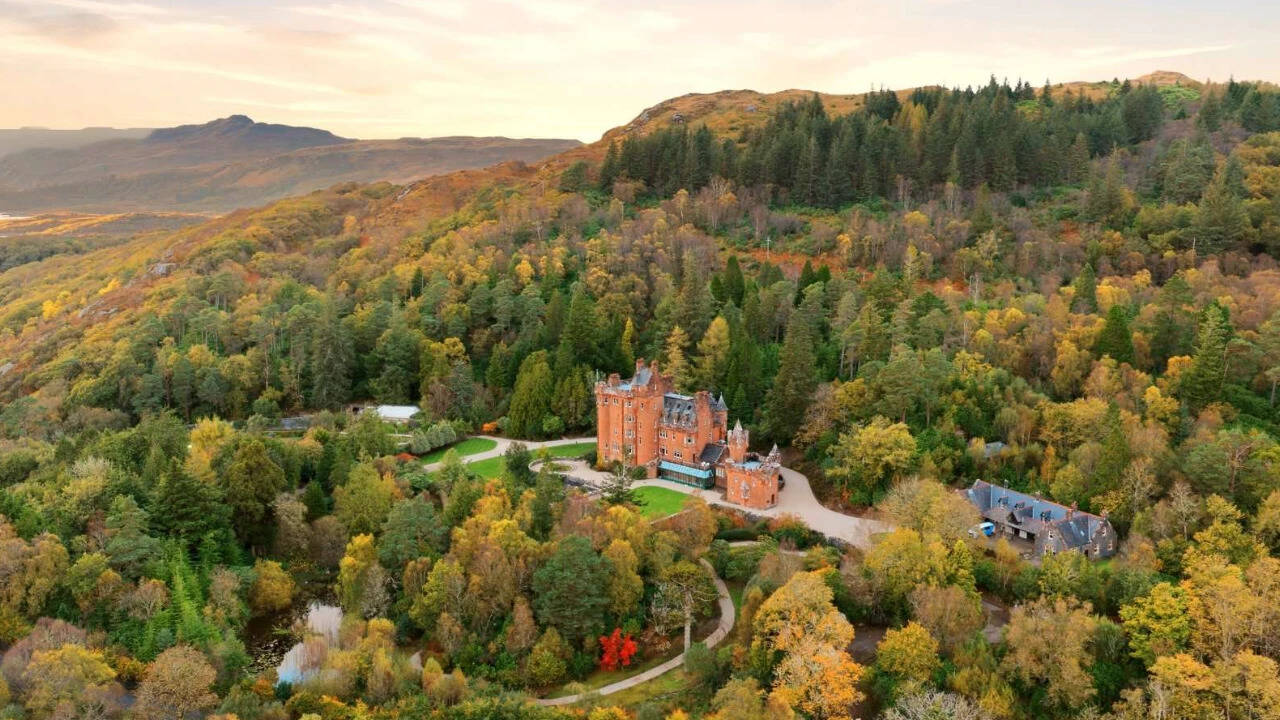
A 16,600-square-foot Scottish castle on 134 acres, complete with two private islands and 850 metres of shoreline, sounds like a billionaire's trophy. Yet Glenborrodale Castle on Loch Sunart is listed at £3.95 million.
That sticker shock is the real story here. On paper, £3.95 million buys you roughly 14 bedrooms in a Scots Baronial mansion, a three-bedroom gate lodge, three coach-house apartments, a jetty, a boathouse, and the islands of Risga and Eilean an Fheidh. In London or New York, that budget barely covers a prime apartment with a view of someone else's roof.
Honestly, though, buying a coastal Highland estate isn't a bargain—it's an entry ticket into serious ongoing bills. Castles in the UK move slowly, with thin liquidity and heavy upkeep that catches plenty of dreamers off guard. If you're looking at a Scottish castle with two private islands at £3.95 million, you're not just buying stone and water. You're taking on a Category A-listed building, conservation rules, and weather that tests every roof tile every winter.
What You Actually Get on Loch Sunart
Set on the southern shore of the Ardnamurchan Peninsula in the Scottish Highlands, Glenborrodale Castle sits inside roughly 134.1 acres of grounds. The main house dates to 1902 and brings classic Baronial drama—oak panelling, marble floors, ornate cornicing, a marble staircase rising to a vaulted gallery, and reception rooms facing the loch. Upper levels include 14 bedrooms (with Savills listing 15 en-suite guest suites), a turret room, an external viewing platform, and a roof terrace looking toward the Morvern Hills.
Beyond the castle walls, the property spreads out in ways a city home never could. You get a three-bedroom gate lodge and a stone coach house split into three self-contained apartments. There's also a separate building with a gym and sauna, commercial kitchens, laundry spaces, workshops, a biomass heating system, and a helicopter landing area rated for large aircraft.
Down by the water, the coastal side takes over. Roughly 850 metres of private shoreline pairs with a boathouse—equipped with power and a winch—and a private jetty. Included in the sale are two private islands in Loch Sunart: Risga and Eilean an Fheidh. Wildlife here isn't a postcard gimmick either; otters, seals, porpoises, and golden and white-tailed eagles inhabit this stretch of western Scotland.
The Gilded Age Backstory Behind the Walls
To understand why a place this grand exists on a remote peninsula, look back to the late Victorian diamond boom. Industrialist Charles Dunell Rudd—who co-founded De Beers alongside Cecil Rhodes—bought into the Ardnamurchan estate in the late 1890s and commissioned Edinburgh architect Sydney Mitchell to build Glenborrodale Castle between 1898 and 1902.
Wealthy Victorian and Edwardian industrialists loved building remote sporting and holiday retreats in the Highlands. They wanted privacy, dramatic scenery, and space to host guests far from industrial cities. That heritage is why the mansion has grand entertaining spaces on the first floor—drawing room, sitting room, dining room, and games room—designed for house parties rather than casual weeknight dinners.
Recent decades have been far less predictable. The property changed hands in 2022 for £3.75 million to spiritual teacher Mark Koppikar, known as Shanti, before legal and ownership turmoil followed and the estate returned to the market. Seeing a historic Highland trophy go through public drama and re-lists is a reminder that romantic settings don't erase practical friction.
Why £3.95 Million Is Only the Opening Bid
If you've ever watched someone fall in love with an old estate without checking the running costs, you know how fast the mood shifts. The purchase price is just the start.
Data analyzed by Castle Collector and Historic Houses surveys shows that historic-house maintenance in the UK averages around £160,000 a year, with heating alone often dominating budgets on large pre-1945 stone buildings. Glenborrodale has a biomass heating system, which helps compared to older oil-fired setups, yet heating and keeping 16,600 square feet dry, warm, and wind-tight in western Scotland takes real money every single month.
Insurance is another trap buyers miss until renewal time. Standard home policies don't fit Category A-listed properties or remote coastal estates with jetties, boats, and islands. Rebuilding to heritage standards with traditional materials and specialist craftspeople costs far more per square metre than standard construction.
Then comes liquidity. Castles trade at a fraction of the turnover rate of ordinary residential real estate. You can easily wait years to exit if your plans change, especially if you bought purely for lifestyle without a revenue engine behind it.
Conservation Rules and Environmental Limits
Buying an A-listed Scottish castle isn't like renovating a suburban house. Historic Scotland lists Glenborrodale Castle itself, along with garden terraces, stables, and the walled garden, while the gate lodge and gate piers are Category B-listed. Changes to historic fabric require careful heritage approvals, and matching authentic stone, lime mortar, or period joinery slows timelines down.
Parts of the wider area also fall under environmental designations linked to Loch Sunart, including Special Area of Conservation and Site of Special Scientific Interest protections. That's great if you care about protecting marine and coastal habitats. It also means any dock work, tree felling, or land alterations must respect ecological rules rather than whatever sounds convenient on a Saturday afternoon.
Who Actually Makes a Highland Castle Work
In my experience watching historic properties across the UK, buyers split into two camps. The first camp buys a castle as a pure fantasy—a big house for family summers and bragging rights. Often, reality hits hard once winter gales arrive, maintenance invoices stack up, and travel time from major airports feels longer than expected.
The second camp treats the estate like a working asset from day one. Having three coach-house apartments, a gate lodge, 14 or 15 guest suites, commercial kitchens, and island access creates options for private retreats, bespoke hospitality, or multi-generational living—provided local regulations, staffing, and seasonal demand align.
Still, even smart buyers disagree on whether a coastal Highland estate is a smart hold. Some point to scarcity: you can't manufacture 850 metres of private shoreline, two islands, and a 1902 Baronial house for £3.95 million very often. Others argue that remoteness, weather exposure, and constant upkeep cap long-term capital appreciation unless income offsets carrying costs. Both views have merit, which is why serious buyers run the numbers cold before falling for the view from the turret.
Practical Next Steps Before Making an Offer
- Pull the full listing pack and title deeds: Review exact boundaries for Risga, Eilean an Fheidh, shoreline rights, private water supply, and any conservation covenants before getting emotionally attached.
- Price a five-year operating budget: Estimate annual biomass fuel, grounds and marine upkeep, specialist heritage insurance, staffing, and a contingency reserve of at least 20% to 30% for surprise repairs.
- Consult heritage and tax advisers early: Speak with a Scottish rural property solicitor, a listed-building surveyor, and a tax specialist regarding Scottish property taxes, business rates on outbuildings, and any commercial plans.
- Test the journey in off-peak weather: Drive the route from Fort William via the Corran Ferry and A861 in grey, wet conditions to see how remote—and how peaceful—it feels when tourists aren't around.