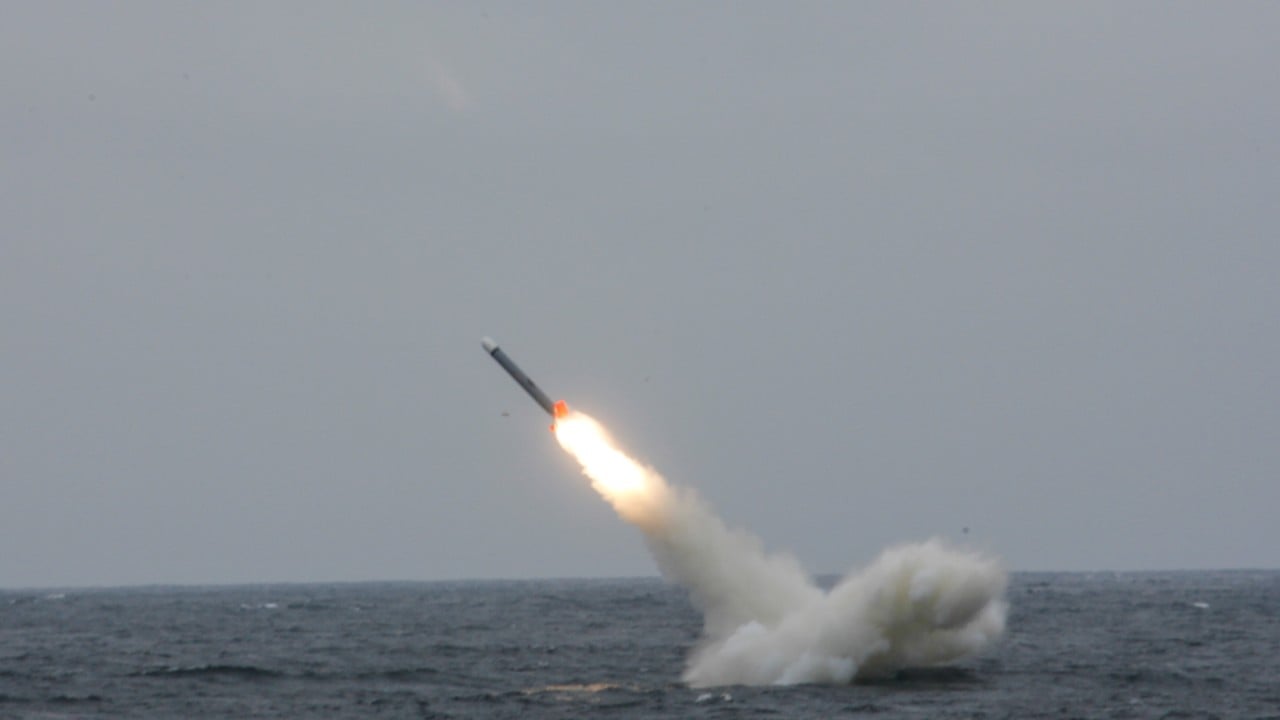
Bringing nuclear cruise missiles back to US Navy submarines sounds like Cold War nostalgia. It isn't.
Washington is pushing hard to revive the Nuclear-Armed Sea-Launched Cruise Missile, known as SLCM-N, and the momentum has picked up fast. Following earlier prototype agreements worth roughly $743.6 million across five contractors and a $194 million fire-control award to General Dynamics Mission Systems, the Navy tapped RTX's Raytheon in late November 2026 under an Other Transaction Authority agreement to advance missile development and subsystem integration. Congress even wrote a deadline into the fiscal year 2026 defense authorization act pushing for limited operational readiness no later than September 2032, ahead of a broader initial operating capability target around 2034.
If you've watched nuclear debates over the last decade, you know how fiercely this weapon divides people. Supporters say a stealthy, sea-based nuclear cruise missile gives the US a flexible regional deterrent against Russia and China. Critics argue it's an expensive distraction that raises miscalculation risks and adds fuel to an arms race.
Honestly, both sides are arguing about real trade-offs. What gets lost in quick headlines is how much engineering, fleet strain, and strategic ambiguity sit behind putting a nuclear cruise missile onto attack submarines.
Why Submarine-Launched Nuclear Cruise Missiles Returned to the Agenda
The US Navy isn't inventing this concept from scratch. During the Cold War, it fielded the nuclear-armed Tomahawk Land Attack Missile, or TLAM-N, starting in the mid-1980s. After the Cold War ended, Washington pulled those warheads off surface ships and submarines in the early 1990s and formally retired TLAM-N under the 2010 Nuclear Posture Review.
For years, that looked permanent. Arms control treaties and shifting threat assessments made tactical sea-based nuclear cruise missiles look like relics.
Then the strategic picture shifted. The first Trump administration revived the idea in the 2018 Nuclear Posture Review, pointing to Russian and Chinese investments in nonstrategic and regional nuclear forces. Later, the Biden administration sought to cancel SLCM-N in its 2022 review, arguing the existing triad and low-yield options already covered the mission at lower cost. Yet Congress kept funding it, and defense lawmakers steadily turned a contested proposal into an active acquisition effort.
Look closely at what changed. The debate moved from whether SLCM-N could be stopped to how fast contractors can build prototypes and integrate them onto ships.
Inside the Hardware and Fleet Trade-Offs
Let's be real about what SLCM-N actually does on paper. Unlike a massive submarine-launched ballistic missile firing from a dedicated boomer, a nuclear cruise missile is designed to fly low, follow terrain, and offer a lower-yield or regional strike option from platforms like Virginia-class attack submarines.
That creates practical headaches right away.
- Submarine capacity is tight: Attack submarines already carry conventional Tomahawks, torpedoes, unmanned systems, and special operations gear. Adding nuclear weapons means competing for hull space, maintenance slots, and crew training.
- Fire control and canisters aren't plug-and-play: Building a missile is only part of the job. Contractors like Northrop Grumman Mission Systems and Pacific Engineering Inc. have worked on launcher and canister development, while General Dynamics Mission Systems has worked on fire-control integration for Virginia-class boats. Raytheon's late-November 2026 agreement brings in teaming contributors such as Anduril Rocket Motor Systems, Divergent, and Williams International to push design maturity and subsystem integration forward.
- Schedule risk is real: A September 2032 limited readiness target or a 2034 initial operating capability date sounds far off until you factor in nuclear surety rules, warhead coordination, and shipboard certification. Defense programs routinely slip when integration hits real-world testing.
Some coverage frames SLCM-N as if a finished missile is already cruising beneath the waves. It isn't. As of late November 2026, it remains in development—moving from early concept work into design maturation, prototyping, and subsystem integration rather than active fleet deployment.
The Deterrence Argument vs. The Escalation Trap
Why do hawks push so hard for SLCM-N when the US already fields bomber-delivered weapons and low-yield ballistic warheads?
Proponents argue that forward-deployed submarines give regional commanders a survivable, hard-to-track option in contested waters like the Indo-Pacific or around Europe. The pitch is simple: if an adversary believes it can use limited nuclear force regionally without triggering a full-scale strategic exchange, a sea-based cruise missile helps close that perceived gap and reassures allies like Japan, South Korea, and NATO partners.
That argument makes sense if you view deterrence strictly through crisis signaling.
Critics see a nasty catch. Attack submarines launch conventional cruise missiles all the time. If an adversary detects a cruise missile launch from a submarine in a crisis, they won't immediately know whether the warhead is conventional or nuclear. That payload ambiguity can trigger hair-trigger overreaction—the exact opposite of stability.
There's also the money question. Analysts and independent watchdogs, including the Union of Concerned Scientists, have long questioned whether SLCM-N delivers enough strategic value to justify billions in development, warhead work, and operational overhead. Even when lawmakers debate budget line items and ten-year cost estimates across tactical nuclear programs, cost-versus-benefit stays front and center.
What This Means Beyond the Headlines
If you read regional security news from East Asia or Europe, you'll see SLCM-N cited as proof of sharpening great-power rivalry. That's fair, yet it's only half the story.
Inside the Pentagon and defense industry, the program is also a test case in faster contracting. Using Other Transaction Authority agreements lets the Navy pull in traditional primes alongside newer or specialized firms—such as Anduril Rocket Motor Systems and Divergent—to speed up prototyping and modular design. Whether that speeds up a notoriously strict nuclear program remains to be seen.
Meanwhile, one big caveat applies to almost all public reporting on SLCM-N: key technical details—exact range, final warhead configuration, and eventual fleet numbers—remain classified or under active review. Treat bold claims about exact capabilities or deployment dates with healthy skepticism until flight tests and official budget documents back them up.
Practical Next Steps If You're Tracking This Program
Don't rely on single-day headlines to judge where SLCM-N stands. Do this instead:
- Check primary contracting notices: Track releases from the U.S. Navy Strategic Systems Programs and prime contractors like RTX to separate early design and prototyping awards from actual production or deployment milestones.
- Watch annual defense bills and budget requests: Look at congressional authorization language and funding lines for SLCM-N and related warhead work, since congressional mandates have repeatedly overridden executive skepticism.
- Read both sides of the deterrence debate: Compare defense policy commentary with independent arms-control analyses from groups like the Union of Concerned Scientists so you weigh operational signaling against escalation and cost risks.