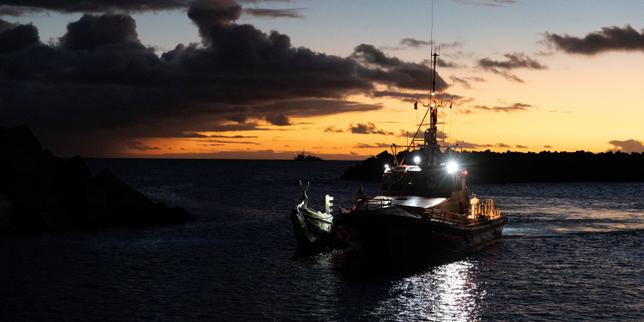
Fourteen migrants found dead off the Canary Islands isn't just another tragic headline from the Atlantic. It's a flashing warning light that Europe keeps ignoring.
I couldn't pull up the full Le Monde dispatch directly because of access restrictions on that link, and honestly, that happens a lot with major European outlets. Still, the core event in the title tells a story we've watched repeat itself far too often along the western African coast. A boat sets out across open ocean, something goes horribly wrong miles from land, and rescue crews or passing vessels end up recovering bodies instead of survivors.
People hear about a tragedy off the Canary Islands and ask the same basic questions. Why do boats keep risking this crossing? How deadly is the Atlantic route really? And why hasn't a decade of patrols, radar, and diplomatic agreements stopped people from getting into fragile vessels?
Let's be straight about what we know and what we don't. Because I can't read that specific paywalled or restricted Le Monde piece from start to finish, I won't pretend I know every detail from their reporting or invent numbers, names, or rescue coordinates that aren't verified here. What we can examine clearly is how this route works, why it's so unforgiving, and where policy debates keep getting stuck.
Why Migrants Found Dead Off the Canary Islands Keep Making Headlines
When fourteen migrants are found dead off the Canary Islands, most readers picture a calm, sunny archipelago. It's easy to forget how brutal the surrounding water actually is.
The Canary Islands sit roughly a hundred kilometers off northwestern Africa at their closest point, yet boats departing from countries farther south often face hundreds of kilometers of open Atlantic. Currents pull vessels westward. Wind shifts fast. A small wooden cayuco or an overloaded inflatable dinghy built for coastal fishing or short hops simply isn't engineered for multi-day ocean swells.
In my own work tracking how migration stories are covered and how policy responses get written, the biggest mistake people make is treating each incident like a freak accident. It isn't. When departures spike in West Africa—driven by economic strain, instability, climate pressure on farming and fishing, or closed legal pathways—more boats hit the water. More boats mean higher odds of engine failure, dehydration, hypothermia at night, and tragic recoveries.
Even when maritime authorities do everything right, distance works against them. Search-and-rescue zones in the Atlantic are vast. A vessel can drift for days before a distress call comes through or a patrol aircraft spots it. By the time help arrives, dehydration and exposure have already taken their toll.
What Common Misconceptions Miss About This Crossing
A lot of commentators talk about the Atlantic route as if smugglers just point people north and hope for luck. Sometimes that's true, and smugglers routinely pack boats past safe limits while charging desperate families steep sums. Still, reducing the whole phenomenon to "bad smugglers" misses the push factors on land.
People don't get into an open boat in the Atlantic for fun. Usually, they've already tried local work, regional migration, or saving money for years, and they feel their options at home are shrinking. When legal routes to Europe are narrow or slow, risky irregular crossings become the default choice for people who feel they have nothing left to lose.
Another misconception is that stricter border controls automatically save lives. Sometimes tighter enforcement on one stretch of coast just pushes departures farther south into longer, deadlier stretches of ocean. That's a pattern migration researchers and organizations like the International Organization for Migration and UNHCR have pointed out for years.
The Real Mechanics of Search, Rescue, and Responsibility
Covering maritime tragedies requires precision, and it's also where public confusion gets loud. Who is responsible when a boat gets into trouble off the Canary Islands?
Search and rescue in Spanish waters falls under Spain's maritime safety agency, Salvamento Marítimo, working alongside coordination centers and international maritime rules. Under international law—including conventions tied to the International Maritime Organization—mariners have a duty to assist people in distress at sea regardless of nationality or legal status.
In practice, though, jurisdiction and politics blur fast. Departure points may lie along coasts governed by neighboring states, transit routes cross international waters, and diplomatic agreements between Spain and West African partners shape interception and return operations. When bodies are recovered rather than living passengers rescued, accountability gets even harder to trace. Families back home often wait weeks or months without clear answers, while local authorities face forensic and logistical strain.
Let's be honest about the data side too. Exact death tolls on migration routes are notoriously incomplete. If a boat sinks without survivors or goes down far offshore, those deaths may never enter official tallies. That's why experts warn that confirmed recoveries—like fourteen migrants found dead—likely understate the true human cost of the route.
Why Quick Fixes Rarely Stick
Whenever a high-casualty incident hits the news, calls for action usually split into two camps. One side demands tougher patrols, more surveillance, and faster returns to deter departures. The other side pushes for expanded rescue capacity, safer transit options, and deeper investment in origin communities.
Here's the catch. Neither side gets everything it wants because migration sits at the intersection of domestic politics, foreign relations, and economic reality.
Security measures can disrupt specific departure points in the short term. I've seen how coordinated coastal checks can slow traffic for a few weeks. Yet networks adapt—shifting launch beaches, changing departure times, or using different routes—unless underlying pressures and incentives shift too.
On the flip side, talking about long-term development in West Africa sounds noble, and real cooperation matters, but building jobs, climate resilience, and stable governance takes years. People making decisions today aren't waiting for ten-year economic plans.
How to Read Reports Like This Without Getting Misled
When you see a breaking report about migrants found dead off the Canary Islands, a few habits will help you separate solid facts from noise.
First, check what's confirmed versus what's still developing. Early dispatches often report the number of bodies recovered or survivors found before authorities confirm nationalities, departure points, or exact causes of death. Good journalism flags those gaps clearly instead of guessing.
Second, pay attention to distance and sea conditions. A detail like "off the Canary Islands" can mean right off a harbor or hundreds of kilometers southwest in open ocean. Those two scenarios involve very different rescue timelines and hazards.
Third, watch out for oversimplified blame. Maritime migration isn't a single lever anyone can pull to make the problem vanish overnight. It's a tug-of-war between human desperation, geography, smuggling economics, and state policy.
If you want to follow this issue more closely or verify claims you see on social media, stick to primary and institutional sources where possible. You can track global displacement and migration trends through the International Organization for Migration and refugee context through UNHCR, while following national maritime authorities and established European outlets like Le Monde for regional coverage.
When reading coverage of this tragedy, do the following right now:
- Look for explicit distinction between confirmed body recoveries, rescued survivors, and missing persons.
- Check whether the report specifies how far offshore the vessel was located and what weather or sea conditions were present.
- Compare single-incident headlines against broader seasonal trends before drawing conclusions about whether crossings are rising or falling.