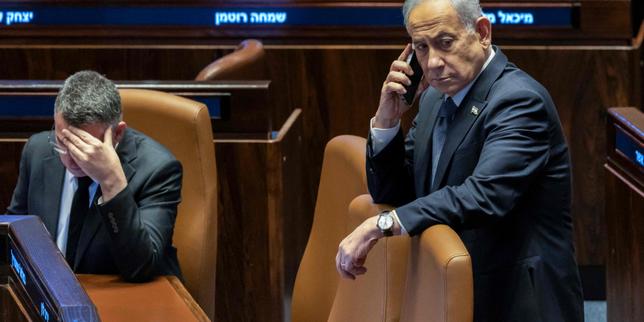
Israel's parliament just passed a preliminary vote to set up a state commission of inquiry into the October 7 attack and the war that followed. Sixty-five lawmakers voted in favor. Fifty voted against.
That sounds like a huge breakthrough after more than three years of stalling. Honestly, it is a real step forward, yet it's only step one in a long legislative slog. A preliminary reading isn't final law. The bill still has to go through Knesset committee work and clear three more readings before anything becomes official.
Still, if you're wondering why this vote matters right now, the answer comes down to power and independence. For years, caretaker Prime Minister Benjamin Netanyahu resisted a state commission of inquiry under the 1968 law, preferring a body shaped by politicians instead. Backing a statutory state commission in the new Knesset—elected on October 27, 2026—signals a sharp shift in who gets to ask the hardest questions about what went wrong.
What This Preliminary Vote Actually Does
Sponsor MK Orit Farkash Hacohen of the Yashar party, led by prime ministerial hopeful Gadi Eisenkot, put forward the State Commission of Inquiry into the 7 October 2023 Massacre Bill, 2026. According to the Knesset press release, the proposed panel would have five members and operate generally under Israel's 1968 Commissions of Inquiry Law.
Here's the timeline baked into the draft:
- It looks back from August 26, 2014—the end of Operation Protective Edge—all the way to January 26, 2026, when the body of the last fallen hostage was returned.
- It requires an interim report within one year of the commission's establishment.
- It sets aside an initial budget of seven million shekels, roughly US$2 million, to get the commission started.
Don't confuse a preliminary vote with a finished investigation. Think of it like getting a bill out of the starting gate in a crowded parliamentary calendar. Lawmakers have to send it to a committee, hammer out details, and survive three more floor readings. Political coalitions shift fast after an election, so what passes at 65-50 today can still get slowed down or amended later.
State Commission vs. Politically Appointed Probe
People often ask why the type of commission is such a bitter fight in Israeli politics. Isn't any investigation better than none?
Not when credibility is on the line. Under the 1968 law, a state commission of inquiry is Israel's highest investigative mechanism. Its defining feature isn't just holding hearings; it's autonomy from the political echelon being scrutinized, paired with broad subpoena authority and the ability to issue personal recommendations that can end careers.
By contrast, a committee appointed by politicians or tightly controlled by the government faces an obvious trust problem. If the people who made policy decisions—or their political allies—control who investigates them, critics will see a whitewash before day one. Look at historical precedents analyzed by security researchers like the Jerusalem Institute for Strategy and Security: past panels such as the Agranat Commission after 1973 and the Winograd Commission after 2006 shaped public accountability and institutional reform precisely because they weren't run as partisan score-settling exercises.
That doesn't mean a state commission is magic. Critics and legal scholars point out real drawbacks too:
- These probes can take years and generate massive friction across the military, intelligence agencies, and government ministries.
- Their recommendations aren't criminal verdicts, and governments have historically debated how quickly to act on them.
- Putting a twelve-year span on the mandate—from 2014 to early 2026—means the commission has a huge canvas to cover, which could strain its one-year interim report deadline.
Why This Fight Has Dragged on for Over Three Years
If you've watched Israeli politics since late 2023, you know the October 7 inquiry hasn't been a quiet legal debate. It's been a central fault line.
Bereaved families and hostage relatives have pushed relentlessly for an independent state probe, and groups like the October Council welcomed the November 25 preliminary vote as a long-awaited move by lawmakers who promised to back it. Opinion polling has repeatedly shown strong public backing for a state commission of inquiry, even as debates persisted over timing, scope, and accountability.
Meanwhile, Netanyahu's outgoing coalition repeatedly blocked efforts to create a state commission, arguing instead for alternative formats with political representation. On the campaign trail leading up to the October 27 election, Eisenkot made establishing an independent state commission a centerpiece pledge—though some bereaved families also pressed his bloc to move faster after the election results came in.
At the same time, this vote isn't happening in a vacuum. As covered in The Times of Israel, the Knesset has also been wrestling with heavy institutional bills—from prime ministerial term limits and rules on indicted lawmakers to rolling back parts of prior judicial and media overhauls. Everything in Jerusalem right now is tangled up in who holds institutional power and how checks and balances work.
Common Misconceptions About Commissions of Inquiry
When headlines hit about an inquiry bill advancing, a few myths tend to pop up right away. Let's clear them up.
First, a commission of inquiry is not a criminal court. It doesn't hand down prison sentences or replace police and prosecutorial work. Its job is to establish facts, examine systemic and leadership failures, and issue findings and recommendations.
Second, passing a preliminary reading does not mean the commission starts interviewing witnesses next week. The Knesset still has to assign the bill to a committee, complete the remaining legislative readings, enact the law, and actually form the five-member panel.
Third, don't assume a one-year interim report will answer every question. Big national security and policy reviews rarely wrap up neatly in twelve months—especially one spanning from August 2014 through January 2026. An interim report usually sets out early findings and direction while deeper work continues.
What to Watch Next as the Bill Moves Forward
If you're tracking this story—whether you're following Israeli politics, national security accountability, or regional affairs—don't get hung up on the single vote count alone. Watch the mechanics over the coming weeks.
- Track the committee assignment and markup. See which Knesset committee takes the bill and whether lawmakers try to narrow or expand its mandate, timeline, or powers.
- Watch the three remaining readings. A preliminary vote is just the opening hurdle; every subsequent reading is a chance for coalition bargaining, delays, or amendments.
- Compare competing proposals. Pay attention to whether backers of a politician-appointed model push counter-proposals or try to alter how members are chosen.
- Read primary legislative texts when available. Official Knesset updates and legal analyses will tell you far more than hot takes on social media about what the final law actually says.
If you're reading along without a Google account, signing in to a Google Account makes it much easier to save this thread and come back to follow how the bill moves through the Knesset.