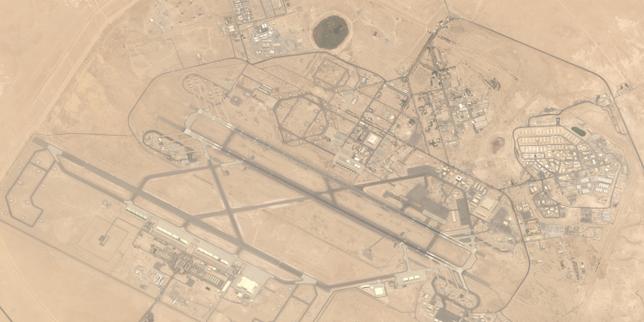
The rules of engagement in the Gulf just shifted overnight. When Iranian drone attacks hit targets in Bahrain and Kuwait, it wasn't just another border skirmish or a routine exchange of regional threats. It was a direct, calculated response to American bombardments on the Iranian island of Qechm. Suddenly, the conflict isn't contained to proxy battlegrounds or shipping lanes; it's knocking directly on the doors of key Gulf states that thought they could thread the needle of neutrality.
If you've been watching the Middle East through the lens of traditional diplomacy, you're missing the core reality. The friction between Washington and Tehran is no longer playing out strictly on theoretical diplomatic stages or through covert cyber operations. It's turning local military infrastructure across the Gulf into collateral damage.
The Escalation Chain Nobody Wanted to Admit
Let's look at how we got here. The sequence started when US forces launched heavy air raids targeting what they identified as missile and drone infrastructure on Qechm Island. Washington framed it as a defensive posture to protect regional assets and shipping channels. Tehran, however, viewed it as an open act of war on sovereign territory.
Instead of absorbing the blow or replying solely through maritime proxies in the Red Sea, Iran pivoted its operational focus westward. Bahrain and Kuwait found themselves staring down incoming combat drones. Why these two nations? Bahrain hosts major US naval command hubs, making it a permanent fixture in Iran's crosshairs. Kuwait, while historically maintaining a delicate balancing act of diplomatic mediation between Iran and the Gulf Cooperation Council, shares a tense maritime and geographic proximity that makes isolation impossible during a broader military escalation.
When foreign military assets are embedded within sovereign Gulf nations, local populations bear the immediate psychological and physical brunt of a superpower standoff. The illusion of a safe buffer zone in the Gulf has vanished.
What Regional Militaries Are Missing Right Now
Most conventional defense analysts keep talking about missile defense intercept rates and radar cross-sections. They're asking technical questions about Patriot batteries and electronic jamming. But they're ignoring the structural vulnerability that these drone attacks expose.
Gulf states are realizing that traditional, surface-level air defense systems are prohibitively expensive to maintain against swarms of low-cost loitering munitions. Firing a multi-million-dollar interceptor missile at a cheap commercial-grade drone isn't a sustainable defense strategy. It's an economic attrition trap designed to bleed state budgets dry while keeping regional risk permanently elevated.
Because of this harsh reality, defense planners in the region are already shifting capital investments underground. We're seeing an aggressive pivot toward reinforced subterranean command bunkers, hardened aircraft shelters, and decentralized early-warning architectures. You can't protect an entire nation's open coastline with surface batteries alone. Survival now requires deep physical decentralization and rapid-response kinetic jamming networks.
The Geopolitical Trap for Gulf Capitals
Governments in Manama and Kuwait City are caught in an impossible squeeze. On one side, their security umbrellas rely heavily on Western military cooperation and the presence of US bases. On the other side, geography dictates that they share a neighborhood with an aggrieved Iran that views those very bases as existential threats.
Neutrality is a nice talking point for press conferences, but it stops working the moment a kamikaze drone enters national airspace. Leaders across the region are quietly calculating that every escalation by Washington carries an immediate, localized invoice that local capitals are forced to pay.
Expect diplomatic channels to go into overdrive behind closed doors. You'll see public statements calling for calm, paired with frantic private messages urging Washington to exercise restraint, while simultaneously upgrading air defense integration with neighboring Arab states.
The security architecture of the Gulf is cracking under the weight of direct state-on-state friction. Pretending that local stability can be maintained through business-as-usual deterrence is no longer an option. The response to these attacks won't be fought with polite communiqués; it will be measured in how quickly these nations manage to harden their infrastructure before the next wave arrives.