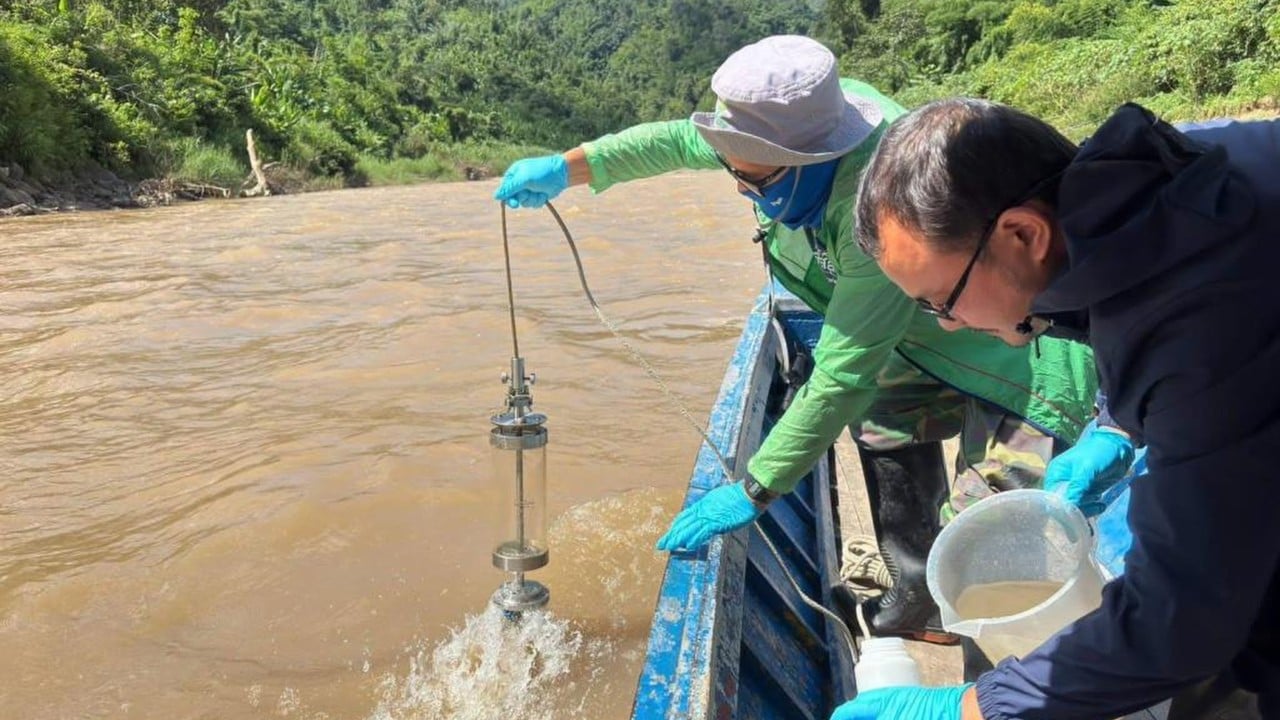
Arsenic is showing up in people's bodies along northern Thai rivers, and diplomatic pledges aren't going to flush it out tomorrow.
When Beijing pledged in November 2026 to work with Thailand and Myanmar on river pollution along their shared border, it grabbed headlines fast. Northern Thai communities have been staring down possible water supply disruptions after unregulated gold and rare earth mining upstream in Myanmar's Shan State pushed unsafe arsenic levels into tributaries feeding the Mekong system, including the Kok and Sai rivers. Bangkok pressed Beijing during talks to help identify mines, trace mineral flows, and shut down offending operations. Chinese Foreign Ministry spokesperson Guo Jiakun said China is closely following the issue, willing to strengthen water management cooperation, and expects Chinese firms operating overseas to follow local laws while opposing ecological damage.
That diplomatic warmth sounds reassuring on paper. Honestly, if you've watched transboundary river politics in mainland Southeast Asia for years, you know pledges are the easy part. Enforcement in a fractured conflict zone is the hard part.
What Mekong Basin Pollution Actually Looks Like on the Ground
Most headlines treat the Mekong basin like a single neat pipe. It isn't. It's a sprawling web of mountain streams, border rivers, floodplains, and mainstem channels sustaining roughly 70 million people across Cambodia, Laos, Thailand, and Vietnam, as documented by the Mekong River Commission.
Around the Golden Triangle in Chiang Rai province, the Kok flows out of Shan State into Thailand while the Sai and Ruak trace border stretches before feeding into the broader river network. Tests by Thailand's Pollution Control Department from March to September 2025 already flagged arsenic and other heavy metals in water and sediment across the Kok and its tributaries, as well as the Sai, Ruak, and Mekong rivers. By November 2026, reports highlighted fish with visible sores in the Mekong and health screenings in Nong Khai where 17 residents exceeded a 100 micrograms per liter urinary arsenic reference threshold, well above the World Health Organization's 10 micrograms per liter provisional guideline for arsenic in drinking water.
Even more striking, Thai opposition leader Natthaphong Ruengpanyawut pointed to state agency tests on the same 322 people between 2025 and 2026 showing accumulated arsenic levels rising by more than 50 percent. Whether people absorb arsenic by drinking untreated water, bathing, or eating contaminated fish and aquatic life, the health risk builds quietly. Long-term inorganic arsenic exposure raises risks of skin, bladder, and lung cancer, while acute exposure can trigger stomach pain, vomiting, and diarrhea.
Why Rare Earths and Gold Turn Shan State Into a Blind Spot
If you want to know why shutting down a single mine is so messy, follow the money and the guns.
According to the U.S.-based Stimson Center, more than 2,400 mines—many unregulated or illegal—operate across mainland Southeast Asia and risk releasing toxic inputs such as cyanide and mercury into regional waterways. In Myanmar's Shan State, armed conflict and weak state oversight create a vacuum where extraction thrives. Rare earth elements and gold generate serious revenue for armed factions on multiple sides of the conflict, which means local power brokers have strong financial reasons to resist sudden shutdowns.
Here's the twist people often miss. Mining is only step one. Separation and refining are step two. Many small or informal rare earth operations lack domestic separation facilities, so they rely on cross-border supply chains and processors—many located in China—to turn raw concentrate into usable materials. Meanwhile, private Thai companies, along with Thai-Myanmar and Thai-Chinese joint ventures, have been linked to importing minerals across the border and moving shipments toward ports like Laem Chabang for export to China.
That makes Mekong basin pollution a supply-chain problem, not just a river problem. You can announce a six-month mine closure in Shan State, yet if ore still moves across borders and buyers keep paying for cheap feedstock, another pit opens fifty miles away.
The Diplomacy Gap Between Talk and Enforcement
Beijing has every incentive to keep ties smooth with Bangkok and protect its regional image. Through the Lancang-Mekong Cooperation mechanism—which brings together all six Mekong countries, including China and Myanmar—Beijing already plays a central role in technical exchanges and infrastructure financing, unlike the Mekong River Commission, where China sits as a dialogue partner rather than a formal member.
Still, there's a big gap between sending experts or pledging capacity-building and actually shutting down mines inside Myanmar. Chinese officials have emphasized that Beijing requires overseas enterprises to obey local laws and notes that river water quality reflects multiple drivers, including geology, climate shifts, and human activity. Geologists and hydrologists aren't wrong about natural background factors in mountain rock. Yet pointing to geology shouldn't obscure acute chemical spikes caused by poorly contained tailings and processing runoff.
In my experience covering cross-border resource disputes, diplomatic promises stall when three things collide:
- Jurisdiction limits: Thailand cannot police mine sites inside Myanmar on its own, and Myanmar's central authority doesn't control every corner of Shan State.
- Opaque supply chains: Without mineral origin tracing and customs transparency, dirty ore can slip through informal crossings or get blended into legitimate shipments.
- Delayed public data: Communities lose trust fast when water tests happen behind closed doors or results take months to reach local residents.
Where Data Is Thin and Views Clash
Let's be straight about what we don't know yet. Publicly available testing often captures snapshots in time or specific stretches of river rather than continuous, real-time monitoring across every tributary and mine tailing pond. Seasonal monsoon rains can dilute concentrations on one day and flush concentrated sediment downstream the next.
Opinions on fixes also clash. Some critics argue Bangkok should refuse mineral imports from any mine or trader tied to poor environmental controls and demand strict cross-border monitoring across all six rivers—the Kok, Sai, Ruak, Mekong, Salween, and Kra Buri. Others warn that abrupt trade crackdowns or uncoordinated border closures could push smugglers into even murkier routes or strain bilateral diplomacy before alternative clean water systems are ready in affected villages.
Both sides have a point. You can't protect villagers with press releases alone, and you can't fix a multi-layered border economy overnight without creating knock-on shocks.
Practical Next Steps for Communities, Officials, and Watchdogs
If you live along these waterways, work on regional policy, or track supply-chain risks, waiting on high-level summits isn't a strategy. A few concrete moves matter right now:
- Prioritize local clean water and health screening: Households near affected tributaries should rely on verified safe drinking water and follow local public health guidance on fish consumption and medical screening rather than assuming boiled river water removes dissolved heavy metals.
- Push for public, frequent water testing: Advocates and local leaders should press authorities to publish exact sampling dates, locations, and lab results—and expand local testing capacity in northern hubs like Chiang Rai and Chiang Mai so communities aren't left guessing.
- Trace the minerals, not just the water: Policymakers and supply-chain auditors should demand origin verification and customs scrutiny on rare earth, gold, and base-metal shipments crossing borders so pollution costs aren't dumped on downstream towns.
- Track joint working group commitments: Watch whether upcoming bilateral and trilateral talks produce binding monitoring schedules, mine-site remediation rules, and clear accountability—not just another round of goodwill statements.
(Note: Because you're currently browsing in signed-out mode, signing in to a Google Account can help you save this thread and come back to your notes later if you want to track how the talks unfold.)
Clean water along the Mekong won't come from polite statements alone. It will come from tracing every gram of toxic runoff and every truckload of ore until polluters pay the price instead of river towns.