Picture a 15-year-old kid trying to stand up after a blood clot cuts off blood flow to his spinal cord. Walking isn't just physically hard—it's exhausting, repetitive, and often frustrating when your legs don't listen on command.
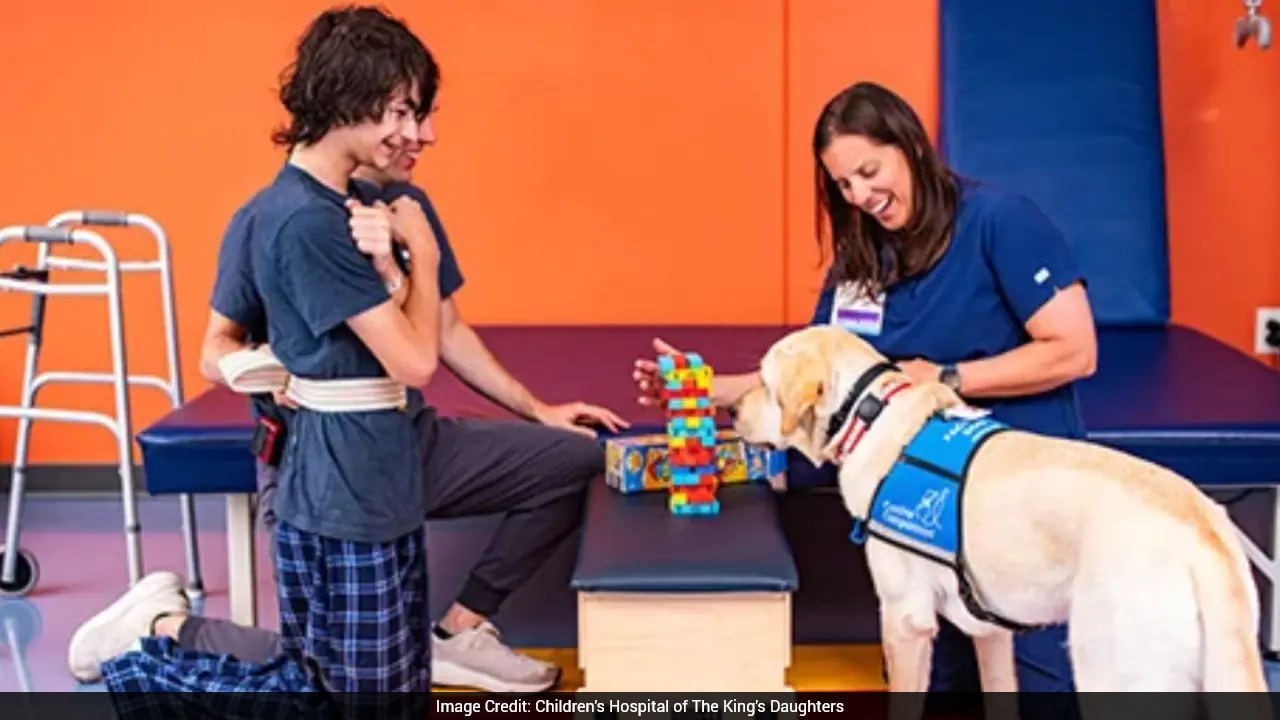
When Virginia teen Noah Ashworth went through inpatient rehabilitation at Children's Hospital of The King's Daughters in Norfolk, his recovery included working with a facility dog named Wally, a Labrador and golden retriever mix placed through Canine Companions. Games like fetch and tug-of-war weren't just distractions from hospital walls. They pushed him to work on core strength, balance, and weight shifting from one foot to the other as he worked toward standing and walking again.
Stories like this grab attention fast because a dog pulling on a rope looks nothing like a textbook clinical drill. Still, if you look closer at what actually happens in neurorehabilitation, playful animal-assisted therapy isn't a magic cure that repairs spinal tissue on its own. It's a practical way to keep a patient moving, engaged, and willing to do hard motor work when standard routines start feeling like a grind.
How a Spinal Cord Stroke Changes Movement and Rehab
A spinal cord stroke—often tied to a blood clot or reduced blood supply to the spinal cord—disrupts signals traveling between the brain and the body. Unlike a typical brain stroke where people immediately recognize slurred speech or facial droop, spinal cord ischemia hits motor control, sensation, balance, and reflexes below the affected level.
In rehab, regaining walking takes thousands of targeted repetitions. Therapists focus on trunk stability, posture, weight shifting, standing tolerance, and stepping mechanics so surviving neural pathways and spared circuits can adapt. You can read more about how movement training supports neural adaptation in NIH research on interventions for neural plasticity in stroke recovery.
Here's the catch that anyone who has spent time in a rehab gym knows well. High-repetition therapy gets boring fast, especially for teenagers. Counting reps in parallel bars or doing the same balance shift ten times in a row can make a patient zone out or quit early.
When a trained dog enters the room, the cue changes. Instead of thinking, Shift my weight left, brace my core, step forward, a teen reaches out to throw a toy or holds steady during a controlled game of tug. That shift in attention matters. Goal-directed movement tied to an engaging task often keeps effort higher over a full session than dry, mechanical drills.
What Science Actually Says About Dog Therapy in Rehab
Let's be honest about the evidence so nobody overhypes it. Animal-assisted therapy has real promise, yet the clinical research on spinal cord injury and neurorehabilitation is still growing and mixed on certain outcomes.
A scoping review published on PubMed Central (animal-assisted treatment in spinal cord injury rehabilitation) examined peer-reviewed studies in spinal cord injury rehab and found encouraging signs in areas like mood, motivation, stress, movement mechanics, and engagement. At the same time, researchers noted that findings aren't uniform across every measure—for instance, pain ratings and long-term durability aren't automatically transformed by a single type of session, and larger, longer studies are still needed.
Other rehab research echoes that nuanced picture. Studies involving trained dogs in inpatient and neurorehabilitation settings frequently report better mood, lower perceived stress during sessions, higher motivation to participate, and gains in functional tasks like walking distance or standing tolerance when paired with structured therapy. Yet physiological stress markers like cortisol don't drop dramatically in every study, and dog therapy works best alongside—not in place of—evidence-based physical and occupational therapy.
I've seen plenty of therapy ideas sound great in a brochure and fall flat on a tough Tuesday afternoon. A dog won't fix poor biomechanics or replace skilled physical therapy. What a well-trained facility dog does reliably offer is a reason to show up with energy, try one more weight shift, and tolerate tough stretches in the hospital without feeling like a lab specimen.
Facility Dog vs. Pet or Emotional Support Animal
People mix these terms up all the time, so it helps to separate them clearly:
- Facility dogs are trained—often through organizations like Canine Companions—to work in clinical, educational, or healthcare settings alongside trained staff to support therapeutic goals and patient care.
- Service dogs are individually trained to perform specific tasks directly mitigating a person's disability.
- Emotional support animals provide comfort through companionship, though they don't carry the specialized public-access or clinical task training of a facility or service dog.
In a hospital setting, that distinction matters for safety, hygiene, infection control, and clinical structure. Bringing a family pet into an inpatient unit isn't the same thing as working with a vetted facility dog team inside a structured rehab plan.
Practical Next Steps for Patients and Families
If you or someone in your family is navigating recovery after a spinal cord stroke or neurological injury, treat playful therapy as one smart piece of a broader plan rather than a standalone fix:
- Ask the rehab team about structured goals first. Ask physical and occupational therapists how any activity—whether traditional gait training or animal-assisted work—targets core control, balance, weight shifting, or safe walking mechanics.
- Check whether your hospital or clinic has a credentialed program. If you're curious about facility dogs, ask how handlers are trained, how sessions are integrated into therapy goals, and what infection-control rules apply.
- Track real-world milestones, not just novelty. Pay attention to concrete progress like standing time, steadier weight shifts, reduced fatigue, and willingness to complete full therapy blocks.
- Plan for life after discharge. Hospital rehab is only the start; ask early about outpatient physical therapy, home exercise routines, and safe progression once you leave the inpatient unit.