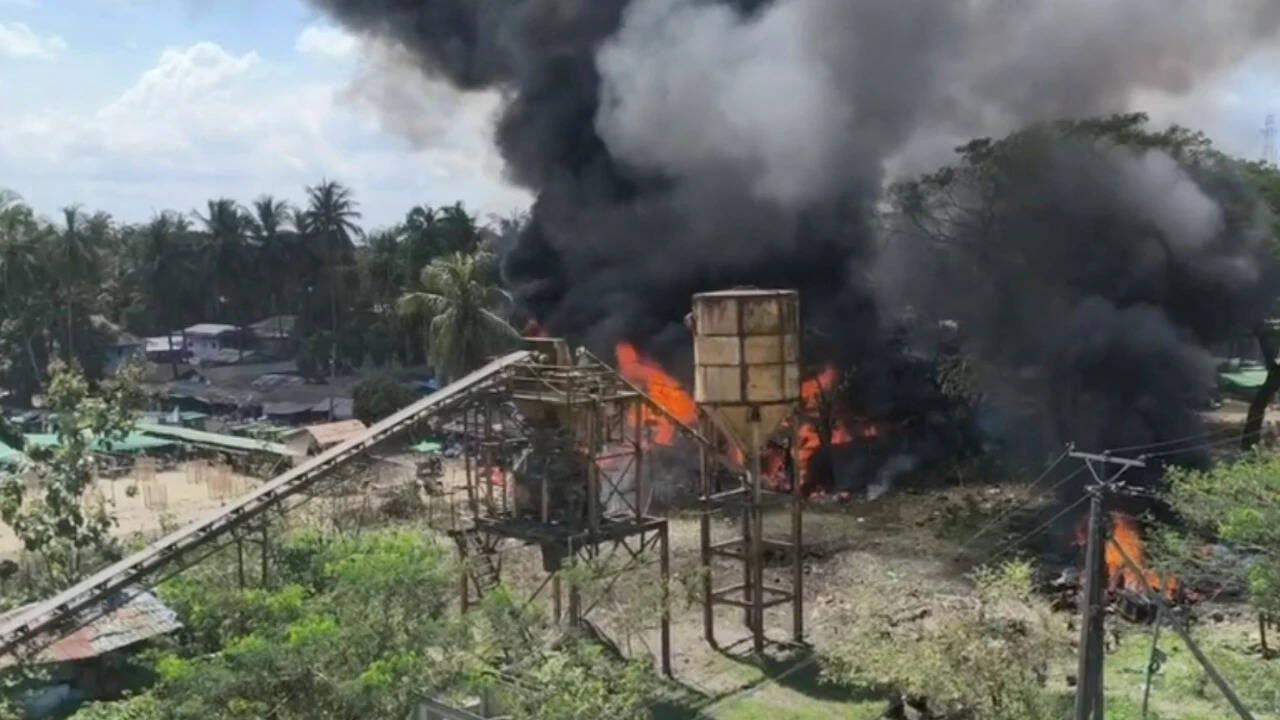
Two bombs, two civilian gatherings, and more than 35 lives lost in a single span of days. First came a Thursday afternoon strike on a school and monastery compound in Sinbaungwe Township in Myanmar's central Magway Region. Then came a Saturday hit on a house hosting a wedding for displaced residents near the Moe Bye area along the Shan and Karenni state border.
People searching for news about these Myanmar military airstrikes usually want three things fast. They want to know what happened, who died, and why international pressure hasn't stopped the planes from flying.
Here's the blunt reality. Airpower has become the junta's main crutch as ground troops lose territory across Myanmar. When territory slips away, aerial attacks rise.
What Happened in Sinbaungwe and Moe Bye
The strike in Sinbaungwe Township hit around 3 p.m. local time on Thursday during a religious ceremony at a school and monastery compound. According to the opposition National Unity Government (NUG), the interim Magway Federal Unit Government, and a local witness who spoke to Reuters, at least 30 people died—including an infant, schoolchildren, women, and nine resistance fighters.
Opposition authorities reported a heavy mix of firepower: four 500-pound aerial bombs, 12 artillery shells, and seven suicide drones. A local witness told Reuters there were no active clashes in the village at the time, noting that resistance fighters only passed through occasionally. Pro-military Telegram channels claimed the attack targeted a graduation ceremony and a gathering of rebel forces, though Myanmar's military had not issued an official statement by Saturday afternoon.
Two days later, another strike hit a house being used for a wedding in the Moe Bye area, straddling the border of Shan and Karenni states. A witness told AFP that preparations were underway for two displaced people to marry when the bomb struck. He said he found 17 bodies at the scene, while photos and videos shared by him and other villagers showed at least six dead and many wounded, including women and children.
One detail from Moe Bye sticks with you. A witness told AFP he heard aircraft overhead and thought his area wouldn't be bombed, right before an explosion shook the ground and smoke rose up. In a video from the aftermath, a bloodied, crying girl asked where her parents were; when told he needed to take her to a clinic first and would call her mother, she said her parents had no money to pay.
Why Myanmar Military Airstrikes Are Escalating
If you've watched this conflict closely since the February 2021 coup that ousted Aung San Suu Kyi's elected government, this pattern isn't new. It's intensified.
According to NUG records cited in recent reporting, Myanmar's military carried out 15,327 airstrikes across 6,653 separate incidents between February 1, 2021 and late October 2026. Those records put civilian deaths from air attacks at 6,467, alongside damage to 562 schools and 848 religious buildings. Broader conflict tracking by monitoring group ACLED puts total deaths across the war at more than 100,000, with over 3.5 million people displaced according to Reuters.
Why rely so heavily on aircraft and drones? Because holding ground across rugged rural terrain is costly and exhausting for ground units. Airstrikes let commanders project force into areas outside garrison control, strike perceived gatherings, and terrorize communities that shelter or live alongside resistance groups.
That doesn't mean every claim goes unchallenged. In conflicts like Myanmar's, casualty tallies and target descriptions often come from local witnesses, opposition administrations, or pro-military social channels before independent verification is possible. Still, the sheer volume of strikes on schools, monasteries, and civilian spaces points to a consistent tactic rather than a one-off mistake.
Timing After the ICJ Genocide Ruling
These attacks landed just a week after the International Court of Justice (ICJ) ruled that Myanmar committed genocide against the mostly Muslim Rohingya minority during the 2017 military crackdown in Rakhine State.
Min Aung Hlaing, who led the 2021 coup and was installed as civilian president this year following widely criticized elections, told state media on Thursday that his government wouldn't comply with "inappropriate" parts of the ruling. That defiance signals something important for anyone tracking accountability. Legal rulings from The Hague carry moral and diplomatic weight, yet they don't automatically ground jets or cut off fuel deliveries on the ground.
Common Misconceptions About the Air Campaign
People often misunderstand how air attacks work in Myanmar's civil war. Let's clear up a few frequent assumptions.
- Airstrikes only happen during active gun battles: Not true. Witnesses in Sinbaungwe reported no active clashes when the strike hit, and Moe Bye's attack struck a wedding gathering. Strikes often target perceived assemblies or resistance-linked areas even without an immediate firefight.
- The military controls everything around a strike zone: Wrong again. Around Moe Bye, the military controls the town itself, while opposition forces operate in surrounding rural areas and villages. Control in Myanmar is patchy, shifting from town to highway to hillside.
- International court rulings stop attacks right away: Courts don't enforce orders with police forces. Without concrete supply cutoffs—especially aviation fuel, munitions, and drone components—air operations can keep running even after major legal condemnation.
What Accountability and Supply Chains Actually Look Like
Following the Sinbaungwe strike, the NUG and interim Magway authorities called the attack a war crime and a violation of the Geneva Convention. They said they're gathering evidence for future international legal cases and pressed the United Nations, ASEAN, and neighboring countries to halt supplies of aviation fuel, munitions, and drone technology to the military.
Honestly, that's where the real leverage sits. International law moves slowly, and armed groups in conflict zones rarely fold to speeches alone. Tracking how fuel reaches airbases, how dual-use or military drone parts move across borders, and how regional neighbors handle border security matters far more in the near term than diplomatic statements.
At the same time, you have to stay clear-eyed about evidence limits. When reporters rely on witness accounts, videos, and opposition tallies—while military officials stay silent or pro-junta channels push counter-claims—some numbers stay contested or partial. Mentioning both the 17 bodies a witness reported finding in Moe Bye and the at least six deaths visible in shared footage is a good example of careful reporting rather than overclaiming.
Practical Next Steps for Following and Supporting Relief
If you want to track this crisis accurately or help people affected without falling for misinformation, take a few practical steps:
- Cross-check casualty numbers across sources: Compare initial witness estimates with later verification from established news agencies like Reuters or AFP and independent conflict trackers like ACLED, and note where figures remain unconfirmed.
- Watch aviation fuel and supply reporting: Pay attention to investigative reporting and policy updates from UN bodies, ASEAN discussions, and human rights monitors focused on jet fuel, weapons transfers, and drone tech—those bottlenecks shape operational tempo.
- Vet aid channels before donating: If you plan to support displaced families or medical clinics inside Myanmar or along border areas, verify that the organization has transparent operations and clear delivery routes for displaced communities.
- Keep context on the broader timeline: Connect current strikes in Magway, Shan, and Karenni areas to the wider post-2021 conflict and recent ICJ developments rather than treating each headline as an isolated event.