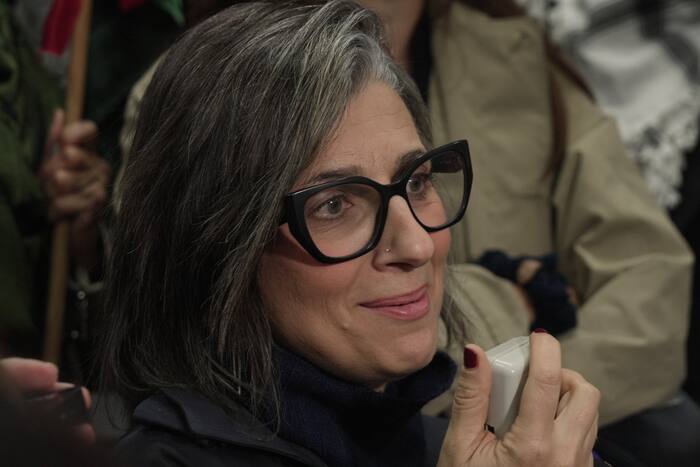
Imagine flying halfway around the world to accept an honorary doctorate, only to spend two sleepless nights under bright terminal lights surrounded by security guards. That's what happened to Francesca Albanese.
She is the United Nations special rapporteur on human rights in the occupied Palestinian territories. On Thursday, November 26, 2026, Costa Rican immigration officials blocked her from entering the country at Juan Santamaría International Airport near San José. She was scheduled to receive an honorary degree from the University of Costa Rica on Friday.
By Saturday morning, November 28, after roughly two days stuck in airport limbo and court battles over her detention, Albanese boarded a flight to Mexico. The standoff turned a university ceremony into a sharp clash over diplomatic immunity, foreign policy alignment, and judicial independence.
What Actually Happened When Albanese Landed in San José
The core question people are searching for is simple. Why would a country known globally for peace and democratic stability stop a sitting UN human rights expert at the border?
Costa Rica's immigration director, Omer Badilla, stated that Albanese was barred due to an alleged international alert over links to terrorist acts and described her as posing a profile against national security. Officials didn't publicly identify which agency issued that alert or release evidence backing the claim.
Albanese flatly rejected the accusation from the airport. She argued that advocating for human rights isn't terrorism, demanded proof, and warned that Costa Rican authorities would face accountability for spreading what she called false claims.
While immigration held her, the situation got messy fast. She shared photos on X showing her luggage beside an airport bench, describing uncomfortable seating, constant noise, bright lights, and security watching her every move. Instead of walking across a stage at the University of Costa Rica on Friday, she delivered her keynote address remotely while still stuck at the airport.
Civil rights advocates and legal allies stepped in quickly. Former colleague Víctor Madrigal-Borloz and civil society groups filed habeas corpus petitions before Costa Rica's Constitutional Chamber of the Supreme Court. Those court orders required authorities to return her passport and allow her a brief stay at an airport hotel to rest before flying out to Mexico on Saturday morning.
Why This Standoff Hits Harder Than a Routine Visa Refusal
Countries turn travelers away every single day. Usually, it barely makes international headlines unless a well-known public figure or diplomat is involved.
Here, the stakes are different. Special rapporteurs aren't standard tourists or casual activists. They're independent experts appointed by the UN Human Rights Council to monitor, report, and advise on specific human rights situations worldwide.
When a government blocks a UN rapporteur without transparent proof of a security threat, it raises a tough question about international cooperation. Even when governments disagree fiercely with a rapporteur's findings, barring one at the border sets a precedent that other states can point to later.
In my experience watching diplomatic rows unfold, the way a state handles an entry ban matters almost as much as the ban itself. Keeping someone in an airport terminal for two days while courts and immigration officials spar creates optics that hurt the host country's reputation—especially when that country prides itself on rule of law.
Geopolitics Behind Costa Rica's Move
You can't read this episode in a vacuum. Costa Rica's foreign policy under President Laura Fernández—who took office in 2026 after former president Rodrigo Chaves, now serving as minister of the presidency in her cabinet—has leaned much closer to Washington and Jerusalem.
Under both the Chaves administration and Fernández's government, Costa Rica has moved toward tighter ties with Israel, abstained on certain UN resolutions critical of Israeli actions, and pursued a pending free trade agreement with Israel. Cooperation with the Trump administration on security and migration has also been a visible pillar of San José's alignment.
Reaction across the diplomatic spectrum split right along those fault lines:
- UN and rights voices: UN High Commissioner for Human Rights Volker Türk said the move was hard to square with Costa Rica's long human rights record, while Amnesty International called the government's actions shameful. Italy's foreign ministry also pressed Costa Rica to let her enter.
- Supporters of the ban: Israeli UN Ambassador Danny Danon welcomed Costa Rica's decision, and US officials at the UN celebrated keeping Albanese out. Watchdog group UN Watch also praised the entry ban over the alleged terror-link alert.
Honestly, that split sums up the polarization around Albanese's mandate. Her reports accusing Israel of genocide and severe abuses in Gaza and the West Bank have made her a lightning rod. Some governments and advocacy groups view her work as vital accountability; others view her rhetoric and mandate as biased and destructive.
What Most Coverage Misses About the Backlash
Many quick wire summaries stop at the airport drama and the name-calling on social media. Yet two deeper angles deserve closer attention.
1. The Sanctions Shadow and Financial Friction
Albanese has already faced sanctions from the United States, and she has noted previously that those measures complicate basic everyday logistics like banking and cards. From the airport, she called for clarity on whether her entry refusal in Costa Rica tied back to US sanctions pressure.
Even without an explicit public admission from San José, sanction regimes cast a long shadow. When a prominent critic of a major superpower is hit with sanctions, smaller partner nations sometimes tighten border scrutiny or adopt aggressive security postures to stay aligned with key allies.
2. A Warning Directed at Costa Rica's Own Institutions
Before leaving for Mexico, Albanese aimed a pointed message not at rival politicians, but at everyday Costa Ricans. She urged citizens to protect their independent judiciary and their public universities, arguing both were under pressure.
Think about why that landed where it did. The University of Costa Rica wanted to honor her, while the Constitutional Chamber stepped in with interim orders affecting her detention and hotel transfer. That put the executive branch's immigration enforcement directly at odds with academic autonomy and judicial review.
Common Misconceptions About This Story
Because headlines move fast, a few myths are already floating around:
- Myth: Albanese was permanently banned from Latin America. Not true. She left Costa Rica and traveled on to Mexico, where she spoke with supporters and continued her schedule.
- Myth: Costa Rican courts forced the government to let her into the country. Not quite. Court intervention focused on habeas corpus and interim orders regarding her detention conditions, passport return, and resting at an airport hotel ahead of departure—not granting full entry into Costa Rica.
- Myth: Every UN special rapporteur has identical formal diplomatic status to an ambassador. In reality, rapporteurs serve as independent experts under UN special procedures rather than accredited state ambassadors, which sometimes creates gray areas in how host governments treat them at borders.
Practical Next Steps If You're Tracking This Story
If you want to follow how this dispute develops without getting lost in partisan spin, do three things:
- Watch for official Costa Rican disclosures: Look for whether immigration or executive officials release any formal documentation explaining the alleged international alert, or whether legal challenges over the detention continue in Costa Rican courts.
- Read primary statements side by side: Compare full statements from the UN Human Rights Office, the University of Costa Rica, and critics of Albanese rather than relying on single-sentence social media posts.
- Track regional diplomatic ripples: Pay attention to how other Latin American governments—including Mexico, where she arrived next—handle UN mandate holders and foreign policy disagreements in the weeks ahead.