Ten people dead and 110 wounded in a single morning at a school in eastern Afghanistan doesn't happen by accident, even when officials call it an accident.
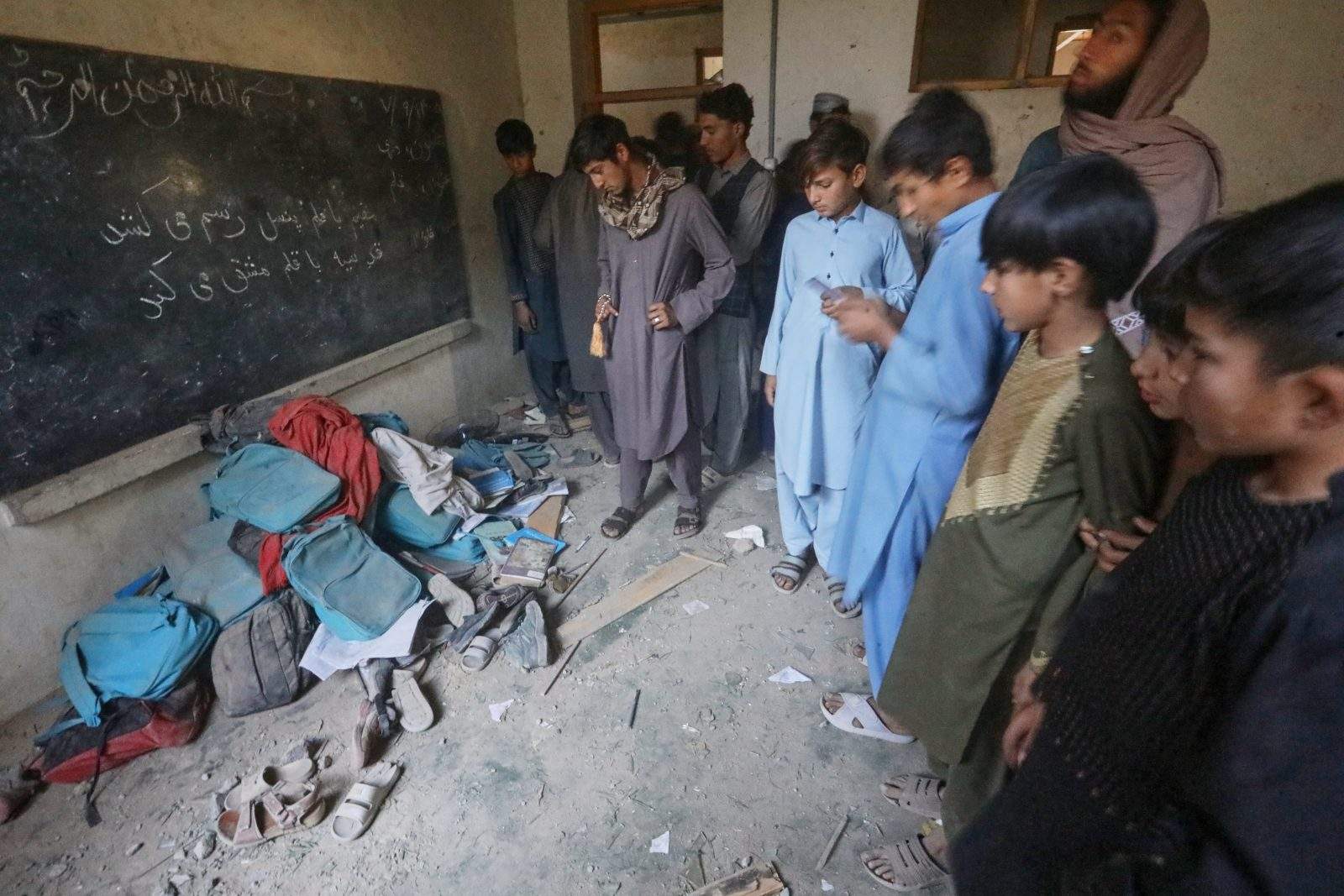
On Saturday, November 28, 2026, around 10:00 a.m., a massive blast tore through a primary and middle school in the Andar Ser area on the outskirts of Asadabad, the capital of Kunar province. Most of the victims were children. According to officials cited by Global News, the explosion appeared to start at a neighboring depot storing explosives for mining companies, with initial reports pointing to negligence at the facility.
When you read a wire brief about a school blast in Afghanistan, your brain immediately jumps to a familiar script. You picture a targeted attack or an insurgent raid. This time, the horror looks different—and honestly, that difference makes it even harder to stomach.
What Happened in Asadabad and Why Numbers Shift Fast
Let's start with what we actually know so far. Interior ministry spokesperson Abdul Mateen Qani gave the toll of 10 dead and 110 wounded, while Kunar Provincial Police Headquarters spokesperson Farid Dehqan confirmed the time and location in Andar Ser near Asadabad. Provincial culture and information director Sami ul Haq Bayan stated that preliminary findings pointed to negligence at a nearby explosives depot used by mining companies, noting that the materials were meant for mining work and clearing hazardous rocks along mountain slopes toward the Kunar-Nuristan highway. Additional analysis by Wikipedia highlights comparable perspectives on the subject.
If you checked other outlets on Saturday afternoon, you probably saw slightly different figures—some reports early in the day cited seven killed and dozens or up to 99 injured before updated tallies reached 10 dead and 110 wounded. That gap isn't necessarily a conspiracy or sloppy reporting. In a chaotic blast zone where families load injured kids into private cars and rush straight to the hospital, early counts lag behind hospital admissions and official confirmations.
Neighbors and parents didn't wait for an investigation report to see the damage. Noor Rahman, who lives next door to the school, told reporters he saw dust rising, ran toward the screams, and pulled his niece along with other injured people out from under fallen bricks. Haji Sulaiman, whose son was hurt, described collapsed rooftops, missing walls, and a scene where almost nothing remained of the school structure. Hospital footage from Asadabad showed young children with bandaged heads and patients sharing beds as emergency wards absorbed the rush.
Why an Afghanistan School Explosion Points to Mining Safety
Here's the angle short news briefs barely scratch. When a country pushes hard to extract mineral wealth without strict industrial oversight, dangerous materials end up too close to daily life.
Afghanistan holds major deposits of iron ore, copper, lead, zinc, gold, coal, and precious stones. In Kunar specifically, gemstone mining has expanded, with companies extracting stones sold at auction alongside blasting work tied to mountain roads. Commercial blasting requires serious explosives handling, secure magazines, strict setback distances from schools and homes, and trained personnel.
When safety standards lag behind extraction, the bill doesn't show up on a mining company's balance sheet first. It shows up in a classroom wall blowing inward at 10:00 a.m.
From years of watching industrial and infrastructure incidents in under-regulated regions, one mistake repeats constantly: treating explosive storage as a temporary logistics chore rather than a high-risk engineering problem. People assume a depot on the edge of town is "far enough" until a spark, heat, shock, or improper handling proves otherwise. Even when authorities launch an investigation—as Kunar officials have—early claims of negligence still need forensic verification to prove exact causes and chain of custody.
A Pattern of Danger Around Schools
You can't look at Kunar in isolation without seeing how fragile children's spaces remain across Afghanistan. Just a few months earlier, in August 2026, an explosion at a Kabul education center wounded more than 40 children aged between 9 and 14, according to reporting on the incident.
Stepping back further, data compiled by the UN Office of the Special Representative of the Secretary-General for Children and Armed Conflict covering January 1, 2023 through December 31, 2025 documented 1,415 children killed or maimed across Afghanistan, alongside 338 recorded attacks on schools and hospitals. While commercial explosives negligence isn't the same thing as a deliberate attack, the outcome for a child sitting at a desk is devastating either way.
What People Get Wrong About School Blasts Here
- Assuming every blast is a militant strike: It's tempting to read every explosion near a school as ideological violence. In Asadabad, officials pointed to a mining explosives depot and suspected negligence rather than a targeted attack. Misreading the cause leads to the wrong prevention fixes.
- Treating initial casualty numbers as final: Early figures in mass-injury events fluctuate as severe cases deteriorate or additional victims arrive at clinics. Treat first-day numbers as a baseline, not a closed book.
- Separating economic extraction from public safety: Mining revenue and road-clearing projects sound purely economic on paper. Without strict siting rules and enforcement, storing blasting agents near neighborhoods creates a direct public health hazard.
Practical Steps When Tracking Developing Crises
If you're following this story—whether as a researcher, aid observer, journalist, or engaged reader—a few habits will save you from bad information and help you spot real accountability:
- Cross-check casualty updates against official and hospital reports: Watch how numbers evolve over 24 to 72 hours as provincial authorities, interior spokespeople, and medical facilities reconcile counts.
- Separate preliminary blame from investigation findings: Officials in Kunar cited suspected negligence at a mining depot while an inquiry was underway. Track whether later updates identify the specific company, storage method, or ignition trigger.
- Look at buffer zones and oversight rules: Pay attention to any announced restrictions on where explosives depots can sit relative to schools, homes, and highways, plus whether independent monitors or humanitarian agencies report follow-up medical and reconstruction support.
- Support verified emergency relief with care: If you plan to donate or assist after major emergencies in Afghanistan, stick to established, transparent humanitarian organizations operating on the ground and verify current access and aid channels before sending funds.
Every piece of rubble cleared in Andar Ser leaves behind a basic question that shouldn't take another tragedy to answer: why were heavy explosives sitting within blast range of kids trying to learn?