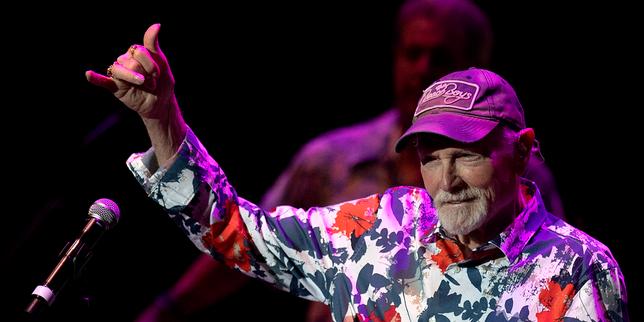
Mike Love is gone. Eighty-five years old, dead on November 28, 2026, surrounded by family after a rough year of health battles.
Most headlines today will treat him like a footnote to Brian Wilson. That's lazy history. And honestly, it gets the whole arc of the Beach Boys wrong.
Brian Wilson was the studio genius who dreamed up harmonies inside his own head and broke under the weight of it. Mike Love was the guy who actually stood in front of a crowd, barked out the hooks, wrote words people could sing at a bonfire, and kept the brand alive for decades after the rest of the original crew either burned out or passed away. Look at the roster now. Al Jardine is the last founding member standing.
Why Mike Love Was Always More Than a Sidekick
When fans talk about the Beach Boys, they love a clean story. Brian equals art. Mike equals commerce and friction. For another angle on this development, refer to the recent coverage from Entertainment Weekly.
Real music history is messier than that. Without Love's voice and lyric instincts, a huge chunk of what we call California pop wouldn't have landed the way it did. Think about "Surfin' U.S.A.," "California Girls," "I Get Around," "Help Me, Rhonda," and "Good Vibrations". Love sang lead on so many of those tracks and shaped the phrasing that gave the group its distinct punch. Then in 1988, long after the sixties surf wave had crested and crashed, he co-wrote "Kokomo" and put the band back at number one.
A lot of listeners miss how much work it takes to translate studio brilliance into a live show. Studio perfection doesn't pay the electric bill on a rainy Tuesday in Ohio. Love understood show business. Sometimes too much, sure. Yet pretending his role was accidental ignores sixty-plus years of chart history and live touring.
The Friction Inside the Family
You can't talk about Love honestly without talking about the fights. Cousins, brothers, lawsuits, bad blood—it was all right there in public view.
In 1994, Love won a major legal fight over songwriting credits and royalties tied to dozens of Beach Boys songs, eventually securing credit on thirty-five tracks. Fans who worshipped Brian Wilson often painted Love as the villain in that courtroom drama. Love saw it differently—he argued he'd been stiffed on credit and money for lyrics he actually wrote.
Then there was the 1988 Rock and Roll Hall of Fame induction speech, where Love took swipes at big names like Mick Jagger and Paul McCartney. And later came the battles over who got to tour under the Beach Boys name. When Love leased the rights to tour under the name and kept rolling with his lineup, Brian Wilson and Al Jardine had sharp pushback. Even the 2011 reunion album That's Why God Made the Radio couldn't erase decades of bruised egos.
Here's what I see after years of watching legacy acts implode. Band feuds rarely have one pure saint and one cartoon monster. Money, credit, grief, and mental strain distort everything. Love leaned into a tough, stubborn, sometimes abrasive posture. Critics hated it. Loyal concertgoers kept buying tickets anyway.
What His Final Year Revealed About Touring
Watching Love's final stretch in 2026 made his devotion to the stage hard to ignore.
He had already been mourning his cousin Brian Wilson, who died in June 2025 at eighty-two, and then lost his sister Maureen in 2026 while dealing with bronchitis and COVID-19. Nearly thirty summer dates got canceled or pushed back between July and early September. A planned September restart hit another wall.
When he did get back on stage in October 2026 in Cincinnati, he looked frail, stayed seated, and needed help getting out there alongside longtime associate John Stamos. Stamos noted that doctors, family, and friends urged him to focus on his health, yet Love insisted on performing because the music and the crowd lifted him up. Love himself said the audience felt like medicine.
That says a lot about who he was at the end. Stubborn? Definitely. Driven by habit, pride, and genuine love for the crowd? Also true. No official cause of death was given when his publicist announced his passing on November 28, and honestly, after a year like that, the exact medical label matters less than the fact that he kept pushing until his body simply couldn't anymore.
Common Myths People Still Repeat About Him
Let's clear up a few sloppy assumptions that pop up every time the Beach Boys make news.
- He only sang backup or surf filler. False. His baritone-leaning, nasal lead vocal anchored massive hits, and his lyric work helped give songs concrete hooks rather than just abstract mood.
- He stopped mattering after the sixties. Wrong. "Kokomo" hit number one in 1988, and his touring version of the band played hundreds of shows over the last thirty years for multigenerational crowds.
- The songwriting disputes were purely invented drama. Not at all. Credit and royalty fights are real business in pop music, and court rulings back in the nineties formally added his name to dozens of songs.
If you only listen to Pet Sounds as a solitary studio masterpiece, you miss half the tension that made the Beach Boys electric. Brian built intricate cathedral walls in the studio. Mike Love wanted people singing along in the back seat.
Practical Next Steps If You Want to Revisit His Catalog
Don't just queue up the usual greatest-hits shuffle and call it a day. Try a more intentional listen this week:
- Compare early studio singles with later deep cuts. Put "I Get Around" and "California Girls" next to tracks from Sunflower or Holland to hear how the group's sound shifted while Love remained a constant presence.
- Read both sides of the band's history. Look into Love's own perspective alongside broader biographies and reporting from outlets like The Guardian and The Independent so you aren't relying on a single one-sided version of events.
- Listen to how vocal arrangements carry the hooks. Pay attention to who takes the lead, who answers in the chorus, and how phrasing drives the rhythm forward rather than just focusing on chord changes.