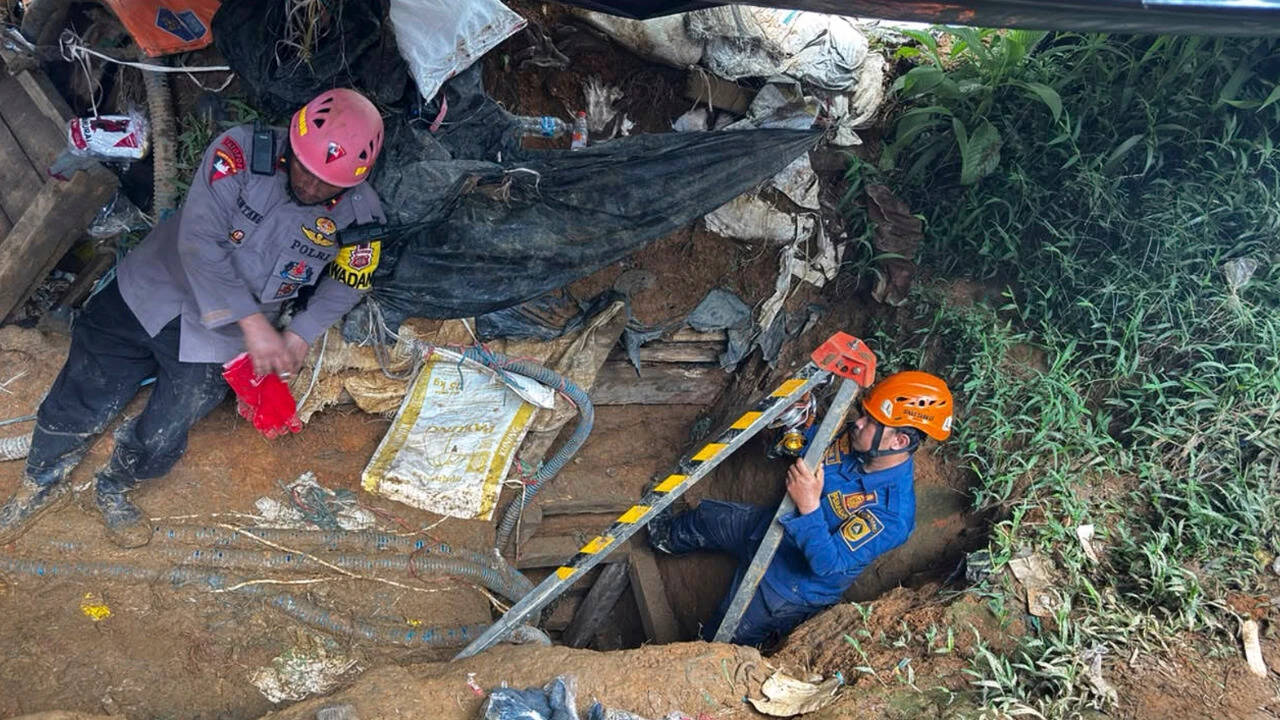
Three miners dead and 23 more still trapped underground after an illegal gold mine in Indonesia flooded following heavy rain. When the Ciseureuh River overflowed late Monday in the Pongkor area of Bogor regency—about 60 km south of Jakarta—water poured into an unauthorized shaft roughly 100 meters (330 feet) deep.
Eleven workers managed to scramble out of one section before the water surged. By Wednesday, rescuers had pulled three bodies from depths of 30 to 40 meters (100 to 130 feet) while racing to drain a narrow, dark, slippery shaft where water levels were stubbornly high.
Here's the part that makes this tragedy so infuriating. Nobody called emergency services right away. Local miners and villagers tried to pump the water out themselves because digging in an unauthorized pit is illegal. Police didn't get word until roughly 16 hours after the flooding began, and formal search and rescue mobilization ramped up after midnight Wednesday once state miner PT Antam passed a report to the Jakarta Search and Rescue Agency.
Every time a disaster like this hits West Java or Kalimantan, people treat it like a freak accident. It isn't. It's a predictable collision of desperation, weak enforcement, extreme weather, and dangerous informal digging.
What Happened in Bogor and Why Rescue Took So Long
Search and rescue teams don't just walk into a flooded hillside hole and start pulling people out. At Pongkor, rescuers from BASARNAS and local agencies faced tight access, poor visibility, slick rock, and ongoing groundwater seepage. Submersible pumps help, yet draining a deep shaft while rain-swollen ground feeds more water into the excavation takes hours—sometimes days—and every minute matters when air pockets and dry ledges are uncertain.
The 16-hour reporting delay changed the timeline before heavy gear even arrived. That delay wasn't born out of indifference. Families and local workers often fear arrest, fines, or losing their only source of income if they draw attention to an illegal operation. Still, waiting costs precious hours when water rises in an enclosed space.
Near the site sits PT Antam's Pongkor gold mining operation, which stated the flood hit an unauthorized mine separate from its own facilities and that its employees were safe. Antam also noted it has repeatedly sealed off illegal access points and used patrols, drones, and surveillance cameras to deter trespassing. Even then, just a week earlier, authorities had reportedly shut down around 30 gold mine pits in another part of Bogor. You close one hole on a steep slope, and another one gets dug nearby.
Why Illegal Gold Mining in Indonesia Persists Despite Crackdowns
If you've ever looked closely at resource-rich rural regions in Indonesia, you know how hard it is to police steep jungle terrain and scattered riverbanks with drones and patrols alone. When formal jobs are scarce or seasonal farm income falls short, informal digging looks like cash on hand.
In the mining and safety space, we call this artisanal and small-scale gold mining, or ASGM. According to data cited in peer-reviewed research from Indonesia's Directorate General of Mineral and Coal (Ministry of Energy and Mineral Resources), authorities had tallied 2,645 illegal artisanal and small-scale mining sites across 30 provinces as of August 2021. That number gives you a sense of scale—thousands of informal workings scattered across vast geography rather than a single isolated camp.
Enforcement is tough for a few practical reasons:
- Remote, rugged geography: Steep slopes, dense vegetation, and river valleys make constant physical monitoring expensive and slow.
- Economic pull: Even modest gold finds can pay far more in a single week than ordinary day labor, pulling in young men and local residents despite obvious risks.
- Low barrier to entry: Hand tools, basic hoists, and small pumps let groups open shallow or medium-depth workings quickly without engineered shoring, ventilation, or flood barriers.
That doesn't mean crackdowns are pointless. Sealing active pits and patrolling buffers around licensed operations matters, especially when heavy rain makes slopes unstable. Yet enforcement without economic alternatives usually pushes diggers to quieter, riskier spots rather than ending the practice.
The Hidden Hazards Beyond Rising Water
Flooding gets the headlines because water traps people fast, and when a river overflows into an unlined tunnel, escape routes vanish in seconds. Yet anyone who studies small-scale mining safety knows the hazards stack up long before a storm hits.
Tunnel collapses and landslides happen when informal diggers carve shafts without proper timbering, rock bolts, or drainage planning. Loose soil and fractured rock saturated by heavy rain can give way without warning.
Then there's what happens to the ore after it comes out of the ground. Small-scale gold processing frequently relies on toxic chemicals—especially mercury for amalgamation and cyanide in extraction—alongside fine silica dust from crushing rock. Workers often handle these materials with minimal or no protective gear. Peer-reviewed studies on Indonesian ASGM sites have documented mercury contamination in river water, sediment, fish, and surrounding ecosystems, plus respiratory risks like silicosis and lung damage from dust exposure.
Honestly, it's a double bind for nearby communities. The same activity that puts food on a family's table can poison local waterways, destabilize hillsides, and put young workers—including teenagers—in life-threatening shafts. At a missing-person post near the Bogor site, a 50-year-old mother spoke of waiting for her 18-year-old son who had planned to work there. Stories like that cut right through policy jargon.
Misconceptions That Cloud Coverage of Mine Accidents
When news breaks about a flooded illegal mine, a few assumptions show up again and again. Clearing them up helps you read the next report with a sharper eye.
First, people assume illegal mines are always run by giant, shadowy cartels with endless money. Some operations do have backers, equipment financiers, or local middlemen, sure. Many others are scrappy, ad-hoc workings run by local groups trying to scrape together a living on land with gold traces. Treating every site as identical misses how differently they operate.
Second, folks often think a nearby licensed mine is automatically at fault when an unauthorized pit floods. Licensed operators have formal safety protocols, engineered facilities, and regulatory oversight—though sharing a region means heavy rain and watershed runoff affect the whole area. Checking whether an incident occurred inside an unauthorized working versus a licensed facility is a basic detail worth getting right.
Third, some assume rescue teams can just pump a 100-meter shaft dry in an hour. Water pressure, muddy debris, narrow passages, and continuous groundwater inflow slow pumping down dramatically. Rescuers have to balance speed against keeping their own teams from getting trapped or crushed.
Practical Next Steps When Tracking or Responding to Mine Disasters
Whether you're following the rescue in Bogor, researching mining safety in Southeast Asia, or looking at how communities reduce disaster risk, concrete steps beat vague outrage every time.
- Verify official counts and updates carefully: Early casualty and missing-person numbers in underground accidents often shift as agencies reconcile lists of workers and confirm who escaped. Rely on updates from agencies like BASARNAS, provincial police, and established wire services rather than unverified social media tallies.
- Watch water levels and weather advisories: In West Java and other mountainous regions, ongoing rain and river discharge directly control how fast shafts drain and whether slopes remain safe for search crews.
- Support safer ASGM alternatives and mercury-free methods: Researchers and international bodies have spent years testing mercury-free gold extraction techniques and safer livelihood programs. Backing practical training, formalization pathways, and community health support tackles root causes instead of just reacting after bodies are pulled out.
- Prioritize fast, non-punitive emergency reporting: Delays of half a day or more in underground emergencies cost crucial time. Clear, rapid emergency channels during acute life-safety crises can help rescuers reach trapped people sooner while authorities address legality separately.
In a steep, rain-soaked valley outside Bogor, pumps keep running and rescuers keep pushing into the dark for 23 missing workers. Until safety, weather reality, and local livelihoods are addressed together, these tragedies will keep repeating.