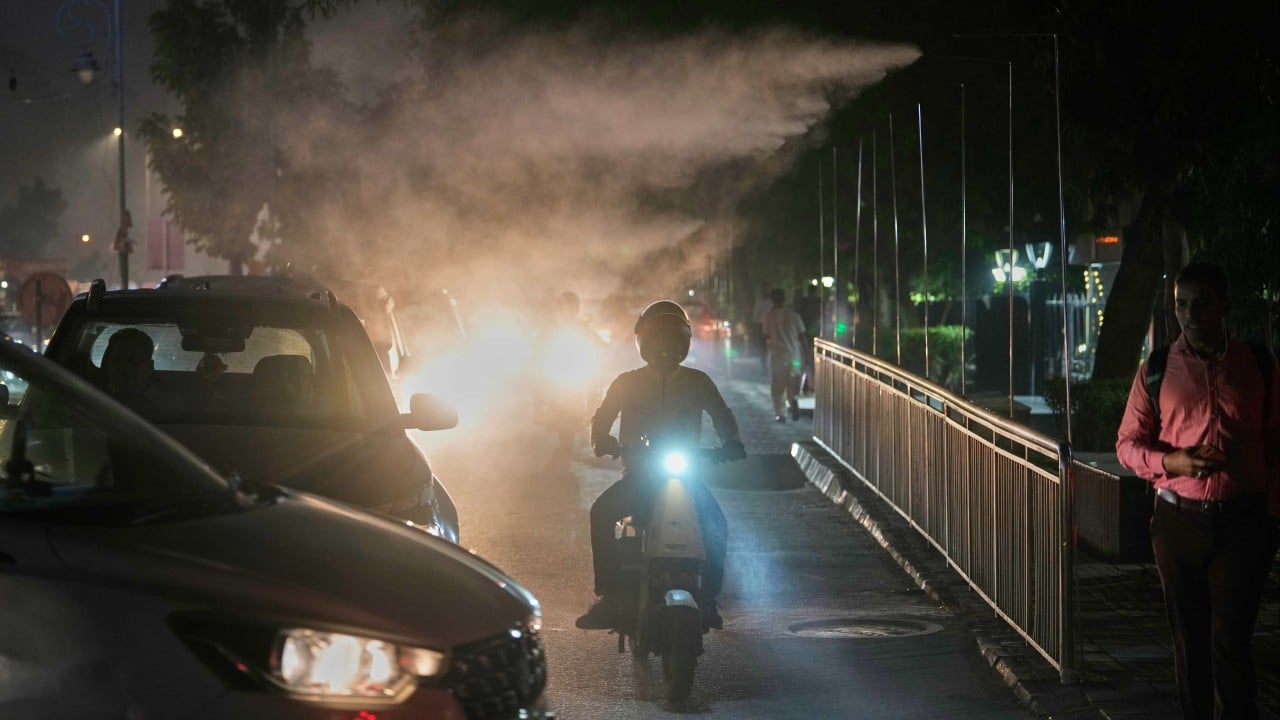
Every autumn, New Delhi transforms into an open-air gas chamber right on schedule. If you step outside into the capital during the festival season, you don't just breathe the air—you taste it. It’s metallic, heavy, and leaves a persistent burn at the back of your throat. Year after year, headlines scream that the city ranks as the world's most polluted urban center on the eve of Diwali, yet the response remains a predictable cycle of emergency bans, finger-pointing, and empty promises.
If you want to understand why millions of residents continue to choke year after year, you have to look past the seasonal panic and examine the structural failures driving the crisis.
The Toxic Convergence That Crushes Delhi
Air quality doesn't plummet to hazardous levels overnight by accident. It happens because multiple pollution vectors collide at the exact same time every single year.
You have the peak stubble-burning season in neighboring Punjab and Haryana, where farmers clear rice paddies using fire because they face narrow turnaround windows before the next planting. Add local vehicular emissions, construction dust, and industrial output, and the air is already teetering on the edge of "very poor" or "severe" before a single festive spark is lit.
Then come the winter meteorological shifts. Wind speeds drop significantly, and temperatures cool down. This creates a thermal inversion layer that traps toxic particulate matter—specifically PM2.5—close to the ground like an invisible lid over the city. When firecrackers are added to this mix despite seasonal bans, the Air Quality Index (AQI) routinely smashes past 400 or even 450 in hotspots like Rohini and Jahangirpuri.
What the Official Narrative Misses
Most mainstream coverage treats Delhi's pollution as a sudden emergency triggered entirely by the festival of lights. That framing is lazy and factually incomplete. Diwali acts as an amplifier, not the root cause.
Long before anyone lights a single cracker, the baseline air is already toxic. Stubble burning accounts for substantial portions of particulate spikes—sometimes hitting roughly 16% to 20% of the capital's PM2.5 load on critical autumn days. Meanwhile, policymakers lean heavily on reactive measures like Graded Response Action Plan (GRAP) stages—banning diesel generators, halting construction, or spraying water from tankers—only after the smog has already settled into people's lungs.
Stopping construction for a few days or restricting truck entry feels proactive on paper, but it's like putting a band-aid on a structural fracture. It fails to address public transit inadequacies across the broader National Capital Region (NCR), unpaved roads leaking dust into the atmosphere, or the lack of viable, subsidized alternatives for farmers who burn crop residue out of absolute economic necessity.
Living Through the Smog
Living in Delhi during November changes daily life in subtle, depressing ways. Air purifiers hum constantly in apartments, their filter replacement intervals shrinking from months to weeks. Schools issue advisories suspending outdoor sports, keeping children cooped indoors. Joggers trade early morning runs for indoor treadmills, and neighborhood pharmacies run out of inhalers and anti-allergy medications.
It’s an exhausting reality for residents who are told to stay indoors while politicians debate jurisdiction. The blame game bounces endlessly between municipal bodies, state governments, and the central administration, while the average person bears the health toll of chronic exposure.
Fixing the Problem Requires Inconvenient Truths
If things are ever going to change, the conversation has to shift from temporary bans to permanent infrastructure overhauls.
Farmers don't burn stubble because they enjoy polluting the air; they do it because clearing fields manually is too expensive and time-consuming. Scaling up machinery subsidies like Happy Seeders needs to move from a pilot talking point to a guaranteed reality. Similarly, public transport across the entire northern plains must become so reliable, clean, and cheap that driving a personal diesel SUV into the city feels obsolete.
Until leaders tackle agricultural economics, regional waste management, and mass transit with long-term capital rather than knee-jerk emergency orders, Delhi will keep waking up choking every single autumn. The smoke isn't going away on its own.