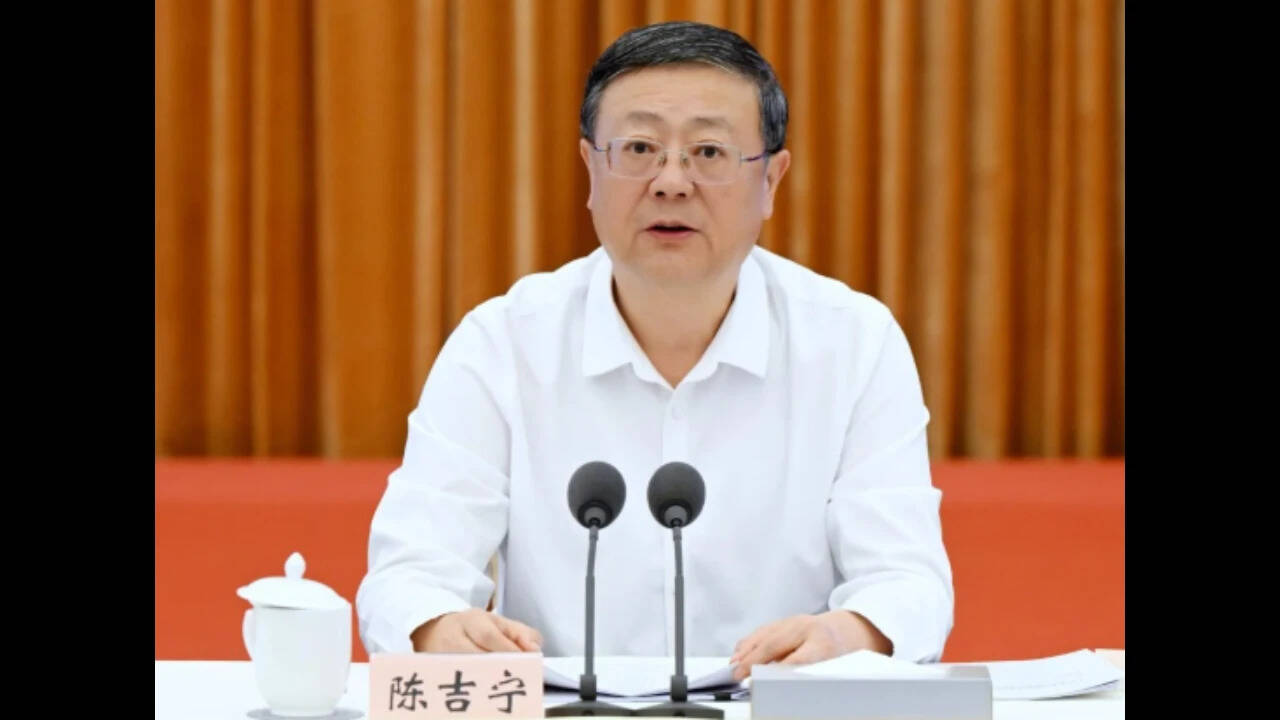
No one in Beijing or Shanghai saw this coming on a Tuesday morning in late November. Just days earlier, Chen Jining was inspecting state-owned shipping giant China Cosco Shipping Corporation on the ground in Shanghai, playing the part of a steady technocrat running China's financial capital. On November 24, 2026, state broadcaster CCTV and Xinhua cut through all that routine with a terse bulletin: Chen, 62, is under investigation by the Central Commission for Discipline Inspection and the National Supervisory Commission for suspected "serious violations of discipline and law."
In Chinese political shorthand, that phrase is a death sentence for a public career. Even more striking, Chen is now the fourth sitting member of the 24-member Politburo formed in late 2022 to be placed under probe or purged, joining senior military figures He Weidong and Zhang Youxia alongside former provincial chief Ma Xingrui. When a sitting Shanghai party secretary goes down, it isn't just another anti-graft headline. It hits the exact nerve of how China grooms and promotes its top leaders.
How Chen Jining Rose and Why His Probe Matters
Chen's trajectory looked almost tailor-made for President Xi Jinping's era. Trained in environmental engineering at Tsinghua University, he earned a doctorate at Imperial College London in the early 1990s before returning to Tsinghua and climbing to university president in 2012. From academia, he moved into government as minister of environmental protection in 2015, became mayor of Beijing in 2017, and entered the Politburo in October 2022 as party secretary of Shanghai.
On paper, he checked every box Beijing values right now. He had hard science credentials, experience managing complex urban systems, and a reputation as a policy-minded technocrat rather than a flashy faction boss. Many China watchers viewed him as a serious contender for senior national roles—perhaps even premier or vice premier—in the leadership reshuffle around the 2027 Party Congress.
That's why his sudden removal from public view stings so much. Earlier in November 2026, Chen had chaired a Shanghai meeting urging officials to stay vigilant against corruption and heed Xi's warnings. In hindsight, those remarks read like a bitter irony. Once the discipline watchdogs move on an official at Chen's level, the investigation rarely ends in exoneration; as Associated Press reporting on the probe notes, a discipline commission investigation of a Politburo member generally signals an eventual political downfall.
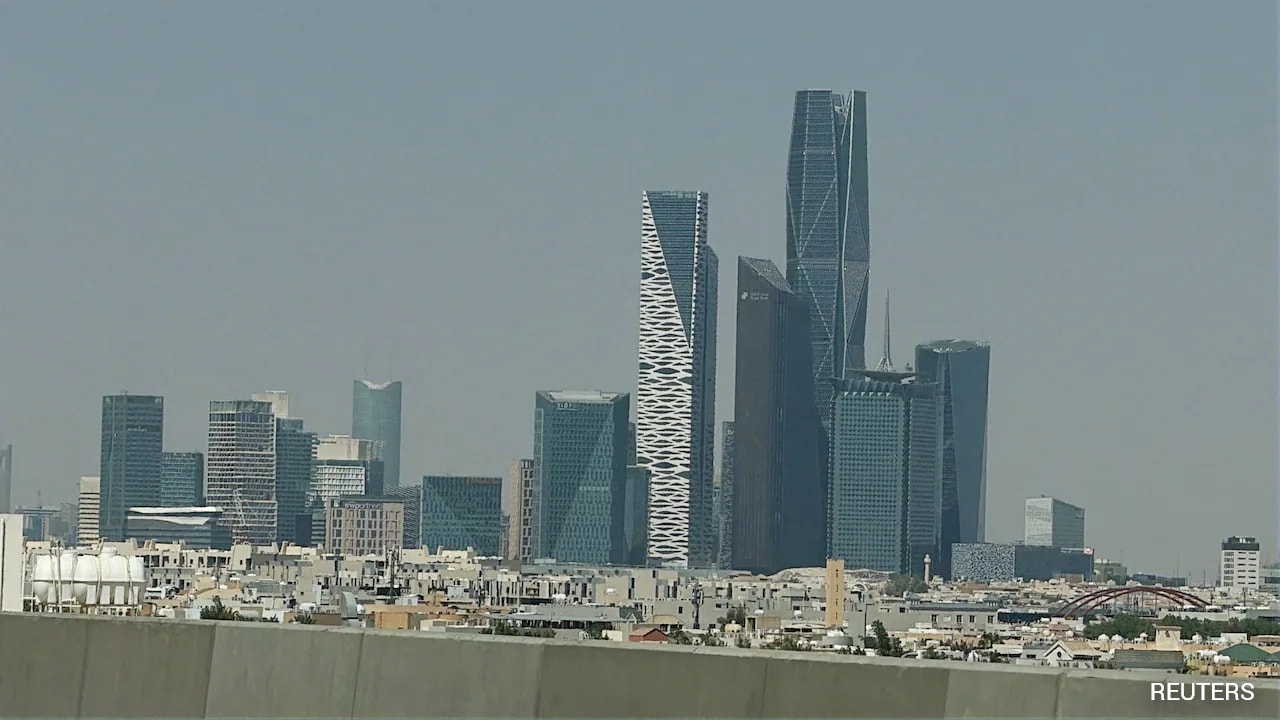
Why Shanghai Is Never Just Another City
If you don't follow Chinese politics closely, you might wonder why a city party boss carries so much weight. In China's political system, the party secretary of Shanghai sits at the intersection of money, industry, and high-level promotion. Unlike a mayor, who handles day-to-day municipal administration, the party secretary holds top political authority over the city.
Look at who held the job before Chen. Xi Jinping himself served briefly as Shanghai party secretary in 2007 before stepping onto the Politburo Standing Committee. Current Premier Li Qiang held the post before moving to the very top of the state council, and Vice President Han Zheng also led Shanghai on his way up. Because Shanghai is China's commercial and financial showcase, running it well has long been treated as a proving ground for national leadership.
That history makes Chen's fall the biggest shock in Shanghai since Chen Liangyu was ousted in 2006 over the city's pension fund scandal. Back then, removing Chen Liangyu weakened rival political networks and helped clear a path for Xi's rise. Twenty years later, the political dynamics are completely different—Xi sits firmly at the center of power—yet the symbolism of a sitting Shanghai chief being hauled before investigators is massive.
An Unprecedented Wave Inside the Politburo
What makes Chen Jining's investigation stand out even more is the company he keeps. The 24-member Politburo elected at the 20th National Congress in October 2022 was supposed to represent the core of China's ruling elite. Instead, it has suffered repeated blows as Xi's anti-corruption campaign keeps widening.
Before Chen, three Politburo members from the 2022 lineup—He Weidong, Zhang Youxia, and Ma Xingrui—had already been hit by probes or expulsions. According to Al Jazeera coverage of the investigation, Mingda Qiu, a senior analyst at the Eurasia Group, called the pattern "unprecedented," arguing that the takedown shows Xi's anti-corruption drive has no limits. And in a separate announcement the same day, a senior official at the Ministry of Science and Technology, Liu Min, was also placed under investigation for suspected violations of party discipline and national laws.
Honestly, when top generals, provincial bosses, and tech-focused ministries are all getting swept up at once, two things become clear. First, loyalty and past credentials won't shield anyone once the Central Commission for Discipline Inspection opens a file. Second, the purge isn't slowing down as China approaches its 2027 Party Congress—if anything, the bar for "clean" is getting stricter and more unpredictable.
What People Usually Misread About These Probes
Whenever a high-profile Chinese official falls, two sloppy assumptions tend to pop up right away.
- Assuming corruption is the whole story. Official statements rarely spell out exact allegations at the start of a probe, using broad language about discipline and law. In real-world Chinese politics, graft charges frequently overlap with factional friction, policy disputes, or failure to enforce central directives tightly enough. You can't assume you know the exact trigger until later party communiqués or court proceedings surface—and sometimes not even then.
- Thinking a technocrat is automatically safe. For years, outsiders assumed that scientists, engineers, and economic managers were insulated from political storms because they focused on "practical" work. Chen Jining's career—from Imperial College London and Tsinghua University to environmental minister and mayor of Beijing—was the textbook example of that technocrat model. His investigation shows that technical competence doesn't create a force field around you.
There's also a genuine debate among analysts over what this means for governance. One view argues that relentless enforcement deters graft and keeps officials on edge across a massive bureaucracy that disciplined hundreds of thousands of people in the first nine months of 2026 alone. Another view worries that when even top-tier, well-regarded leaders can vanish overnight, remaining officials become overly cautious, stalling initiative just when China wants dynamic economic and technological execution. Both arguments have merit, and right now the evidence points to control taking priority over comfort.
Practical Next Steps If You Track China Markets or Policy
If you're watching this story for business, investment, or geopolitical reasons, don't overreact to a single headline—and don't tune it out either.
- Watch for the interim replacement in Shanghai. Watch official state media to see who steps in to run Shanghai's party apparatus and whether a temporary caretaker or a permanent successor is named quickly. Who gets the nod tells you a lot about Beijing's priorities for the city's financial and industrial agenda.
- Track related personnel moves in tech and state enterprises. Because Chen recently inspected China Cosco Shipping Corporation and a senior science ministry official was probed the same day, pay close attention to leadership shakeups in major state-owned firms and science-and-tech bodies.
- Separate rumor from official disciplinary notices. In fast-moving purges, social media speculation runs wild. Stick to confirmed announcements from Xinhua, the Central Commission for Discipline Inspection, and established international reporting rather than unverified online lists of "next targets."
- Re-check your assumptions ahead of 2027. If your business or research strategy relies on specific provincial leaders or "safe" technocrats staying in place through the 2027 Party Congress, stress-test those assumptions now. Leadership continuity at the top of China's system is proving far less predictable than many expected.