Why Anthropic Soaring Past Two Trillion Changes Everything
Anthropic priced its IPO at $83 a share, then watched the stock open at $111.50 on the Nasdaq—a 34% pop on day one that pushed the company's implied valuation straight past the $2 trillion mark.
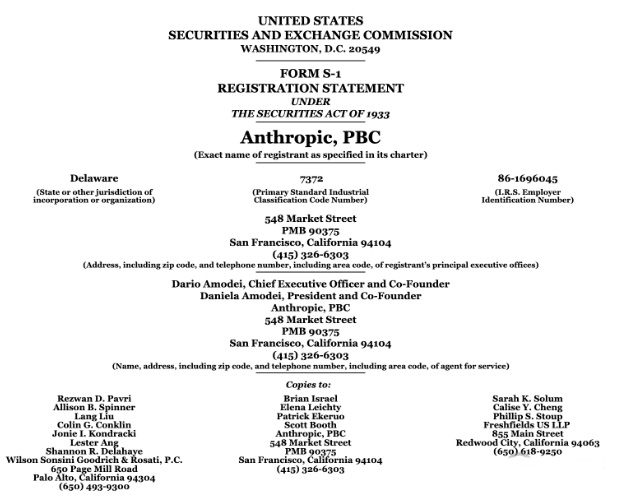
Five years ago, seven researchers walked out of OpenAI to build a safety-minded rival. Today, their offering has blown past SpaceX's $75 billion listing in June 2026 to claim the title of largest IPO in history, raising roughly $81.3 billion in the public offering alone—and closer to $107.3 billion once you tack on a $26 billion private placement with strategic partners.
Ticker symbol: ANT. Timing: November 19, 2026.
If you've watched the AI market over the last two years, you already know how jittery traders have been. Chip stocks took a beating after the Nvidia fallout, midterm shifts in Washington sparked fresh talk about regulation, and plenty of smart money wondered if AI revenue could ever catch up to data-center spending. Then Anthropic opened more than 30% above its IPO price—which had already valued the business around $1.5 trillion on a fully diluted basis—and suddenly the whole market had to check its assumptions. For another perspective on this event, see the latest coverage from The Motley Fool.
Still, celebrating an opening print is one thing. Living inside a $2 trillion valuation on the public markets is something else entirely.
The Real Math Behind the IPO Numbers
Headline valuation numbers get messy fast, so let's separate the moving parts before anyone gets carried away.
At $83 per share across 980 million shares sold in the IPO, Anthropic pulled in about $81.3 billion. Depending on whether you look at non-diluted share counts or fully diluted figures that include options, restricted stock, and convertible instruments, the offering pricing sat near $1.1 trillion to $1.5 trillion. When trading actually kicked off on Thursday morning at $111.50, buyers immediately priced the business at roughly $2 trillion.
Why did institutional and retail buyers pay up right out of the gate? Because the top-line growth has been startling.
According to filings and market coverage, Anthropic's third-quarter 2026 revenue hit roughly $17 billion—up 47% from the second quarter—with an annualized revenue run rate reaching around $81 billion by the end of October. That is a staggering climb from where the company stood a year earlier. And unlike consumer-first chatbots that fight every day for casual clicks and ad-adjacent attention, Anthropic leaned hard into enterprise software and developer workflows, particularly with Claude and Claude Code.
In my experience watching enterprise software cycles, sticky engineering workflows are hard to rip out once teams wire them into production. When an AI coding tool becomes part of how a company ships software every afternoon, switching costs start looking a lot more like real infrastructure than a fad.
Where the Bull Case Holds Up—and Where It Gets Thin
Let's be honest about what's working here. Anthropic isn't selling vaporware or tiny pilot contracts. Enterprise customers are spending real money, and analysts like Needham have pointed to sharp gains in cost-to-serve efficiency—dropping from roughly $2 in compute/serving cost per dollar of revenue in 2024 down toward about 14 cents, with bullish long-term margin projections.
At the same time, look closely at the operating and capital picture in the filings before treating this as a risk-free compounder.
In Q3 2026, Anthropic swung to an operating loss of $567 million after posting $974 million in operating income the prior quarter. Net losses under GAAP have looked even wilder—including a $66.3 billion net loss in Q2 and $23.3 billion in Q3—largely driven by massive non-cash revaluations tied to convertible notes, SAFEs, and related instruments rather than day-to-day cash burn. Even so, you can't ignore the capital hunger behind the scenes.
Anthropic spent nearly $9 billion on computing capacity and infrastructure in the first half of 2026—nearly four times what it spent a year earlier—and added another $5 billion in Q3 computing costs. Even more eye-opening: the company has racked up roughly $900 billion in total computing commitments with partners including Amazon and Alphabet's Google, with tens of billions due over the coming year and some capacity contingent on partner financing and permits.
That is the central tension of this listing. Massive demand meets massive capital intensity. If compute gets cheaper and model utilization scales smoothly, operating leverage can look extraordinary. If model training and inference costs stay stubbornly high while rivals undercut prices, even a fast-growing business can feel squeezed.
What People Get Wrong About Anthropic's Debut
A few common myths are already floating around this IPO, and clearing them up saves you from bad decisions.
- Myth 1: A $2 trillion debut means the AI bubble is over. Not even close. One blowout opening trade proves strong appetite for a category leader, not that every AI stock or infrastructure bet is priced sensibly. Portfolio managers like Armina Rosenberg of Minotaur Capital have noted that a single listing won't settle the broader debate over AI economics—quarterly earnings as a public company will.
- Myth 2: Revenue run rate equals guaranteed future cash flow. A run rate extrapolates recent momentum forward. Anthropic itself has warned that growth rates naturally slow as a business gets bigger, and hitting multi-hundred-billion-dollar revenue targets years out requires flawless execution amid fierce competition from OpenAI, Google, and others.
- Myth 3: Opening day pop guarantees smooth sailing. Big debuts often bring big swings once initial excitement cools and lock-up provisions or quarterly reports arrive. Paying a rich multiple on day one leaves less room for disappointment if Q1 or Q2 growth merely meets high expectations instead of smashing them.
What This Means for OpenAI, Rivals, and Everyday Investors
For competitors, Anthropic's listing is a loud benchmark. OpenAI, which has been eyed for a potential public move next year, now has a public market yardstick right next to it. Cloud giants and chipmakers—including backers and partners like Amazon, Google, and Nvidia—have even bigger stakes tied to how public investors value frontier AI.
There's also a political and regulatory edge to watch. CEO Dario Amodei and Daniela Amodei built Anthropic with a distinct public-benefit and safety identity, yet the company has drawn sharp pushback from Washington figures over safety, regulation, and national security. Going public puts every safety stance, government contract, and infrastructure deal under quarterly scrutiny.
If you're thinking about buying ANT or adding AI exposure to your portfolio, don't chase the opening-bell noise blind.
- Read the S-1 risk sections on compute commitments and non-cash charges so you know what's accounting noise versus hard financial obligations.
- Watch gross and operating margins across the next two quarterly reports, not just top-line run-rate headlines.
- Size any position for volatility and avoid going all-in on day one when post-IPO swings and staged share releases can create much better entry points.
- Check how much AI exposure you already hold through broad index funds, cloud providers, and chipmakers before adding another mega-cap AI name.