You click "buy now" on a discounted air fryer, a pair of running shoes, or a holiday gift, and a parcel shows up on your doorstep before you've even finished your coffee. It feels effortless. It isn't. Today, as Amazon staff striking on Black Friday weekend kick off another wave of walkouts and rallies across more than 20 countries, that illusion of frictionless retail hits a very loud wall.
Look at the timing. From Black Friday on November 27 through Cyber Monday on November 30, unions and campaigners tied to the Make Amazon Pay coalition are staging strikes and protests right in the middle of the busiest shopping weekend of the year. A basic news brief might tell you who is walking out and what slogans are on the placards. Honestly, that only scratches the surface. If you care about how modern logistics actually works, what your discounts really cost, or whether labor organizing in big tech can stick, this weekend matters far more than most shoppers realize.
What Is Actually Happening This Weekend
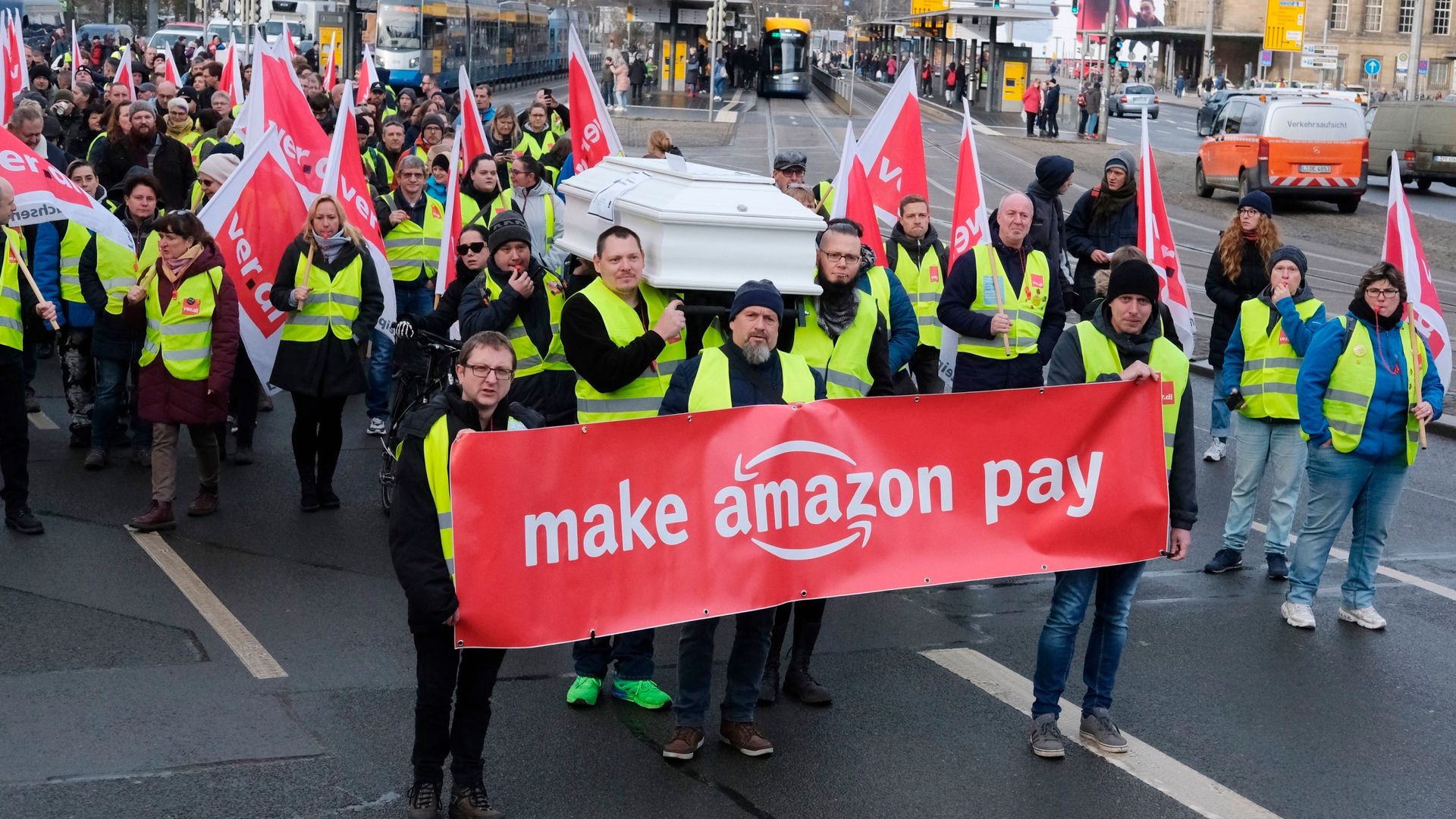
The headline action centers on coordinated walkouts and rallies spanning over 20 countries across the Black Friday to Cyber Monday window, backed by unions and advocacy groups including UNI Global Union and Progressive International. In Germany, the union ver.di called strikes across 11 Amazon sites starting early Friday morning—including facilities in Leipzig, Bad Hersfeld, Dortmund, and Koblenz—marking its largest simultaneous call-out at the company. Elsewhere, protesters and allies are gathering in cities like New York, London, Hyderabad, Los Angeles, and Chicago, using public rallies and even projection campaigns to press demands over pay, safety, surveillance, taxes, and union recognition.
At the same time, union leaders have widened the pressure campaign beyond warehouse gates. Earlier in November 2026, more than 30 union leaders across 19 countries urged governments to scrutinize public contracts awarded to Amazon and Amazon Web Services. In New York City, a separate clash over proposed delivery-driver protections has even spilled onto shipping labels.
Amazon pushes back hard on the coalition's framing. Company spokespeople have dismissed the campaign as misleading, pointing to competitive pay, benefits, and workplace safety programs while contesting unionization orders and disputes in court. That tension—between a company touting its investment and benefits versus unions calling out speed quotas, monitoring, and bargaining barriers—defines every Black Friday showdown.
Why Black Friday Is the Pressure Point Unions Pick
Nobody schedules a strike by accident. Picking Black Friday weekend is pure leverage math.
Retailers build their annual margins around peak seasonal volume, when fulfillment centers run near full tilt and delivery networks have almost zero slack. Even if a walkout doesn't shut down every building or stop every van, it forces managers to scramble shifts, reroute inventory, and answer awkward questions from reporters during peak promotional coverage.
From years of watching supply chains up close, here is a common mistake people make when reading strike headlines. They assume a walkout means your package won't arrive. Usually, that isn't what happens first. A giant like Amazon has deep redundancy across regions, third-party carriers, and automated sorting lines. Unless a strike hits a critical regional choke point for days on end, most shoppers still get their boxes on time. The real disruption is reputational and operational—it slows specific tasks, raises overtime or temp costs, and puts labor friction front and center when executives want everyone talking about flash sales.
There's also a numbers gap that fuels the argument every November. Analysis cited around the 2026 actions notes that Amazon posted $20.7 billion in profit between July and September 2026—roughly $225 million a day—on a record 13.9% operating margin, while planning around $220 billion in capital spending for the year, heavily aimed at AI data centers. Meanwhile, Amazon put US full-time warehouse and delivery starting pay at $20 an hour ($41,600 a year before tax) after a September 2026 bump, while part-time pay details remain less visible. When workers look at massive profit and infrastructure spending alongside tight hourly rates and strict productivity targets, the gap feels personal.
What People Miss About Warehouse Work and Automation
Walk past a fulfillment center during peak season and you'll notice two things right away. First, the sheer scale of the boxes moving past conveyor belts and robotic pods. Second, how little room there is for unscheduled slowdowns.
Critics and unions regularly point to repetitive tasks, intense pacing, heat exposure in hot climates or seasons, and digital monitoring as core grievances. In India, for example, extreme heat in warehouses drew scrutiny from the National Human Rights Commission after workers raised alarms over heat-related collapses. In Germany, ver.di has criticized monotonous workflows and workplace monitoring, claims Amazon's German representatives have denied.
Here's where things get even trickier for workers long-term. Automation isn't just a sci-fi sidebar anymore—it's part of the labor equation. Reporting on internal company planning has pointed toward using robotics to avoid hiring more than 600,000 US workers by 2033. That changes the stakes of every contract fight. Unions aren't only arguing over today's hourly wage; they're trying to win job security,
At the same time, let's be fair and accurate about what's settled versus what's still contested. Labor advocates point to wins in certain places—such as agreements in Italy addressing surveillance, social-security steps for delivery workers in India, and union recognition milestones in Canada—while in the US, Amazon continues to contest a National Labor Relations Board bargaining order tied to the Staten Island JFK8 facility. Data on injury rates, part-time hours, and local site conditions varies across countries and facilities, so sweeping generalizations can overshoot the evidence. Still, the pattern is clear enough that labor conflict at peak retail season is now an annual fixture rather than a one-off protest.
What This Means for You as a Shopper and Reader
You don't have to join a picket line to pay attention, and you don't need to pretend a 25% lightning deal exists in a vacuum. A few practical ways to approach this weekend with clearer eyes:
- Check delivery windows, not just sticker prices: If you're ordering gifts with hard deadlines, order early and watch carrier tracking rather than assuming next-day speed is guaranteed during peak volume.
- Compare local and direct options: If a specific item isn't exclusive to a mega-marketplace, check whether a local shop, independent brand, or direct manufacturer offers a similar price without peak-season logistics bottlenecks.
- Read strike coverage past the headline: Look for who is actually walking out—unionized warehouse staff, delivery drivers, or allied campaigners—and check how the company responds to specific claims rather than relying on one-line summaries.
- Keep an eye on policy battles, not just retail promos: Municipal delivery rules, public contracting debates, and court rulings on union recognition will shape how fast and how cheaply goods move long after Cyber Monday ends.
The discount timer on your screen resets every few hours. The fight over who bears the cost of making that speed possible doesn't reset at midnight.
European Amazon workers strike on Black Friday
This video offers brief visual context on how coordinated Black Friday walkouts by Amazon warehouse staff in Europe play out during peak holiday shopping.