An earthquake doesn't toss a commercial jet around in midair. That's the first thing to get straight when a viral clip shows an airliner pulling up just shy of the tarmac at Los Angeles International Airport.
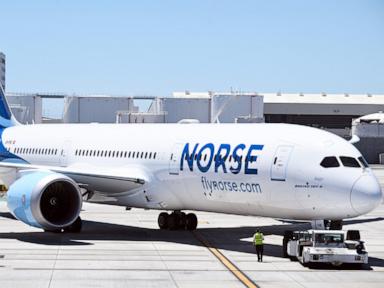
When a magnitude 5.0 earthquake struck near Manhattan Beach on Saturday morning, November 28, 2026, around 9:30 a.m. local time, live airport cameras caught the shaking as a Delta Air Lines flight approached LAX. Air traffic control called for a go-around—the standard aviation maneuver where pilots add thrust, climb back up, and try the approach again later. Reports vary slightly on flight numbering across early coverage, with outlets citing Delta 1972 and Delta 1932, while FlightAware tracking cited in regional reports noted a delay of over an hour as shaking and aftershocks rippled across Southern California.
If you're sitting in a cabin watching the wingtip climb away from a runway you were seconds from touching, your stomach drops. It feels dramatic. Honestly, it's routine.
Pilots and air traffic controllers execute go-arounds every single day for far more mundane reasons than seismic activity. A gust of wind shifts at the last second. Another plane takes a fraction too long to clear the runway. Visibility dips below minimums. An earthquake simply turns a familiar safety valve into a dramatic piece of footage.
Why Pilots Go Around When the Ground Shakes
An airplane flying through the atmosphere is coupled to the air, not to the earth's crust beneath it. Seismic waves travel through rock and soil, shaking towers, terminals, pavement, and parked vehicles, rather than yanking a cruising or approaching jet sideways through the sky.
So why abandon a landing at all? Because the runway itself is the variable that just changed.
An earthquake can crack pavement, leave behind debris, disrupt lighting or navigation aids, or knock power offline in a tower or terminal. Touching down on an uninspected surface—or committing to a rollout when a runway might have new fissures or obstructions—creates risks you can easily avoid simply by climbing back into clean air.
In Saturday's incident near Manhattan Beach, the epicenter sat offshore beneath Santa Monica Bay at a depth of roughly 12 to 13 kilometers, according to the U.S. Geological Survey. Seismologist Lucy Jones noted in coverage that it was the largest quake in the Los Angeles County–Orange County area in 12 years, and that its depth and offshore location likely limited severe structural damage despite widespread shaking. Even so, ceiling tiles fell in a terminal, glass cracked or shattered in spots, emergency crews fanned out across the region, and dozens of aftershocks followed—including a magnitude 4.5 tremor before noon.
Telling an approaching crew to go around buys time. It keeps the jet safely airborne while controllers assess what's happening on the ground and crews check whether the airfield is clear.
Common Myths About Earthquakes and Flying
People tend to fill in the blanks with movie logic whenever an earthquake and an airplane collide in the news. A few misconceptions show up again and again.
- Myth one: The plane felt the earthquake in midair. Unless you're already rolling on the wheels, you aren't feeling seismic ground motion. Passengers sometimes feel sharp gusts, turbulence, or a sudden climb during a go-around and assume the shaking came from below. Usually, it's just normal engine thrust and pitch change.
- Myth two: A go-around means something is broken. A missed approach or go-around is a planned, practiced maneuver taught from early flight training all the way through airline simulator checks. Pilots don't hesitate to do it. Waiting until the last possible second to salvage a questionable landing is what gets crews into trouble; pulling up early is disciplined airmanship.
- Myth three: An earthquake automatically shuts down the whole airport. Not necessarily. While some quakes force temporary ground stops or tower evacuations—such as the March 2020 magnitude 5.7 earthquake near Salt Lake City that disrupted power and tower operations, or temporary East Coast ground stops after the April 2024 New Jersey quake—airports weigh airfield integrity, communications, and power before halting traffic. After Saturday's Manhattan Beach quake, LAX officials reported airfield inspections completed with no issues observed and ongoing flight operations alongside facility checks, even as aftershocks continued.
How Controllers and Airports Decide What Happens Next
Watching a single video clip leaves out the behind-the-scenes coordination happening at the exact same moment. Controllers in the tower and approach facility are dealing with the same shaking everyone else in the basin feels.
According to reporting on audio from Saturday's event, one controller still cleared an arriving aircraft to land with an advisory while another directed a go-around for a Delta flight as a precaution. That split isn't a contradiction. Every approach has its own timing, spacing, and visual or instrument picture, and controllers make judgment calls in real time based on what they see and what's happening on the ground.
Past events show how quickly conditions can shift. During the November 2018 magnitude 7.0 Anchorage earthquake, controllers briefly evacuated an approach control facility—off the air for under a minute—before returning to work amid damaged ceiling tiles and water lines while holding arriving aircraft until runways were checked. Even smaller regional tremors can prompt a targeted runway check; LAX had a runway inspection request after a magnitude 4.4 quake near Commerce on November 20, 2026, without major cancellations.
Here's what I've noticed after following aviation incidents like this for years: the sharpest tension isn't mechanical—it's informational. In the first ten minutes after a tremor hits, nobody on the ground has a complete damage map yet. Air traffic control has to balance keeping skies orderly, preventing holding stacks from getting chaotic, and avoiding putting a plane on pavement nobody has verified since the shaking started.
There is also a genuine debate among aviation observers over how much precautionary go-around traffic adds workload to busy airspace like Southern California during a multi-aftershock day. Climbing back into the mix requires fuel, sequencing adjustments, and extra communication when controllers and crews are already on high alert. Still, almost every pilot and safety analyst will tell you the same thing: extra fuel and another approach beat rolling onto an unverified runway every single time.
What You Should Do If Your Flight Goes Around or Hits Quake Delays
If you're ever in the air or at the airport when an earthquake hits near your destination, a little preparation saves a lot of stress.
- Expect the climb and stay buckled in. If your plane suddenly pitches up and power increases near touchdown, don't panic. Keep your seatbelt fastened and wait for the captain's announcement once the crew has stabilized the climb and talked with air traffic control.
- Check your airline app before heading to the terminal. Even when an airport stays open and runways clear inspection, terminals can have localized closures, fallen ceiling panels, glass cleanup, or slower concourse flow. Give yourself extra buffer time if you're traveling through a shaken area.
- Plan for aftershocks and rolling delays. A notable earthquake often brings a string of aftershocks over hours or days. A stronger aftershock can trigger brief pauses for re-inspections, so keep essential items—medication, chargers, snacks, and flexible plans—in your carry-on rather than checked bags.
- Rely on official agencies and airlines, not unverified clips. Social media videos can strip away context, mislabel flight numbers, or recycle old footage during breaking news. Check the Federal Aviation Administration status updates, your airline's notifications, and the U.S. Geological Survey for accurate seismic and operational details.