Two strong jolts rattled Southern California on Saturday morning, November 28, 2026, ending LA's long streak without a magnitude 5. The U.S. Geological Survey recorded a magnitude 5.0 earthquake at 9:30 a.m. PT a few miles west-southwest of Manhattan Beach, followed at 11:41 a.m. PT by a magnitude 4.5 aftershock in roughly the same offshore zone. Tens of smaller aftershocks kept rolling through the South Bay all afternoon.
Look at the headline numbers and you might think the sky is falling. It isn't. For the immediate LA metro area, Saturday's 5.0 was the strongest shake since the magnitude 5.1 La Habra earthquake in March 2014. It scared people from Venice to Silver Lake and rattled dishes from El Segundo to Gardena, yet major structural damage and serious injuries did not materialize.
Why Two Quakes Hit So Close Together
When a magnitude 5.0 strikes at 9:30 a.m. and a 4.5 hits just over two hours later, your brain naturally treats it like a double mainshock. Seismologists classify the 11:41 a.m. event as an aftershock because a larger shock already happened and a sequence of smaller adjustments is underway.
By early Saturday afternoon, the USGS catalog had logged more than a dozen aftershocks of magnitude 2.5 or higher, while seismologist Lucy Jones noted more than 40 total quakes when smaller tremors are counted. That cluster includes smaller jolts right after the mainshock, several in the 3.7 to 3.8 range before noon, and additional tremors in the afternoon such as a 4.0 and 3.9.
Having lived through plenty of California rattle, I can tell you the psychological toll of back-to-back sharp jolts often hits harder than the physical impact. You sit down with your coffee, your nerves finally settle, and suddenly the floor jumps again. Still, a 4.5 releases roughly one-fifth to one-sixth of the wave amplitude of a 5.0, which explains why it felt sharp nearby without turning into a catastrophe.
The Fault Mystery Nobody Can Lock Down Yet
Here's the part most quick news recaps gloss over. Seismologists haven't pinned down the exact fault that ruptured off Manhattan Beach.
Analysis pointed to a thrust motion—meaning compression pushed one block of rock up and over another—along an offshore structure near either the Palos Verdes fault zone or a smaller Redondo fault. Because both lie underwater and were mapped using marine geophysical surveys with limited detail, experts like Lucy Jones explained that a magnitude 5.0 offshore event often doesn't give enough clean signal to pick one fault with certainty without deeper study.
That uncertainty bothers people who want a neat label on the map. Honestly, though, it's pretty normal for complex coastal crust in Southern California. Rock in the South Bay gets squeezed and sheared across overlapping fault strands, and small-to-moderate quakes happen on structures that aren't always easy to distinguish at first glance.
What Actually Happened on the Ground
Emergency crews swung into action fast. Los Angeles Fire Department personnel across all 106 neighborhood fire stations went into earthquake mode to survey districts and check critical infrastructure. Mayor Karen Bass reported no major damage to critical infrastructure, and the National Tsunami Warning Center confirmed there was no tsunami threat.
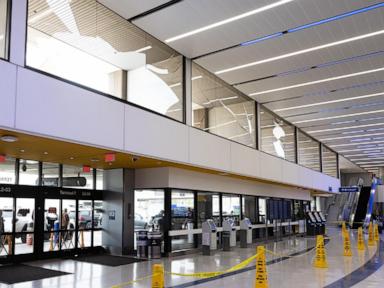
Localized headaches did pop up. Minor damage included shattered glass and a fallen ceiling panel inside an LAX terminal, a cracked storefront window and broken bottles at a Manhattan Beach market, and items toppling off shelves in nearby South Bay communities. Officials in Manhattan Beach also closed the pier as a precaution after the 11:41 a.m. aftershock and clarified that flames seen near the El Segundo refinery were safety flares rather than a fire.
ShakeAlert Buzzes and Why Phones Didn't All Ring
If your phone screamed before the shaking hit—or stayed dead silent while your neighbor's buzzed—you weren't imagining things. The USGS ShakeAlert system is built to detect rapid ground motion near a rupture and send warnings before stronger waves reach farther locations.
Right near the epicenter, physics works against early warning. When a quake starts just a few miles off Manhattan Beach, strong waves can arrive almost at the same moment the alert triggers. Distance, phone settings, cell network congestion, and app permissions also shape who gets pinged first.
Does This Mean the Big One Is Next
Let's be straight about this. A magnitude 5.0 earthquake does not trigger a major San Andreas rupture on command, nor does it mean a giant quake is guaranteed this week. What it does change are the short-term aftershock odds.
Forecasts from the USGS Earthquake Hazards Program after the morning activity put the odds of at least one more magnitude 3 or greater aftershock over the following week near 79 percent, magnitude 4 or greater near 27 percent, and an event of magnitude 5 or greater around 4 percent. Those numbers sound scary if you read "4 percent" as a coin flip. In plain terms, another quake at or above 5.0 is possible, though most aftershocks will stay smaller and taper off over time.
Even bigger picture, a moderate shake that causes almost no collapse is a cheap rehearsal. Most Californians wait until drywall cracks or water heaters tilt before taking basic prep seriously.
Common Mistakes People Make After a Moderate Quake
- Running outside during shaking: Glass, falling masonry, facade trim, and downed wires make doorways and sidewalks risky. Drop, cover, and hold on where you are until shaking stops.
- Shutting off the gas main "just in case": Unless you smell gas, hear a hiss, or see a damaged line, leave the valve alone. Turning it off unnecessarily leaves you without hot water or heat until a utility technician can safely restore service.
- Walking barefoot over debris: Broken glass and dropped ceramics on tile or hardwood floors cut feet fast when aftershocks hit in the dark.
- Ignoring unanchored heavy furniture: Tall bookcases, televisions, and mirrors over beds are classic hazard multipliers during repeated aftershocks.
Practical Next Steps Right Now
- Check your home for hazards: Look for cracked plaster, leaning chimneys, shifted water heaters, or a gas odor; if you smell gas, leave immediately and call the utility from outside.
- Stage shoes and a flashlight tonight: Put sturdy closed-toe shoes and a working flashlight right next to your bed so you aren't scrambling in the dark during a night aftershock.
- Verify your alert settings: Check your iPhone or Android emergency alert settings and make sure the California Governor's Office of Emergency Services ShakeAlert tools and MyShake app have location access enabled.
- Secure top-heavy items: Use earthquake straps or museum putty on heavy frames, monitors, and shelving units before the next jolt arrives.
- Review a simple meetup plan: Confirm how your household will check in if cell networks get sluggish after a stronger tremor.