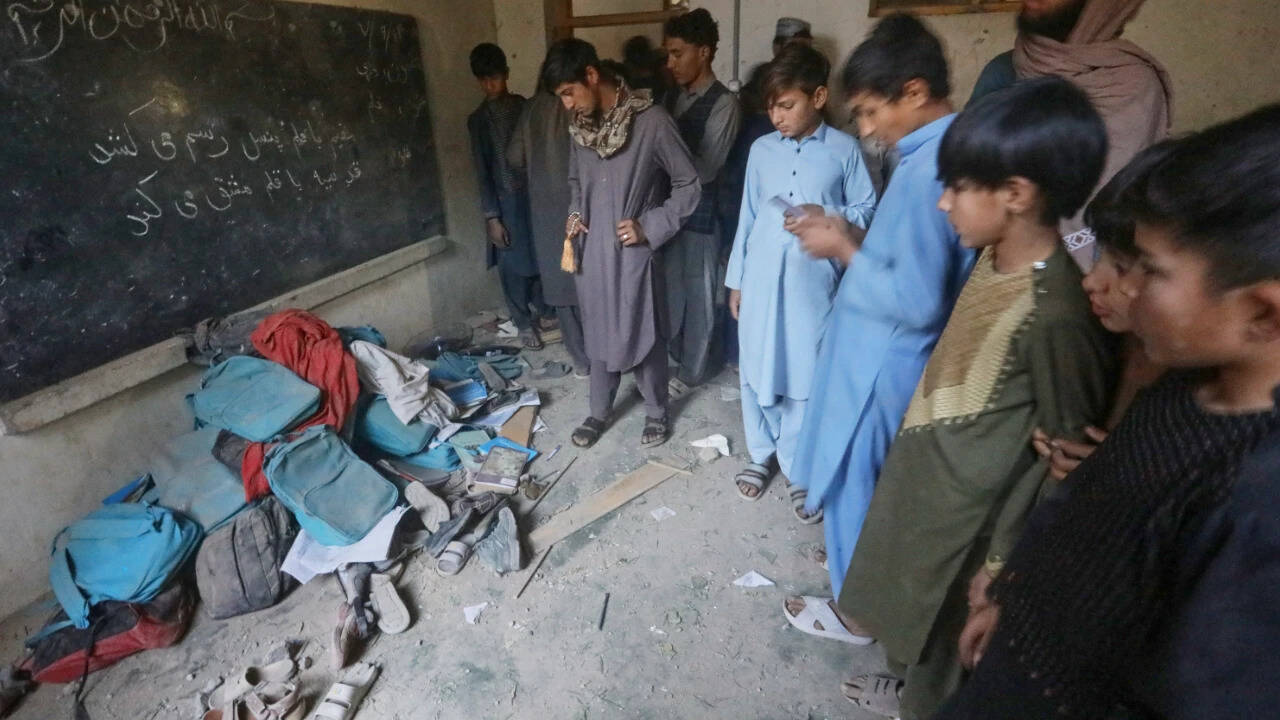
Ten people dead. Another 110 wounded. Most of them schoolchildren. That is what happened around 10 a.m. on Saturday, November 28, 2026, in the Andar Ser area on the outskirts of Asadabad, the capital of Afghanistan's eastern Kunar province, when a massive blast ripped through a primary and middle school.
Initial findings from Afghan officials point to negligence at a nearby depot where mining companies stored explosives. The Times of India ran a short wire-based report focusing heavily on raw witness shock, including a local resident saying pieces of wood and human flesh were flying everywhere. Shock matters because it captures human reality. Shock alone doesn't explain why commercial blasting supplies were sitting right next to classrooms in the first place.
If you look past the immediate horror, a bigger structural failure stands out. Mining in eastern Afghanistan is expanding fast, especially gemstone extraction sold at auction. Safety enforcement and buffer rules haven't kept pace with that growth. When heavy industrial materials sit next to schools, homes, and shops, a single mistake turns a routine morning class into a mass-casualty scene.
Why This Kunar School Blast Happened
According to officials cited by the Associated Press, including Kunar Provincial Police Headquarters spokesperson Farid Dehqan and Kunar Culture and Information Director Sami ul Haq Bayan, preliminary information indicates the explosion originated at a neighboring explosives storage site used by mining companies. Interior Ministry spokesperson Abdul Mateen Qani confirmed the toll of 10 killed and 110 injured, while reports also noted explosives were kept in a house or depot beside the school. Similar insight on the subject has been shared by Associated Press.
Here is the part that gets lost in quick breaking-news summaries. Officials described negligence and insufficient precaution as apparent factors, though an investigation is still underway and the exact trigger hasn't been publicly established. Because the probe isn't finished, treating preliminary statements as final proof would be careless. Still, the physical proximity of mining explosives to a school compound is hard to excuse.
Witness accounts show how suddenly ordinary life collapsed. Neighbor Noor Rahman ran into the dust toward the school, heard screaming inside a room, spotted his niece's moving hand, and cleared bricks to pull her and other injured people out. Another resident, Haji Sulaiman, whose son was hurt, described collapsed rooftops, missing walls, and injured children suffering from glass cuts, falling masonry, and entrapment. Hospital scenes from Asadabad showed young patients with bandaged heads and beds shared among the wounded.
The Hidden Risk Behind Afghanistan's Mining Boom
Afghanistan holds significant deposits of iron ore, copper, lead, zinc, gold, coal, and gemstones. In Kunar province, gemstone mining has been expanding as companies extract stones that later go to auction. On paper, resource extraction brings jobs and revenue to mountainous provinces where economic options are tight. In practice, weak oversight turns extraction into a public safety hazard.
I've watched resource booms in under-regulated regions play out the same way over and over. Operators cut corners on storage, transport, and site separation because compliance costs money and enforcement is thin. Storing blasting agents in makeshift spaces or adjacent properties near populated areas isn't a harmless shortcut. It's a ticking bomb waiting for heat, mishandling, or a spark.
Compare what sounds good in theory with what happens on the ground:
- In theory: Mining companies isolate high-risk explosives in licensed, remote magazines far from schools and housing.
- In practice: Storage happens near residential compounds and schools, leaving zero blast radius when something goes wrong.
- In theory: Safety inspections catch improper handling before an accident occurs.
- In practice: Investigations happen after walls collapse and children are already in hospital wards.
Even UNICEF emphasized that schools must be safe places for every child while mobilizing emergency medical support and assessing family needs alongside partners. When commercial negligence intersects with child protection, the cost isn't abstract. It shows up as bandaged heads, abandoned schoolbags, and grief-stricken families.
What Makes School Safety So Fragile Right Now
This tragedy didn't land in a vacuum. In August 2026, a separate hand grenade explosion at a school complex in Kabul wounded more than 40 children between the ages of nine and 14. Put those two events together and you see a grim pattern: children in Afghanistan face danger both from deliberate violence and from reckless material hazards.
Honestly, it's infuriating that kids going to class have to contend with poorly managed mining explosives next door. A school is supposed to be one of the quietest, safest places in a community. Instead, classrooms in Asadabad became sites of flying debris, shattered glass, and emergency rescues.
There are also things we still don't know, and being honest about those gaps matters. Authorities have deployed specialized investigative teams, yet full findings on what ignited the blast and who managed the storage site haven't been released. Some local commentary online has speculated about rival narratives, while official statements and wire reporting point to mining explosives negligence. Until verifiable investigation results are published, credible reporting has to separate confirmed facts, preliminary official claims, and unverified rumors.
Practical Next Steps for Oversight and Accountability
Preventing a repeat of the Kunar disaster takes concrete operational changes, not just condolences. If you're following the response, working with aid groups, or evaluating risk around mining operations in high-hazard areas, focus on steps that actually reduce exposure:
- Enforce strict blast-zone separation. Require commercial explosives depots to sit well away from schools, clinics, and dense neighborhoods, with zero tolerance for storing blasting materials in residential or school-adjacent structures.
- Audit storage custody and chain of command. Track every batch of commercial explosives from supplier to site, verifying who holds keys, who inspects facilities, and what safety protocols govern handling.
- Prioritize trauma and school recovery support. Back agencies like UNICEF and local health teams delivering surgical care, mental health support for traumatized students, and safe temporary learning spaces so education doesn't stall completely.
- Demand transparent investigation disclosures. Push for clear, public findings once technical teams finish examining the site so negligent operators face real consequences rather than quiet impunity.
Real accountability starts with keeping dangerous explosives far away from children's classrooms.