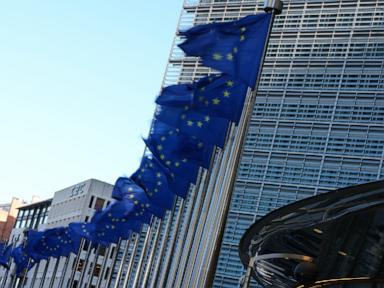
The European Commission just pulled the plug on EU Academy, its public online learning hub, after an AI-driven cyberattack exposed personal data including user names and email addresses. That's the headline reality as of November 23, 2026. If you ever took a course on EU policies or registered for a workshop through the platform, your contact details may already be sitting in an attacker's hands.
Spokesperson Thomas Regnier confirmed on Monday that the EU Academy data leak stems from a broader campaign first spotted on October 22. Officials haven't said how many accounts were affected or whether passwords were taken. For now, the platform is offline while investigators trace the damage.
Honestly, it shouldn't surprise anyone that an automated training portal got hit before core internal staff systems. Public-facing learning portals have to be open to thousands of outside users, which makes them way harder to lock down than an isolated internal intranet. Yet when a major institution like the European Commission has to shut down a public service a full month after first detecting trouble, it proves how fast AI-assisted attacks are moving.
Why the EU Academy Data Leak Matters Beyond One Website
On paper, losing names and email addresses sounds mild compared to a bank breach or a stolen Social Security number. In practice, that's a dangerous trap.
Attackers love clean, targeted lists of people who engaged with European Union institutions. If you're a policy researcher, a consultant, a student, or a civil servant who used EU Academy to learn about bloc regulations, your email address is prime bait for spear-phishing. Instead of sending a generic spam blast, an attacker can craft a message pretending to be from EU Academy, Brussels security teams, or a workshop coordinator asking you to "verify your account" or open a malicious document.
Think about how convincing that feels when you actually used the site. Most people let their guard down when an email matches something they genuinely signed up for.
From a broader security perspective, this incident is also the first public confirmation of user data exposure tied to the October wave targeting the Commission. Earlier in November, after Politico broke news of the incidents and officials addressed questions at a November 19 press briefing, Regnier noted that authorities had rolled out preventative measures and hadn't found evidence of a breach hitting Commission staff as a whole across Brussels' roughly 40,000 EU institution workers. Still, taking EU Academy offline shows containment is still underway.
How AI Changed the Attack Math
We're past the days when AI in hacking just meant cleaner grammar in phishing emails. Security teams have watched attackers use AI tooling to speed up reconnaissance, probe for weaknesses, and test exploit paths at a pace human analysts struggle to match manually.
Reports around the investigation—including coverage from AP News, Euronews, and Cyber Security News—point to AI-assisted methods and scrutiny around automated vulnerability tooling such as ARTEX, while CERT-EU oversees digital security across EU institutions. Attribution hasn't been officially confirmed by the Commission, even as Euronews reported sources suspect a China-backed group.
Here's what I see happen time and again when organizations defend against AI-speed attacks: teams rely on slow, manual review cycles and assume a breach means an immediate, dramatic alarm. Reality is messier. Intrusions can start weeks earlier—here, detection dates back to October 22—while investigators piece together which databases were touched and what stayed untouched.
That gap between initial detection and public confirmation frustrates users. It's also normal in complex investigations. Jumping to public numbers before forensic checks finish can create false certainty or tip off attackers about what defenders know. At the same time, keeping users in the dark for weeks carries its own cost: people don't know to watch their inboxes until a warning drops.
Common Mistakes People Make After an EdTech or Portal Breach
Whenever a training portal or public government site gets hit, users usually fall into one of two habits. Neither helps.
- Assuming "no password confirmation" means zero risk. Even if the European Commission hasn't confirmed password exposure on EU Academy, leaked email addresses and names are enough to power targeted phishing and credential-stuffing attempts if you reused that email and password combo somewhere else.
- Clicking links in "security update" emails. Right after a breach hits the news, fake warnings spike. Scammers impersonate support teams, security agencies, or portals offering "breach checks" designed to steal logins or install malware.
Another mistake is treating a public learning account like a throwaway profile. Many professionals use their work or primary email addresses to register for courses, webinars, and policy briefings. Once that address is exposed, every newsletter, calendar invite, or login prompt tied to it needs a closer look.
What You Should Do Right Now
Don't panic, and don't wait for another email from the platform to act. Take a few practical steps today:
- Treat any EU-related email with extra skepticism. If someone emails you about EU Academy, your account status, certificates, or security updates, navigate to official domains on your own instead of clicking links or downloading attachments.
- Rotate passwords if you reused them. If you used the same password anywhere else with that email address, change it immediately to a unique one stored in a password manager.
- Turn on multi-factor authentication. Lock down your email account first with an authenticator app or hardware key, since your inbox is the master key to almost everything else.
- Watch for follow-on lures. Over the next few weeks, pay close attention to unsolicited messages referencing EU policies, training programs, or urgent verification requests—especially if they pressure you to act fast.
AI-driven attacks aren't going away, and even major institutions with dedicated cyber teams get hit. Your best defense is simple: assume your email address is already out there, keep your login security tight, and never trust an urgent message just because it sounds official.


