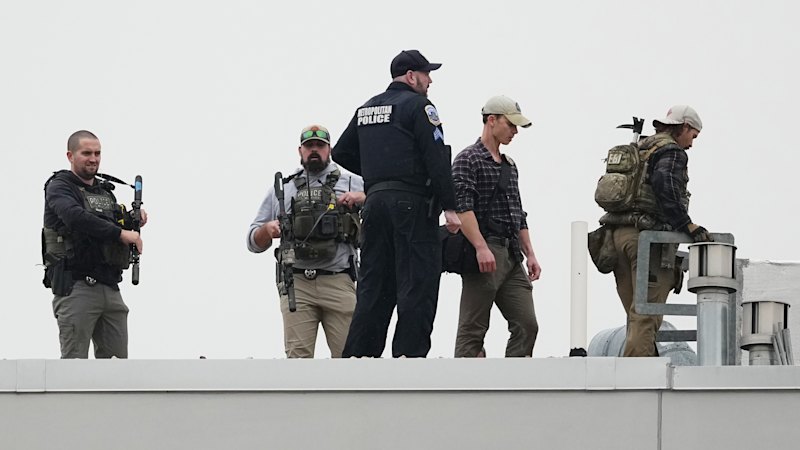
A quiet Thursday morning rush hour near Logan Circle turned into a chaotic emergency zone when a gunman opened fire inside and outside a popular Washington, D.C. fitness center. The violent episode left one person dead, four others injured, and sparked a tense multi-agency standoff that paralyzed a busy neighborhood just blocks from downtown.
The incident unfolded shortly after 8 a.m. near the intersection of 15th and P streets Northwest. Witnesses described scenes of immediate panic as shots rang out both inside the Vida Fitness gym and on the bustling street outside. Interim D.C. Police Chief Jeffery Carroll confirmed that five people were struck by gunfire. One victim tragically died at the scene, another sustained critical injuries, and three others suffered non-life-threatening wounds before being rushed to nearby hospitals.
The Barricade and the Suspect
Following the initial gunfire, the suspected shooter fled into the upper residential floors of the apartment building situated directly above the gym. Police sources and building residents later indicated that the gunman lived on the seventh floor and had a running dispute with the building's homeowners association. Neighbors noted that the suspect had previously voiced complaints about property damage, even filing a lawsuit and posting grievances online and during board meetings.
Law enforcement agencies flooded the area within seconds of the initial emergency calls. The Federal Bureau of Investigation, the Bureau of Alcohol, Tobacco, Firearms and Explosives, the Metro Transit Police, and local departments converged on the block. Officials ordered a strict shelter-in-place directive for nearby residents and locked down local schools as heavily armed officers secured the perimeter.
Negotiators made contact with the suspect and spent
What the Washington DC Shooting Coverage Missed About Urban Security
news
Emergency sirens echo differently in the capital. People stop walking, look toward the noise, and wait for notifications that take too long to arrive.
When a gunman opened fire in Washington DC, leaving one person dead and four others wounded before barricading himself inside a building, the news alerts hit phones across the country within minutes. But notifications don't tell the real story. They rarely explain the sheer chaos of an active shooter situation unfolding in a dense urban corridor, nor do they capture the immediate panic of residents and workers scrambling for cover while emergency services lock down entire blocks.
If you only read the baseline news flashes, you missed the structural reality of how modern cities handle acute violence.
The Reality of Urban Containment Zones
Police response times in Washington DC usually rank among the fastest in the country due to heavy federal and local law enforcement presence. Yet, seconds feel like hours when an armed suspect takes shelter inside a structure.
Barricaded situations change the tactical equation completely. First responders can't simply rush a doorway when an active shooter holds a tactical advantage from an elevated position or a fortified interior room. Containment becomes the primary objective. Streets empty out. Transit lines divert. Businesses pull down security gates.
This creates an artificial ghost town within minutes.
Most coverage focuses purely on the casualty count and the suspect's identity. What gets ignored is the cascading operational gridlock. Major arteries freeze. Hospitals go on diversion status. Emergency rooms prep trauma bays while police negotiators try to establish contact. The ripple effects stretch miles away from the actual address.
Why Standard Protocols Fall Short
We rely on reactive measures. Run, hide, fight. Shelter in place. These directives work on an individual level, but they expose a glaring hole in municipal emergency preparedness.
Buildings downtown aren't universally equipped with smart lockdown systems. Glass facades offer zero ballistic protection. Older commercial properties feature multiple entry points that make securing a perimeter an absolute nightmare for patrol officers.
When gunfire breaks out in a populated district, the chaotic architecture of the city works against the public. Narrow alleys, interconnected structures, and heavy foot traffic create severe bottlenecks. First responders face a dual crisis: neutralizing the threat while managing hundreds of panicked bystanders who have nowhere safe to run.
We talk endlessly about policy changes after every tragedy, but property owners and city planners rarely talk about physical hardening. Upgrading security isn't just about hiring guards or installing metal detectors. It requires rethinking how buildings interface with the public streetscape during a crisis.
The Human Cost Behind the Headlines
Numbers on a screen strip away humanity. One life lost, four injured. Those statistics represent families, coworkers, and individuals whose Thursday afternoon turned into a nightmare.
Trauma recovery in these scenarios doesn't end when the police clear the building. Witnesses, surviving victims, and local workers carry the psychological weight for months. Schools nearby go into lockdown. Parents leave work in a panic. The collective anxiety of a community under threat lingers long after the police tape comes down and the roads reopen.
We need to look past the breaking news cycle. Security updates shouldn't only happen in the wake of a fatality.
Evaluate your own surroundings. Know the exits of every building you enter. Pay attention to local emergency alert systems. Preparation isn't paranoia; it's basic situational awareness in a world that demands vigilance.