Young Republicans aren't asking for a polite rebrand after the 2026 midterms. They're demanding that their party grow up.
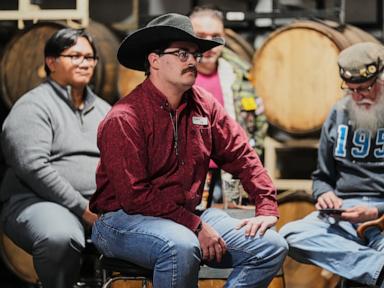
When the Tarrant County Young Republicans gathered at Martin House Brewing Company in Fort Worth, Texas, on November 23, 2026, the mood felt less like a victory lap and more like an intervention. Three weeks after brutal midterm losses, members in their twenties sat across from one another hashing out why the GOP bled momentum among younger voters. Some blamed old-guard leadership. Others pointed straight at Donald Trump's economic messaging. A smaller, sharper faction argued the party wasn't aggressive enough.
Here's the blunt truth that veteran strategists keep missing. Winning young voters once with viral energy or populist theater doesn't lock them in for a decade. After the 2024 election sparked talk of a lasting youth realignment, the 2026 midterms snapped that illusion. According to CIRCLE data from Tufts University, young voters backed Democratic House candidates by 36 percentage points nationally in 2026, swinging sharply back from 2024 even among groups like young men and non-college youth who had previously shifted right.
If you've spent time around campus chapters or local GOP clubs over the past two years, you already felt this tension building. Younger conservatives aren't a monolith. They're split between policy-minded builders who want serious answers on housing and wages, and hardline agitators pushing a much tougher cultural fight.
What Young Republicans Actually Mean by Growing Up
When activists and attendees at the Fort Worth gathering told party leaders to "grow up," "take themselves seriously," and "be humble," they weren't talking about wearing nicer suits. They were talking about moving past grievance politics and personality worship.
Take 25-year-old Trevor Carr, who showed up to his first Tarrant County Young Republicans meeting after sitting out the midterms. Carr told reporters he skipped voting because he doubted Trump would follow through on his promises, arguing that while Trump's disruptive style shook up Washington ten years ago, it has served its purpose and the movement needs to mature into a serious political platform centered on principle rather than loyalty to one man.
That sentiment hits a nerve because it exposes a crack inside the conservative youth coalition. Polling from the Harvard Institute of Politics Fall 2026 Youth Poll found that only 31% of young Republicans identified as members of the MAGA movement, and non-MAGA young Republicans reported lower definite voting intent than their MAGA peers. Plenty of young conservatives came for lower costs and limited government, not endless online brawls.
At the same time, growing up looks very different depending on who you ask in the room. While Derrick Wilson, chair of the Texas Young Republican Federation, argued that Republicans need to stop pointing fingers everywhere except at themselves and return to fiscal and social conservatism, 26-year-old former Marine Stephen Nesbitt argued the exact opposite. Nesbitt said the party needs to get meaner, stricter, and triple down, naming non-Christians, immigrants, and communists as enemies.
Honestly, that clash is the whole story right now. You can't build a durable majority out of two wings that don't even agree on whether the party's problem is immaturity or insufficient ruthlessness.
Why Affordability Beats Culture War Slogans Every Time
Ask a 24-year-old what keeps them up at night, and you'll usually hear about rent, groceries, starter homes, and paychecks—not a cable news talking point.
Wilson put his finger on a glaring disconnect during the Fort Worth discussion. Young adults who want to buy a home and start a family hear top leaders shrug off lower home prices, and it lands like a slap in the face. When housing costs stay out of reach and entry-level wages feel stretched thin, abstract promises about "winning" don't pay the electric bill.
Data backs up how hard pocketbook pressure hits young people's politics. Research from CIRCLE in 2026 showed that young people struggling financially were far less likely to shift ideologically right than financially stable or wealthy peers. Meanwhile, the Spring 2026 Yale Youth Poll found cost of living and affordability leading young voters' top priorities, ahead of corruption, democracy, healthcare, and housing.
Here is where a lot of political commentators get things backwards. They assume every young voter who turned away from the GOP in 2026 suddenly fell in love with progressive orthodoxy. Plenty didn't. Many simply felt let down on basic economics or alienated by constant drama. In politics, disillusionment is often quieter than anger—voters don't always switch sides loudly; sometimes they just stay home or drift toward independence.
The Trap of Mistaking 2024 Energy for a Permanent Shift
I've watched political parties misread youth trends for years, and the biggest mistake is treating a single election cycle as permanent destiny. After 2024, plenty of pundits acted as if young men and working-class youth had permanently joined the Republican fold.
Two years later, the numbers tell a much messier story. In the 2026 midterms, CIRCLE's analysis showed young Latino men shifting dramatically back toward Democrats—from a narrow Trump edge in 2024 to a nearly 40-point Democratic House advantage in 2026—while young white men also swung back toward Democratic candidates. Young voters without a college degree likewise moved back toward Democrats in House voting after showing more openness to the GOP two years earlier.
Why did that happen so fast? Because young voters today are pragmatic and skeptical. The Harvard Youth Poll showed overwhelming pessimism among 18-to-29-year-olds about the country's direction and deep fear about the future. When a party holds power and voters still feel squeezed financially, incumbents—and their allies—take the blame.
There's also a nuance worth noting on social issues. Political scientists tracking public opinion, including analysis highlighted on Good Authority in 2026, have pointed out pockets of rising social traditionalism among certain younger conservatives on specific questions. Yet even when pockets of the right lean more traditional, broad electoral coalitions still hinge on everyday economic relief and credibility. You can't lecture a generation out of feeling broke.
Practical Moves for Young Conservatives and Party Leaders
If young Republicans want real influence heading toward 2028 rather than another post-mortem at a local brewery, talk won't cut it. Action has to match the rhetoric.
- Put real housing and cost-of-living math on the table. Stop treating high home prices like a badge of honor for existing owners. Push concrete ideas on zoning reform, construction bottlenecks, healthcare transparency, and starter-home affordability that young adults can actually picture using.
- Audit your own coalition before blaming everyone else. Wilson's point about looking in the mirror applies well beyond Texas. Track who actually turned out in your precinct, why first-time voters stayed home, and where candidates lost ground among working-class and independent twenty-somethings.
- Reward policy competence over viral clout. If younger conservatives want a party that grows up, they have to back candidates who can explain budgets, trade, and regulation without needing a camera crew to manufacture outrage.
- Build local civic muscle year-round. Showing up only in the final six weeks before a November election leaves massive ground untouched. Host neighborhood policy forums, mentor new voters on local school and city council races, and listen more than you post.
The 2026 midterms made one thing unmistakable for young Republicans. Nostalgia and noise won't carry the next decade, and a party that refuses to grow up risks watching a whole generation walk past it for good.



