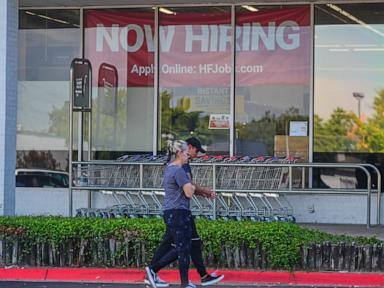
Every Thursday morning, Wall Street holds its collective breath for a batch of numbers released by the Department of Labor. When initial jobless claims tick upward to 200,000, financial news anchors love to spin up a panic about the health of the American worker. You see flashing graphics and urgent chyrons warning that cracks are forming in the foundation of the economy.
Don't buy the hype.
If you look past the weekly headline noise, a jobless claims figure of 200,000 isn't a sign of distress. It is a textbook definition of a resilient, stable labor market. Layoffs remain historically rare, corporations are holding onto their talent, and the underlying reality of the American workforce looks vastly different from what the doom-scrollers online want you to believe.
The Real Story Behind the 200000 Claims Mark
Let's look at the actual mechanics of what happened. Initial claims rose by 9,000 from a slightly upward-revised 191,000 the week prior. Economists surveyed ahead of the release had consensus expectations sitting right around 195,000. Because the actual print came in slightly higher than what the models predicted, algorithmic traders and headline-chasers reacted as if something went wrong.
That is an overreaction.
To put things in proper historical perspective, weekly filings for unemployment benefits spent large stretches of past decades hovering well above 300,000, and during economic shocks, those numbers exploded into the millions. Bouncing around the 200,000 threshold is not a symptom of a contracting job market.
Why US Jobless Claims Touching 200000 Doesn't Mean the Sky is Falling
business
Headlines love panic. Every time weekly unemployment filings nudge slightly upward, financial media outlets scramble to draft alerts about shifting labor trends. Recently, US jobless claims ticked up to 200,000. People freaked out. They shouldn't have.
If you look past the initial shock value of the headline number, the reality on the ground tells a much steadier story. Historic context matters here. We aren't looking at a crumbling labor market. We are looking at routine noise in a historically tight employment ecosystem.
Let's break down what these numbers actually mean for your career, your business planning, and the broader economy without the standard media sensationalism.
The Baseline Context of 200,000 Weekly Filings
To understand why 200,000 initial jobless claims is actually a strong indicator, you need to look at where we've been historically. During severe economic downturns, weekly filings skyrocket past millions. Even in healthy, humming economic cycles before major disruptions, a baseline of 200,000 to 220,000 claims is completely normal.
Workers change jobs. Companies restructure. Seasonal layoffs happen. People relocate. Friction exists in every labor market, no matter how robust hiring might be.
When claims stay under 250,000, economists generally view the labor market as expanding. A tick up to 200,000 means very little on its own. It's a blip, not a trend.
Why People Misinterpret Weekly Volatility
Weekly jobless claims data is notoriously noisy. State agencies process filings in batches, holidays throw off collection schedules, and temporary weather events can cause brief spikes in specific regions.
Treating a single week's report as a macroeconomic turning point is a rookie mistake. You have to look at the four-week moving average to smooth out the weekly spikes and drops. When you do that, the baseline stability becomes obvious.
What the Labor Market Is Actually Doing Right Now
The broader employment picture involves more than just how many people file for initial benefits. Employers continue retaining talent because finding replacements remains difficult and expensive.
Turnover costs hurt bottom lines. Smart business owners hoard good workers even when growth slows slightly. That dynamic keeps mass layoffs off the table for most major sectors.
Wage growth has cooled from its post-pandemic frenzy, but it hasn't collapsed. Workers still possess leverage in specialized fields like healthcare, skilled trades, and advanced technology roles.
Sectors Experiencing Real Shifts
Not every industry shares the same reality. Tech and media companies bloated their headcounts during the zero-interest-rate years and continue rightsizing. Retail and hospitality face seasonal adjustments.
Yet, manufacturing, logistics, and healthcare absorb displaced workers quickly. The friction isn't a lack of open positions; it's a mismatch between worker skills and open job requirements.
How to Protect Your Career and Business
Stop reacting to every macroeconomic data point that flashes across your phone screen. If you're an employee, obsessing over weekly jobless claims won't save your job if your company underperforms. Focus on execution, build cross-functional skills, and keep your network warm.
If you're an employer, stop delaying strategic investments based on scary headlines. The labor market isn't falling off a cliff. Plan your hiring around actual customer demand and revenue, not cable news chatter.
Take a breath. The data shows normal fluctuations, not a crisis.