We are watching the slow unraveling of the post-Cold War security architecture, and most Western capitals are still treating it like a regional border dispute. It is not. The ongoing war in Ukraine isn't just about Donbas, territorial lines, or local sovereignty. It is the opening salvo of a broader, systemic contest over who writes the rules of the international system.
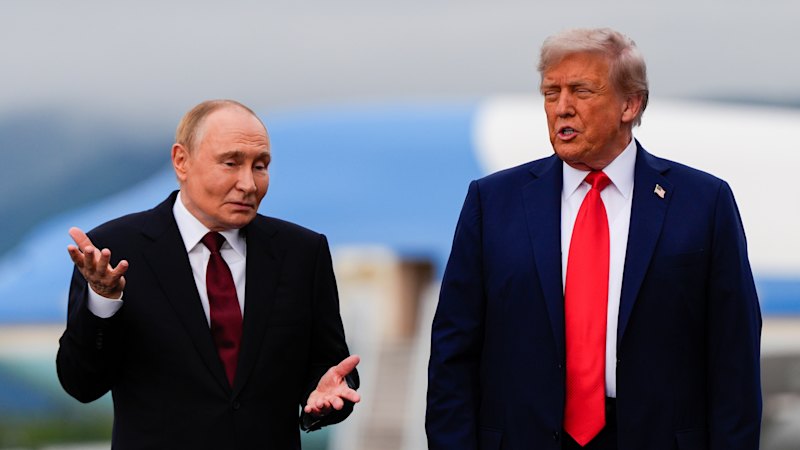
When Vladimir Putin launched his full-scale invasion, he didn't just target Kyiv. He threw down a gauntlet against the liberal world order. Yet, diplomatic circles in Washington and parts of Western Europe keep sliding back into comfortable complacency. They view the conflict through a short-term lens, hoping for a tidy ceasefire or a negotiated land swap that lets everyone return to business as usual. That is a dangerous illusion.
The Baltic Warning Test
If you want to understand where this is heading, you don't look at Paris or Berlin. You look at Tallinn, Riga, and Vilnius. To the Baltic states, Ukraine is the ultimate stress test of Western resolve. Former Latvian Prime Minister Krisjanis Karins put it bluntly during conversations with security analysts: freedom isn't a given, and nations on Russia's immediate periphery have everything on the line. When Latvia shipped its Stinger missiles to Ukraine in the critical opening days of 2022, saving Kyiv's Hostomel Airport from falling into Russian hands, they weren't just helping a neighbor. They were defending their own borders by proxy.
Too many Western leaders fail to grasp the core objective here. Putin's ambitions do not stop at the Dnipro River. His ideological framework views the dissolution of the Soviet Union as a historic catastrophe that must be reversed. More importantly, he seeks to fracture the transatlantic alliance, test NATO's Article 5 guarantee to its breaking point, and prove that democratic institutions are too slow, divided, and self-absorbed to mount a sustained defense.
The Cost of Short-Term Pragmatism
Economic opportunism continues to undermine collective security. Recent maneuvers, such as renewed energy trades and the loosening of specific sanctions to acquire discounted Russian diesel, send a disastrous signal to Moscow. When major global players prioritize short-term price relief over long-term strategic integrity, they finance the very military machine threatening European stability. It creates a perverse loop where Western cash directly funds Russian ordnance.
NATO analyst Carlo Masala argued persuasively in his widely read European essays that ignoring the systemic nature of this war is suicidal. If the revisionist powers—anchored by Moscow and backed by strategic alignments with Beijing, Tehran, and Pyongyang—manage to rewrite the rules of territorial acquisition in Europe, the shockwaves will reshape global security. The Indo-Pacific will feel it. The South China Sea will feel it. Global trade norms will shatter.
What Happens Next
Pretending that a peace deal in Ukraine will restore the status quo is a geopolitical fantasy. Russia's economy has shifted to a permanent war footing. Its military doctrine has adapted to attrition, drone warfare, and hybrid cyber aggression. Even if active hostilities freeze tomorrow, the structural confrontation between an assertive authoritarian axis and a hesitant West will define the next decade.
The democratic world has a choice. It can continue sleepwalking through a rolling global crisis, trading long-term security for short-term political convenience. Or it can recognize that the defense of Ukraine is the first line of defense for the entire international rule of law. Stop waiting for a return to normal. Normal isn't coming back.