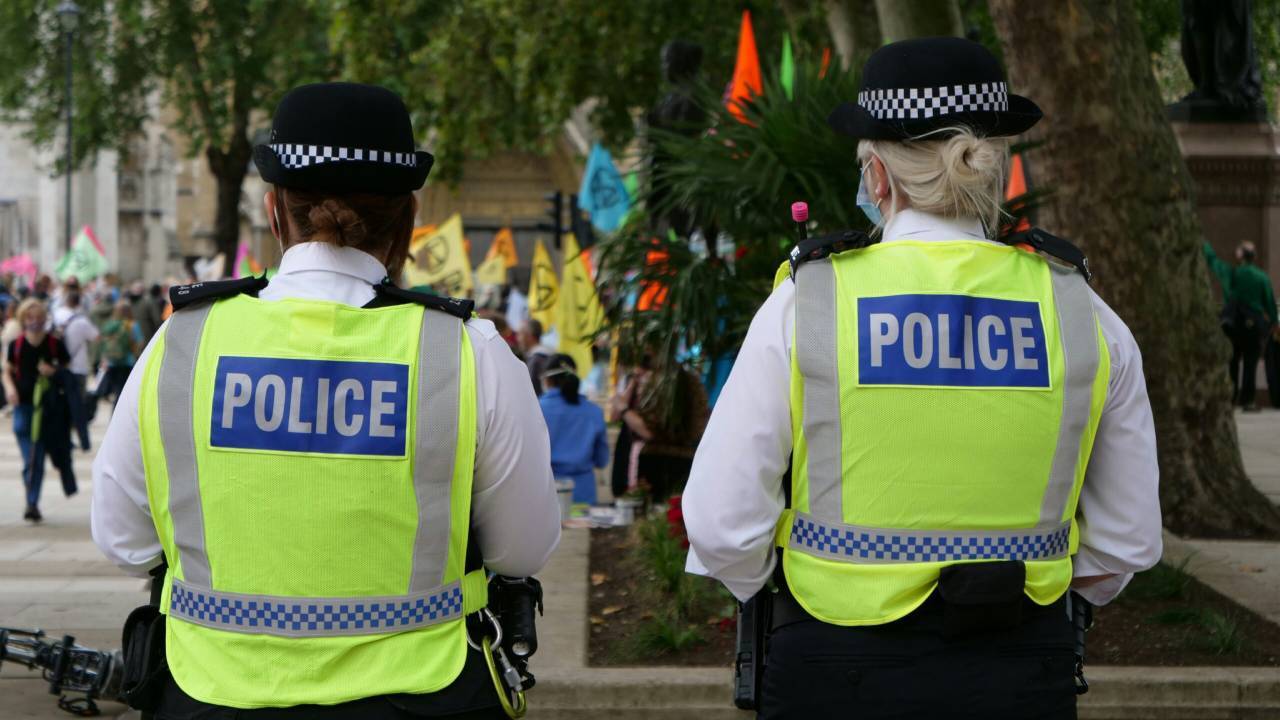
Should a uniformed British police officer adjust her appearance or behavior around certain men based on religious norms? That single question blew up into another political firestorm in late November 2026.
Guidance linked to the National Police Chiefs' Council advised female officers to dress modestly and factor in cultural sensitivities when interacting with Muslim men, while also touching on same-sex dynamics and spaces like mosques or Muslim homes. Reform UK leader Nigel Farage and Conservative figure Chris Philp pounced fast, accusing senior officers of pushing two-tier policing.
Let's be honest. Headlines like that travel at light speed because they hit two nerve endings at once: faith and authority. When a public institution tells officers how to handle cultural boundaries, critics don't just see etiquette. They see a threat to equal treatment under the law. Yet if you look closer at how British policing actually works on the street, the fight isn't really about hemlines or sleeves. It's about trust, operational safety, and whether well-meaning advice backfires into division.
How UK Police Modesty Guidance Turned Into a Political Flashpoint
Whenever police guidance mentions religion or culture, public reaction splits along predictable lines. One side hears practical de-escalation advice meant to avoid needless friction during community outreach or home visits. The other side hears a message that women in uniform must shrink or alter their authority to accommodate religious expectations. Similar analysis on this trend has been provided by NBC News.
Look at why Farage and Philp seized on the story so aggressively. Over the past couple of years, accusations of two-tier policing have shifted from fringe talking points to mainstream political ammunition in Britain. Earlier in November 2026, Home Secretary Shabana Mahmood set out plans to address growing public concern over perceptions of uneven policing, warning against misguided attempts at course correction that could look like differential treatment.
Against that backdrop, advice telling female officers to mind modesty or consider same-sex arrangements around Muslim men lands like gasoline on an open flame. Critics argue that equal law enforcement requires officers to treat every citizen identically, regardless of faith, gender, or background. If an officer hesitates to enter a room or changes how she carries herself because of a suspect's or resident's religious norms, detractors say standards are bending in the wrong direction.
Still, I think politicians and commentators often flatten complex operational guidance into a caricature. Police forces in the UK deal with thousands of daily encounters—from routine neighborhood visits to sensitive domestic disputes and multi-faith community engagement. Guidance documents are usually drafted to help officers navigate awkward or tense situations without losing control of the scene. The trouble starts when wording sounds vague, mandatory, or deferential rather than practical.
What Critics Mean by Two-Tier Policing in Britain
If you've followed UK politics lately, you've heard "two-tier policing" dozens of times. Most people use it as shorthand for a simple fear: that different groups get different treatment depending on politics, race, or religion.
In reality, the phrase carries two distinct meanings in public debate:
- Perceived bias in enforcement: Critics claim some protests, offenders, or communities are handled more leniently—or more harshly—than others.
- Cultural deference in policy: Opponents argue that diversity and inclusion initiatives sometimes prioritize sensitivity over blunt neutrality.
Neither claim is easy to prove with a single viral quote. Policing data is messy, context-heavy, and fiercely contested. A decision that looks like favoritism from a distance might look like crowd-control triage or safeguarding to the officer on the ground. At the same time, ignoring public perception is a fast way for any police force to lose legitimacy. In Britain's model of policing by consent, public trust isn't a nice bonus. It's the foundation of the job.
Here's where I stand. Calling every cultural briefing "two-tier policing" cheapens real accountability when genuine mistakes happen. On the other hand, dismissing ordinary citizens' concerns as bad faith is just as reckless. When people feel the rules aren't applied evenly, telling them not to notice rarely calms things down.
Practical Realities for Women in Uniform
Let's step away from cable-news shouting matches for a minute and think about what actually happens on a shift. Female police officers face enough real-world challenges without becoming proxies in a culture war.
A few practical realities shape how officers operate in diverse neighborhoods:
- Authority comes from the warrant and conduct, not deference: A police officer doesn't stop being a police officer because someone holds conservative views on gender or modesty. Clarity and firmness matter far more than self-consciousness.
- Safety always outranks etiquette: Any rule or tip around same-sex officers or sensitive spaces only makes sense when it supports officer safety, evidence gathering, and victim protection. If cultural consideration slows down an urgent response or compromises safety, it's broken.
- Ambiguous wording creates confusion: Telling officers to "dress modestly" without clear operational context invites eye-rolls from frontline staff and outrage from critics. Uniformed officers already wear standard kit or plain clothes suited to their assignment. Vague advice makes leadership look out of touch.
Having watched plenty of public-sector policy rollouts go sideways, I've noticed a clear pattern. Good intentions fail when guidance reads like a lecture instead of a field note. Frontline officers want plain, unambiguous rules they can apply in ten seconds flat, not essays on cultural theory.
Common Questions People Ask About This Row
Did UK police ban female officers from working with Muslim men?
No. Advising officers to consider cultural context or same-sex dynamics is not a ban on women policing Muslim men or entering particular settings. In practice, operational needs, shift staffing, and safety requirements dictate deployment.
Why does religious guidance trigger such fierce backlash?
Because policing sits right at the intersection of state power and personal values. When guidance appears to single out a specific faith group—even with benign intent—critics quickly frame it as special treatment or unequal standards. Once that narrative sticks, nuance gets drowned out.
How can police balance cultural awareness with equal treatment?
By keeping guidance grounded in law, safety, and professional standards rather than social signaling. Understanding community norms can help officers communicate clearly and avoid unnecessary escalation, provided everyone remains equally accountable under the law.
What to Watch and Do Next
If you're following this story—whether as a UK resident, a policy watcher, or someone trying to cut through political spin—don't rely on second-hand outrage alone. Read primary summaries, check official responses from police bodies and the Home Office, and separate genuine policy flaws from partisan slogans.
If you work in public policy, communications, or organizational leadership, take a hard look at how your own guidance reads to people outside your bubble. Ask yourself three blunt questions: Is the instruction clear enough to follow under pressure? Does it protect safety and fairness first? And could a reasonable outsider misread the phrasing as favoritism? Fixing unclear language early saves a whole lot of headaches later.
Does two-tier policing exist in Britain? provides useful video context on how British political leaders and commentators debate fairness and equal treatment in UK policing.