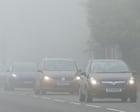
Driving through a wall of white at seventy miles per hour is a terrifying experience. One minute you're tracking tail lights on the motorway, and the next you're swallowed by a dense, milky blanket that reduces visibility to less than fifty meters.
The Met Office recently triggered yellow weather warnings across large swathes of England and Wales, pointing to a specific combination of atmospheric elements acting as the ultimate recipe for thick fog. When high pressure takes control, winds drop, skies clear, and the ground rapidly loses heat overnight. Moisture condenses in the cooling air right at the surface, creating a ground-level cloud that catches commuters completely unprepared.
Most people think fog is just low cloud cover, but the physics operating close to the tarmac are entirely different.
The Science Behind November Visibility Drops
Radiation fog happens when autumn nights lengthen and the earth radiates heat back into space unchecked. Without a blanket of clouds trapping warmth overhead, temperatures plummet. If there's enough moisture lingering from recent damp weather and zero wind to mix the air, tiny water droplets suspend themselves right where you're trying to drive.
Industrial areas and urban pockets often get it worse. Microscopic pollution particles floating in the atmosphere act as seeds for moisture to latch onto, making the soup even thicker.
When the Met Office issues these alerts, they aren't crying wolf. Visibility can drop off a cliff in a matter of miles. You might leave home under clear skies and plunge directly into a localized pocket where you can barely see the end of your own bonnet.
Why Drivers Still Ignore Basic Fog Safety
Despite yearly reminders, standard commuter behavior during a fog warning remains shockingly risky. People tailgate. They rely entirely on automatic headlights—which often leave rear lights dark because front sensors don't register the thick haze behind them.
Driving too fast for the conditions is the default error. If your visibility is restricted to fifty meters, braking distances change completely. Reacting to a stationary queue of traffic on a wet, slick road hidden beneath fog requires every bit of your attention.
Here is what you actually need to do when the yellow warnings drop:
- Check your vehicle's fog lights before you leave the driveway. Know the difference between front spots and high-intensity rear red lights.
- Turn your lights on manually. Do not trust auto settings in heavy mist.
- Slow down drastically, even if the road looks clear ahead.
- Leave double or triple your normal gap to the car in front.
- Turn off your music, roll down your window slightly at junctions, and listen for traffic you cannot see yet.
The Broader Weather Shift
This sudden spike in dense autumn fog marks a distinct seasonal gear change. Weeks of aggressive Atlantic storms and gale-force winds driven by a powerful jet stream have given way to stubborn high pressure.
While a blocked weather pattern brings welcome relief from torrential rain and structural damage, it traps cold air and moisture right at the surface. These stagnant atmospheric conditions mean fog can linger well past mid-morning in some valley locations and rural basins before finally burning off under weak November sun.
Flight schedules at regional hubs, cross-channel ferry services, and early morning rail commutes bear the brunt of the disruption. Airlines hold departures until runway visibility thresholds improve, causing ripple delays that last all day.
Next time you see a yellow fog alert pop up on your phone, don't just brush it off as standard winter gloom. Give yourself an extra twenty minutes, check your bulbs, and assume the motorway will test your patience.



