Elections aren't just about counting ballots. Sometimes, they're about whether the rules of democracy even survive the week. As the United States marches toward the crucial 2026 midterm elections, Donald Trump's ongoing hostility toward early voting and mail-in ballots isn't mere political posturing. It's the logical extension of a playbook written years ago. When critics look back at the chaos of January 6, 2021, many chalked it up to an unprecedented, chaotic outburst. They were wrong. It wasn't an anomaly. It was a proof-of-concept for modern American populism.
The Mechanics of Discrediting the Ballot
Look closely at how political momentum shifts right before a major legislative showdown. Historically, a sitting president's party takes a beating during midterms. The current administration faces strong headwinds, low approval ratings around thirty-seven percent, and deep economic anxieties over trade wars and tariffs. Faced with tough polling numbers, the response from the White House hasn't been to pivot toward moderate voters. Instead, it's an aggressive assault on the voting infrastructure itself.
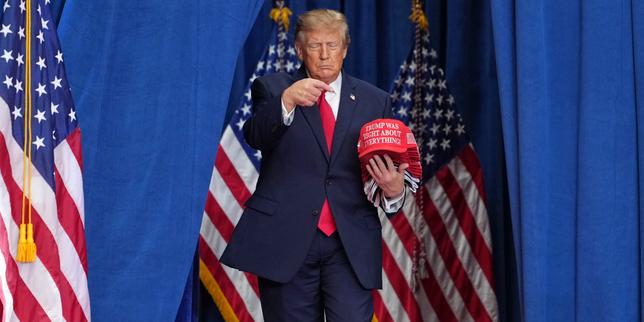
From preemptive legal challenges filed in states like Alaska to fierce rhetoric condemning early voting as "stupid" and "ridiculous," the strategy relies on pre-delegitimization. If your base believes the game is rigged before the first box is unsealed, defeat can be reframed as theft. It's a calculated gamble. Donald Trump even cast his own early ballot near Mar-a-Lago while simultaneously railing against the practice on the national stage. That contradiction isn't a slip-up. It's a feature of populist political theater. You use the system to survive while telling your followers the system is corrupt.
Beyond the Ballot Box: The Permanent Campaign of Grievance
Why does this method keep working? Because grievances mobilize people faster than policy achievements ever could. When Trump remarked that Republicans needed to win the midterms because Democrats would otherwise "find a reason to impeach" him, he wasn't just talking about legislative power. He was framing the entire political structure as an existential battleground.
This brings us straight back to the events at the Capitol. January 6 wasn't a spontaneous riot that got out of hand. It was the physical manifestation of a core political theory: that established institutional norms carry zero moral weight if they stand in the way of populist victory. When institutions slow you down, you pressure them. When election laws frustrate you, you rewrite them or sue to block them.
What the Establishment Misses
Traditional pundits love to analyze these moves through the lens of ordinary political strategy. They talk about suburban swing voters, inflation metrics, and ground game analytics. They miss the forest for the trees. Trump doesn't want to win within the traditional rules of American democracy; he wants to rewrite the definition of legitimacy altogether. Every lawsuit filed against mail-in voting, every threat to contest upcoming results, and every rally questioning electoral integrity serves a single long-term objective.
If the public loses faith in the referee, the game ceases to matter. And when the game ceases to matter, power flows entirely to whoever can shout the loudest and mobilize the most passionate faction.
Where We Go From Here
If you want to understand where American politics is heading, stop waiting for a return to pre-2016 norms. It's not happening. The ongoing war against midterm voting mechanics is just the latest skirmish in a much longer campaign to redefine democratic participation as a partisan weapon. Watch the courts, watch how local election boards handle post-vote disputes, and remember that every rule change is designed with one ultimate goal in mind: ensuring that defeat is never treated as final.
Midterm Elections: Trump weakened by trade war
This video provides additional context regarding how economic policies and trade disputes are actively shaping the political landscape and voter sentiment ahead of the midterm elections.