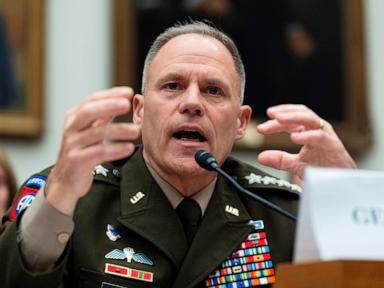
The U.S. Army has been running without a Senate-confirmed chief of staff for seven months, and the White House just made its move to end the standoff. President Donald Trump formally nominated Gen. Christopher LaNeve—a veteran paratrooper who until last year worked directly beside Defense Secretary Pete Hegseth as his senior military aide—to take over as the service's highest-ranking uniformed officer.
Most casual readers will see this as routine Pentagon shuffling. It isn't.
LaNeve's nomination sits right at the intersection of an unprecedented string of senior military firings, a ticking clock on Capitol Hill following the November midterm elections, and a fierce internal battle over how the Army prepares for drone-heavy modern warfare. If you want to understand where America's ground forces are headed over the next four years, you have to look closely at how LaNeve got here—and the political minefield waiting for him in the Senate.
How Chris LaNeve Rose From Hegseth's Inner Circle to Top Army Officer
To appreciate why this pick is turning heads in Washington, look at the timeline. Two years ago, LaNeve was a three-star general commanding the Eighth Army in South Korea. He had a classic, dirt-under-the-fingernails infantry resume—tours in Iraq and Afghanistan, command of the 82nd Airborne Division, and a Ranger tab. Nothing about his career screamed "political insider."
Then came 2025.
In March 2025, LaNeve was tapped to become Defense Secretary Pete Hegseth's senior military assistant. In Pentagon terms, that job puts you in the room for every major decision, phone call, and personnel clash. He relinquished his Korea command in April 2025 and moved into the Secretary's inner circle.
Things moved fast after that. By October 2025, the White House nominated him to become the Army's vice chief of staff, even though Gen. James Mingus was already sitting in that seat. Mingus ended up retiring two years earlier than planned, and by February 2026, LaNeve pinned on his fourth star and took over as the Army's number-two officer.
Two months later, the floor dropped out from under the Army's top leadership.
The April Ouster of Gen. Randy George
In April 2026, Hegseth abruptly fired Army Chief of Staff Gen. Randy George without offering a public explanation. George, originally nominated during the Biden administration in 2023, was widely respected on Capitol Hill by lawmakers from both parties.
Reporting from The Guardian later pointed to a specific flashpoint behind the scenes. On March 28, an unauthorized Army helicopter flyover occurred near the Tennessee property of musician Kid Rock. According to those reports, George pushed for an official investigation into the flight, and Hegseth blocked it. Days later, George was out of a job.
LaNeve stepped in immediately as acting chief of staff. He has been doing double duty—serving as both vice chief and acting chief—ever since.
Why the Pentagon Leadership Vacuum Hits Nearly a Million Troops
Here is what gets lost when headlines focus strictly on Washington palace intrigue. The U.S. Army isn't a small startup. It is an organization of nearly one million active-duty, Guard, and Reserve soldiers, and for months it has operated with temporary leadership at both the civilian and uniformed levels.
Look at the top of the org chart right now:
- Chief of Staff: Acting (Gen. Christopher LaNeve, pending confirmation).
- Vice Chief of Staff: Vacant once LaNeve moves up—Trump simultaneously nominated Lt. Gen. Marcus Evans, currently the director of Army staff and a former special operations commander, to fill that slot.
- Secretary of the Army: Acting (Adam Telle). Former Army Secretary Dan Driscoll, who worked closely with Gen. George and told lawmakers he didn't know why George had been fired, resigned amid growing friction with Hegseth. The White House still hasn't nominated a permanent civilian secretary.
Acting leaders can keep the trains running on time. They can sign routine orders and manage day-to-day readiness. What they struggle to do is lock in multi-year budget priorities or push controversial structural reforms past skeptical appropriators in Congress. When both the civilian secretary and the four-star chief are in "acting" status, defense contractors and combatant commanders alike start hedging their bets.
Acting Army Secretary Adam Telle praised LaNeve on social media following the formal nomination, calling him "the right leader at the right time to modernize the Army and ensure our Soldiers are prepared to dominate on any battlefield". LaNeve struck a traditional tone in his own statement, noting his 36 years in uniform and saying he looks forward to continuing to serve soldiers and their families if confirmed.
The Drone Controversy That Could Complicate Senate Confirmation
If you think LaNeve is going to waltz through the Senate Armed Services Committee unopposed, think again. Even with a solid combat record, he has already made decisions during his seven-month stint as acting chief that irritated lawmakers.
The biggest sticking point is unmanned warfare.
LaNeve drew sharp congressional pushback after eliminating the 600-member Unmanned Assault Battalion, an experimental unit that had been stood up as part of the 173rd Airborne Brigade. At a moment when the war in Ukraine and conflicts across the Middle East have proved that cheap drones can paralyze armored columns, disbanding a dedicated unmanned assault unit looked to several lawmakers like moving backward.
LaNeve has worked hard to counter that narrative. He issued updated operational doctrine through new "How the Army Fights" guidance, created a new Program Acquisition Executive focused specifically on autonomy, and rebranded the service's modernization hub into the U.S. Army Futures and Autonomous Systems Command (FASCOM).
His argument—one shared by many traditional infantry commanders—is that drone warfare shouldn't be siloed inside one specialty battalion. Instead, autonomous systems need to be woven into every brigade across the force. Whether senators buy that explanation, or view it as bureaucratic rebranding after killing a promising unit, will be front and center during his confirmation hearing.
The Midterm Clock Is Ticking on Capitol Hill
Timing is everything in Senate confirmations, and the calendar isn't doing the White House any favors.
The nomination landed just weeks after heavy Republican losses in the 2026 midterm elections—results that will hand control of both the House and the Senate to Democrats when the new congressional session convenes in January 2027. That leaves a narrow lame-duck window for the current Republican-led Senate to hold hearings, clear committee votes, and confirm both LaNeve and Lt. Gen. Marcus Evans.
If the nomination stalls and rolls over into January, the political math changes overnight.
A Democratic-controlled Senate Armed Services Committee won't necessarily reject a four-star general with 36 years of service. Historically, lawmakers defer to presidents on uniformed service chiefs unless there is a glaring personal disqualifier. What Democrats will do, however, is use LaNeve's confirmation hearing as a high-profile stage to grill the Pentagon over:
- Why Hegseth has fired more than a dozen senior generals and admirals since taking office.
- The exact circumstances surrounding Gen. Randy George's April removal and the blocked helicopter investigation.
- Whether proximity to the Defense Secretary is replacing institutional independence as the main qualification for four-star rank.
Even before January, LaNeve isn't guaranteed unanimous GOP support. Several defense-minded Republicans on the Armed Services Committee had close working relationships with Gen. George and have quietly bristled at the turbulence inside the Pentagon's top ranks.
What Happens Next and How to Track the Confirmation
Whether you follow defense policy professionally or just want to see past the partisan noise, watching how this nomination plays out over the next six weeks will tell you a lot about civil-military relations in 2026.
If you want to track where things stand before Congress adjourns, keep an eye on three concrete milestones:
- The Senate Armed Services Committee calendar: Watch for the committee to schedule LaNeve's formal confirmation hearing before mid-December. If a hearing date isn't posted within the next two weeks, the odds of a pre-January floor vote drop sharply.
- Written advance policy questions: Before any four-star nominee testifies, the committee releases their written answers to dozens of policy questions. Look specifically at how LaNeve addresses civilian control of the military, whistleblowers, and FASCOM's budget priorities.
- The Marcus Evans companion nomination: Keep watch on whether the Senate bundles Lt. Gen. Evans's vice chief nomination alongside LaNeve's. Confirming both together finally gives the Army a permanent, Senate-confirmed uniformed team after months of limbo.
Check the official Congress.gov nominations tracker under the Department of Defense filings to see the exact date the paperwork is referred to committee and whether any senator places a formal hold on the floor vote.
For visual context on the broader Pentagon leadership dynamic behind this nomination, you can watch Gen. Barry McCaffrey TORCHES Pete Hegseth, which discusses the tension between retired senior military leaders and Defense Secretary Pete Hegseth's management approach.



