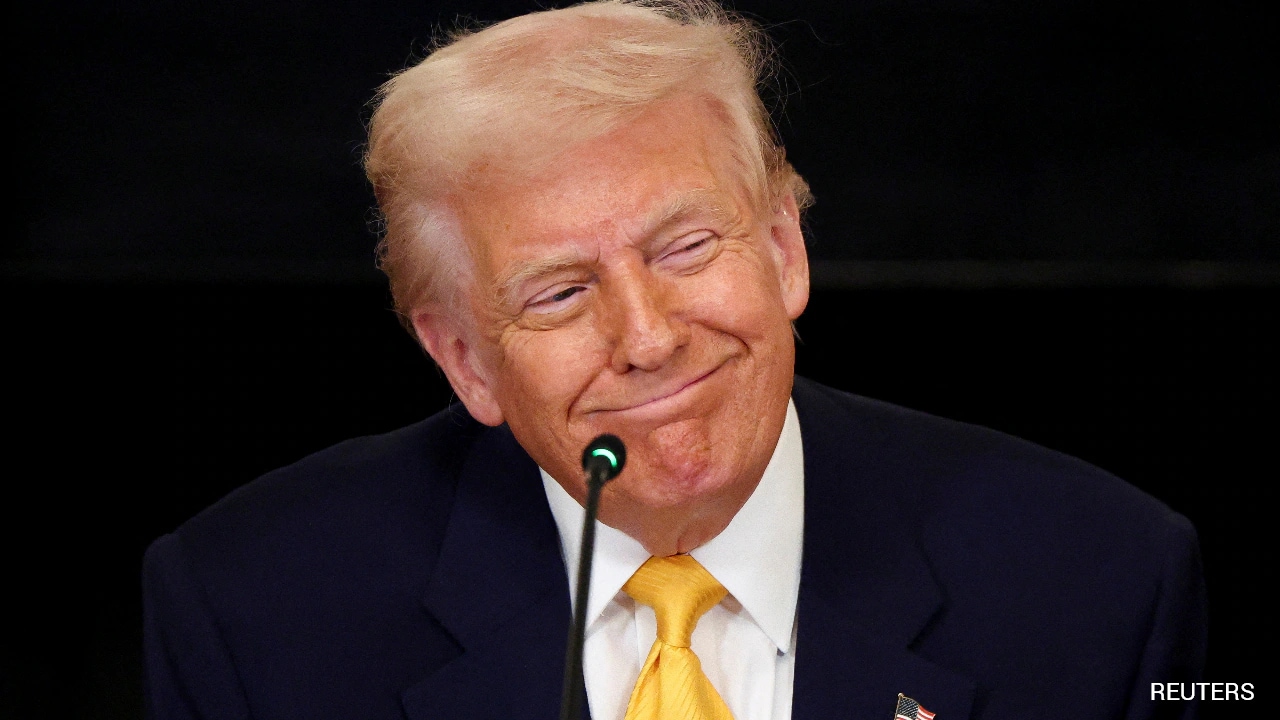
President Donald Trump threw another private dinner for top holders of the $TRUMP meme coin at his Virginia golf club on Sunday night, even as the token trades below a dollar after crashing roughly 99% from its January 2025 peak above $73. Honestly, watching a VIP gala where one buyer qualified with $518—down from at least $55,000 for the first dinner in May 2025—tells you everything you need to know about how fast hype cools off when a meme coin has no underlying business.
NDTV's short piece recaps the headline facts: the Sterling, Virginia event, celebrity attendees like Kevin O'Leary, Floyd Mayweather, Tristan Thompson, and Lior Suchard, the collapse of $TRUMP and $MELANIA, foreign-linked exchange wallets, and incoming Democratic scrutiny after the midterms. Fair enough as a quick wire summary. Still, if you actually care about how crypto contests work, why seats went unfilled this time, and what happens to retail buyers left holding the bag, a three-minute news brief barely scratches the surface.
The Economics Behind a $518 Dinner Seat
Look at the numbers from this third holder event compared to the first one in May 2025. Back then, people fought over 220 seats, and qualifying required around $55,000 worth of $TRUMP, with top contenders holding millions of dollars in tokens. According to Reuters reporting on the final leaderboard that closed on November 16, only 130 wallets made the cut for up to 185 open spots, holding a combined $8.6 million in $TRUMP. That is a 94% drop in aggregate holder value compared to the $148 million held by top competitors ahead of the first dinner.
Even more telling, The Washington Post reported that more than 5,000 eligible holders didn't bother registering, even after organizers tacked on four extra days to sign up. Why walk away from a free pass? Because when a token has already bled out from a paper valuation over $14 billion to roughly $250 million, plenty of burned holders just want out rather than chasing novelty swag like a numbered watch or fragrance.
A perk only works as a magnet while people believe the underlying asset can bounce back. Once the market stops believing in the bounce, even a presidential photo op starts feeling like a consolation prize.
Traders who've played these holder leaderboards before know the game isn't simple. During the May 2025 event, time-weighted balances mattered, and on-chain trackers noted that roughly 40% of attendees held less than a single $TRUMP token by the time dinner rolled around. Many buyers scoop up tokens to lock in a leaderboard spot and dump them right after rankings lock. This time, the token didn't even get a pre-dinner lift. It slid from $1.11 when rankings locked on November 12 into the $0.80s and low $0.90s right before the event, down roughly 20% over that stretch.
Some attendees didn't even take directional price risk. Trader Morten Christensen told Bloomberg he hedged his $TRUMP purchases with a separate short bet that paid off when the coin dropped, turning his costs at earlier events into a small net gain. That kind of hedge is smart risk management for an experienced trader, yet it highlights how disconnected the contest mechanics are from long-term investing.
What People Miss About Meme Coin Contests and Foreign Wallets
People searching about this dinner usually ask two practical questions. First, can you actually meet the president privately? Second, who is really buying these tokens?
The short answer to the first question is no. According to contest terms reported by Reuters and The Washington Post, the top 29 holders got access to a VIP reception alongside celebrity guests, while top-tier holders could qualify for physical perks like 18-karat gold Trump watches if they met steep thresholds, with no private one-on-one meetings with Trump guaranteed. Anyone expecting backroom policy access from a general dinner seat was reading too much into the marketing.
The second question is trickier—and more consequential for Washington. Blockchain analysis prepared for Reuters by Public Citizen found that more than half of the digital wallets publicly listed on the leaderboard for the November event were tied directly to cryptocurrency exchanges that block U.S. users, pointing toward foreign nationals. Since meme coins trade pseudonymously on public blockchains unless KYC data is voluntarily disclosed, you can't reliably tell from a wallet address alone who sits behind the screen. Still, heavy activity linked to offshore venues fuels sharp pushback from ethics watchdogs and Democratic lawmakers.
The White House has pushed back on conflict-of-interest accusations, maintaining that the gala is a private event with no promise of official action and pointing to trust arrangements managed by Trump's children. Speaking at the Virginia club, Trump defended his crypto push as a matter of U.S. competitiveness against China and voiced hope for stalled federal crypto legislation like the CLARITY Act. Meanwhile, Democratic leaders—including Sen. Adam Schiff and Sen. Elizabeth Warren—have signaled plans for congressional probes after Republicans lost control of both chambers of Congress in the midterms.
Asymmetric Payoffs for Founders vs. Retail Holders
Here's the uncomfortable math that separates token creators and early insiders from everyday buyers. Financial disclosures released in June 2026 showed Trump earned well over $1 billion across crypto ventures, including more than $600 million tied to $TRUMP meme coin sales and over $500 million from World Liberty Financial, with broader reporting putting his first-year second-term income above $2.2 billion. At the same time, separate on-chain analyses cited in financial coverage estimate that retail and outside investors across $TRUMP and related family crypto projects have absorbed billions of dollars in collective losses.
I've watched plenty of retail traders fall into the exact same trap across different crypto cycles. Someone sees a viral launch, assumes celebrity or political branding creates a permanent price floor, and buys late on green candles. When the token drops 50%, they average down hoping for a rebound. When it drops 90%, they hold out of stubbornness or turn up at a promotional event hoping the mood shifts.
Meme coins are pure attention instruments. Unlike an equity with cash flows or a protocol generating sustainable fee revenue, a meme coin's value rests almost entirely on narrative momentum, liquidity, and token supply schedules. With scheduled token unlocks continuing into 2028, selling pressure isn't a theoretical risk—it's baked into tokenomics.
Smart Moves If You're Trading or Watching Meme Coins
If you got pulled into $TRUMP, $MELANIA, or any similar political or celebrity token, don't let sunk-cost thinking run your portfolio. Take a few concrete steps right now:
- Audit your exact cost basis and tax position. Pull your full transaction history across wallets and exchanges before year-end so you know your realized and unrealized losses, and talk to a qualified CPA if you plan to harvest tax losses where rules allow.
- Separate entertainment bets from real capital. If you ever buy a meme coin for the spectacle or a contest perk, size it like a concert ticket or casino chip—money you can lose completely without changing your monthly budget.
- Check token unlock calendars before entering. Never buy a token blindly without checking how much supply is locked, who holds it, and when new tokens hit circulation.
- Watch policy headlines without confusing them with fundamentals. Congressional hearings, executive remarks, or bills like the CLARITY Act can spark brief volatility spikes, yet legislation alone doesn't fix weak tokenomics or fading demand.
A dinner at a golf club can keep a small circle entertained for a night. It can't repeal supply and demand.