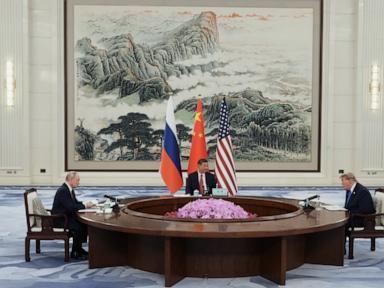
Donald Trump, Xi Jinping, and Vladimir Putin sat at the same table in Shenzhen on November 19, 2026, and walked away with a joint peace declaration that says almost nothing concrete about nuclear arms. Honestly, that shouldn't surprise anyone who's watched nuclear diplomacy over the past decade. Getting the leaders of the United States, China, and Russia into one room on the sidelines of the APEC summit was a huge photo op, sure. Real binding limits on warheads? Not a chance.
I've followed arms control talks long enough to know that summits billed as "historic" usually produce broad statements of principle when the underlying math doesn't work. And right now, the math is messy. With the New START treaty having expired back in February 2026, Washington and Moscow no longer have legally binding caps on their strategic arsenals or on-site inspection rights. Trump pushed for a modernized deal that brings China into the fold, while Xi talked about preventing nuclear war and eventually prohibiting nuclear weapons altogether. Yet the four-point declaration that came out of Kylin Villa focused on general commitments to reduce nuclear risks, boost refined fuel supplies, reform the United Nations, and push back against what the three leaders called jurisdictional overreach by the International Criminal Court.
Why Nuclear Breakthroughs Remain Out of Reach in Three-Way Talks
If you look closely at what happened in Shenzhen, the big catch isn't a lack of polite words. It's asymmetry.
According to Stockholm International Peace Research Institute (SIPRI) estimates for 2026, Russia holds roughly 5,420 nuclear warheads and the United States holds around 5,042, while China's stockpile sits closer to 620. Put yourself in Beijing's shoes for a second. Why would Xi agree to caps or intrusive verification rules when China is still building up its forces and sits at a fraction of Washington's and Moscow's totals? Beijing has consistently resisted joining bilateral-style caps unless arsenals look far more balanced or the bigger powers make steep cuts first.
Moscow adds another layer of complication. Russia has argued in recent years that any future nuclear arms framework shouldn't just rope in China—it should also account for British and French nuclear forces. Meanwhile, on-the-ground signals cut against calm diplomacy. Just before the summit, Russian TV highlighted an officer carrying Moscow's nuclear briefcase as Putin arrived in China, and Russia sent nuclear-capable Tu-95 bombers to Vietnam. When a country pairs nuclear signaling with talks about "lowering risks," skeptics are right to read the fine print carefully.
Daryl Kimball, executive director of the Arms Control Association, has pointed out that a single summit can at best open a channel rather than deliver a dramatic breakthrough overnight. That's a fair assessment. Even Cold War stability didn't start with a comprehensive treaty on day one—the U.S. and Soviet hotline came in 1963, years before SALT I in 1972. Still, without inspection data or formal warhead caps, defense planners in every capital fall back on worst-case assumptions. Worst-case planning gets expensive fast and raises the odds of miscalculation.
What the Fuel Supply Pledge Actually Means for Energy Markets
A lot of coverage around the Shenzhen talks zeroed in on the pledge to increase the production and supply of refined petroleum products and keep energy flows stable. If you're watching gas prices or shipping costs, that sounds promising on paper. In practice, it's a statement of intent rather than a production quota.
Look at the alignment of the three countries in that room:
- The United States and Russia are major oil and energy producers with huge refining and export footprints.
- China is the world's largest crude oil importer, making it acutely sensitive to supply shocks and price spikes.
With conflict around the Iran war disrupting shipping and threatening key chokepoints like the Strait of Hormuz, energy security isn't abstract right now. When Brent crude has been hovering near the $90s and refinery margins have been tight, a joint nod toward boosting refined fuel supplies can briefly cool market nerves. Traders react to headlines in real time.
Still, I wouldn't treat a diplomatic declaration as a guarantee of cheaper fuel at the pump. The joint statement didn't spell out specific export volumes, refinery run targets, or sanctions relief. Refining capacity faces physical bottlenecks, maintenance schedules, and geopolitical friction that a one-page leaders' statement can't wish away. Plus, the declaration didn't lay out a peace roadmap for Ukraine or the Middle East—two conflicts that keep energy markets on edge in the first place.
UN Reform and the Pushback Against the International Criminal Court
Beyond nukes and fuel, the Shenzhen statement took aim at international institutions. All three leaders backed reforming the United Nations so it can respond more effectively to global challenges. Because the U.S., China, and Russia are permanent, veto-holding members of the UN Security Council, agreeing on "reform" is easy when nobody defines what changes they want. Historically, Washington, Beijing, and Moscow often pull in different directions on Security Council membership and institutional authority.
The sharper political message was aimed at the International Criminal Court. The three leaders emphasized state consent, immunity for state officials, and opposition to what they described as abuse of jurisdiction by the ICC and similar bodies. That line carries obvious weight for Putin, who has faced an ICC arrest warrant over alleged unlawful deportation of Ukrainian children, and it aligns with the Trump administration's own fierce clashes with the court, including sanctions against ICC officials. Neither the U.S. nor China is a party to the Rome Statute, so their alignment on pushing back against the tribunal isn't new, even if putting it in a joint trilateral text gives it fresh symbolic weight.
Common Misconceptions About This Summit
When a headline says three rivals met on nuclear risks with no major breakthrough, a few myths usually spread fast:
- Myth 1: "No breakthrough" means nothing happened. Symbolism in statecraft isn't nothing. Having the U.S., Chinese, and Russian presidents sit down together for the first time in a trilateral format establishes a direct line of communication during a tense period. Channels matter most when crises flare.
- Myth 2: A peace declaration equals a ceasefire. Neither the war in Ukraine nor the conflict involving Iran was resolved in Shenzhen, and major flashpoints weren't settled in the joint text. Declarations of principle aren't binding treaties or truce agreements.
- Myth 3: China is ready to sign onto U.S.–Russia-style nuclear limits. Arsenal disparities and strategic doctrine still separate Beijing from Washington and Moscow. Expecting an immediate three-way warhead cap ignores basic arithmetic.
Practical Next Steps for Tracking What Comes Next
If you're following this story because of global security, energy costs, or business risk, don't stop at the initial summit headlines. Watch the follow-through over the coming weeks and months:
- Read the official text, not just the summaries. Compare the White House readout with statements from Beijing and Moscow to spot subtle differences in wording on nuclear dialogue, UN reform, and fuel supplies.
- Track fuel and freight indicators. Watch crude benchmarks, refining crack spreads, and shipping risk in the Persian Gulf rather than assuming a diplomatic pledge automatically lowers retail fuel prices.
- Follow working-level arms control signals. Look for concrete technical talks on crisis hotlines, missile launch notifications, or risk-reduction guardrails—those smaller mechanics are usually where real progress starts after New START expires.



