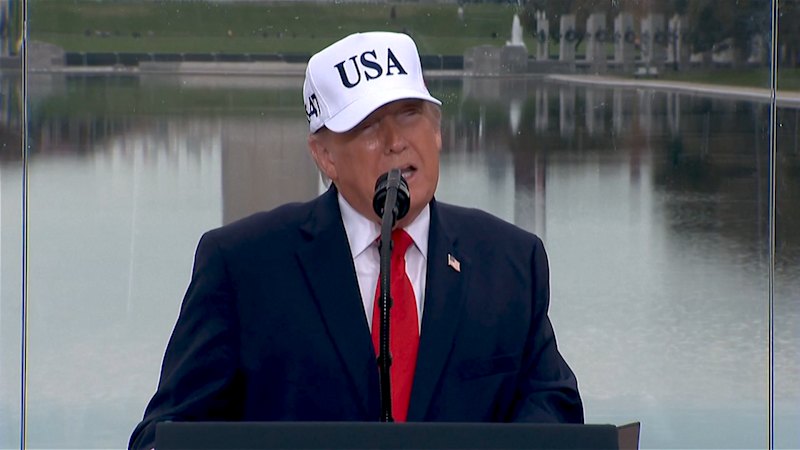
Donald Trump stood in front of the Lincoln Memorial on the eve of the midterm elections and floated an idea that instantly sent reporters scrambling. He claimed his administration was giving serious thought to renaming the iconic D.C. landmark after himself.
Then came the quick punchline. "I'm only kidding!" he shouted to the crowd, adding a plea for the press corps not to run with the headline.
Yet, anyone watching politics closely knows that Trump rarely tosses out ideas completely by accident. This casual comment was less about a literal name change and more about a much bigger political theater playing out around the National Mall. The pool renovation project has turned into a massive talking point, blending infrastructure, campaign optics, and a hefty price tag right when voters are heading to the polls.
The Reality Behind the Concrete and Paint
To understand why a joke about the Lincoln Reflecting Pool grabs headlines, you have to look at what has actually happened to the basin over the past several months. What started as an ambitious beautification effort ahead of America's upcoming 250th anniversary quickly morphed into a logistical and financial headache.
Back in the spring, the administration promised a quick, cheap fix. Instead of a multi-million-dollar granite overhaul estimated at over three hundred million dollars, officials opted for an industrial-grade swimming pool coating meant to give the water an "American flag blue" hue.
The budget quickly ballooned. Costs climbed past fourteen million dollars. Algae started turning the water green despite fresh paint and new bubblers, and the administration even blamed vandalism for ongoing maintenance issues. When you tie a massive public works project to the presidency, every peeling coat of paint becomes a political scorecard.
Turning Infrastructure Into a Campaign Weapon
Trump’s appearance by the pool on Monday afternoon wasn't just a random sightseeing tour. It was a calculated media moment staged right before voting day. With control of Congress on the line and polls showing tight races across the country, Trump used the National Mall backdrop to project control, economic pragmatism, and executive action.
He held up enlarged photographs comparing the before and after states of the monument. He criticized previous bureaucratic delays while championing his own methods. Naming the pool after himself—even as a punchline—fits a long-running pattern of personalizing national spaces and branding government assets with his own signature style.
Love it or hate it, the tactic forces attention away from tough midterm forecasts and sticky inflation numbers, steering the news cycle back to a visual project people can instantly see on TV.
What Happens Next on the National Mall
The midterm results will dictate whether these kinds of executive-led overhauls face intense congressional scrutiny or get a green light to continue. Democrats have signaled that White House grounds and National Mall projects are prime targets for future investigations if control of the House or Senate shifts.
For now, the water in the reflecting pool sits under a microscope. Whether it stays blue, turns green again, or gets another drainage cycle next spring, the landmark has firmly cemented its place in contemporary political warfare. The joke about the name change might have lasted only a few seconds, but the debate over who controls and shapes America's national monuments is here to stay.



