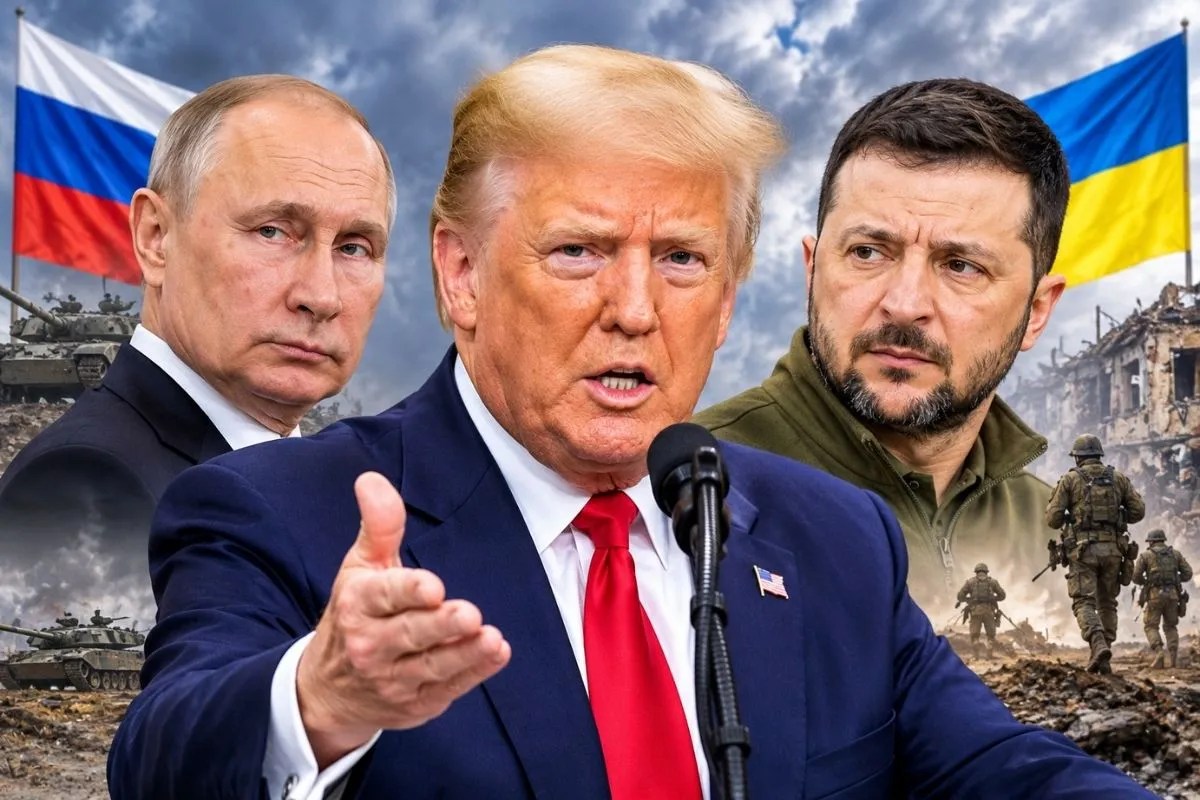
Donald Trump doesn't do nuance, and his recent assessment of the Russia-Ukraine conflict proves it once again. During a wide-ranging interview, the U.S. President pointed straight at the root of the ongoing stalemate, arguing that the intense personal animosity between Ukrainian President Volodymyr Zelensky and Russian leader Vladimir Putin remains the single biggest roadblock to a lasting peace deal.
If you've been following the rhetoric coming out of Washington, Moscow, and Kyiv, this framing shouldn't come as a total shock. But it strips away complex geopolitical maneuvering and boils a devastating multi-year war down to an intensely personal clash of egos.
The Core Argument Behind the Closed Doors
Trump didn't mince words about how he views the origins of the crisis. He claimed that if he had been in the Oval Office when the invasion initially kicked off, the war never would have happened. Instead, he inherited a geopolitical disaster that he now insists is grinding toward a conclusion.
According to Trump, getting these two leaders into the same room is practically a non-starter because the mutual hatred runs too deep. "It's hard for them to be in the same room," Trump noted bluntly. Yet, despite this toxic personal dynamic, the White House maintains that a settlement is closer than critics think, pointing to upcoming high-stakes diplomatic tracks involving special envoys like Steve Witkoff and Jared Kushner.
What a Compromise Actually Looks Like
Realpolitik is rarely pretty, and Trump's vision for winding down the conflict involves hard truths that Kyiv won't like. Any viable peace framework will likely force Ukraine to accept territorial adjustments. The map of Eastern Europe won't look the way it did before 2022, and acknowledging that reality is part of what Washington is trying to force onto the table.
At the same time, the diplomatic machinery is moving fast. Trilateral discussions and European partners are actively trying to iron out credible security guarantees for Ukraine. Without ironclad guarantees, any ceasefire is just a countdown to the next invasion. But convincing Moscow to respect those boundaries while forcing Kyiv to concede ground creates a diplomatic tightrope walk with very little margin for error.
Shifting Focus From Middle East Flashpoints to European Borders
While the world watches the friction between Zelensky and Putin, Washington's foreign policy calculus remains split across multiple theaters. Trump brushed aside concerns regarding potential new escalations involving Iran, pointing out that core military objectives have been met and nuclear materials remain contained beneath heavy layers of security.
This allows the administration to pivot back heavily toward concluding the European crisis. Whether a deal can be hammered out before the personal hostility between the two eastern European leaders completely sinks negotiations remains the million-dollar question. Diplomacy at this level isn't about friendship; it's about backing both sides into a corner where continuing the fight costs more than stopping it.



